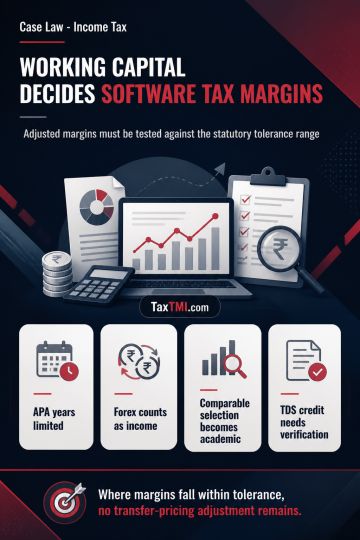
Working-capital adjustment determines whether software-services transfer-pricing margins fall within the statutory tolerance range, eliminating any ad...
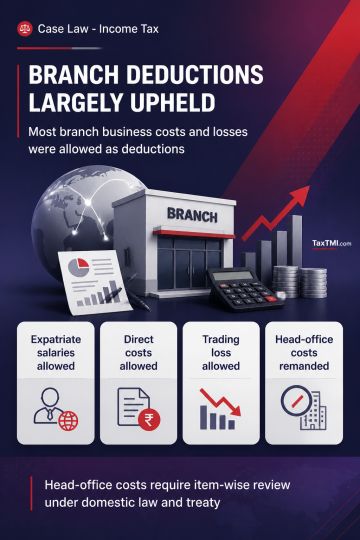
Permanent establishment deductions upheld for expatriate salaries, direct costs and trading losses, while head-office costs require fresh classificati...
Data transmission equipment classification under CTSH 8517 62 remains distinct from residual classification, with exemption evidence requiring scrutin...
The case pertains to the addition of undisclosed income u/s 69A of the Income Tax Act, wherein the peak credit method was applied. The Commissioner of Income Tax (Appeals) [CIT(A)] was satisfied with the assessee's business activities and cash collections deposited in bank accounts. The CIT(A) reproduced the details of the peak credit, considering opening balances in bank accounts, cash, advances, income from money lending business, and drawings. The CIT(A) determined the unexplained amount after deducting the net fund available from the peak credit. The CIT(A) relied on the decision of the Madras High Court in the case of PCIT v. S. Anbukannan, which upheld the peak credit method for addition of undisclosed income, and the ITAT Chennai's order in the case of S. Kulanthaian, who is a relative of the assessee. The ITAT found no infirmity in the CIT(A)'s order and dismissed the Revenue's appeal.
The case pertains to the addition of undisclosed income u/s 69A of the Income Tax Act, wherein the peak credit method was applied. The Commissioner of Income Tax (Appeals) [CIT(A)] was satisfied with the assessee's business activities and cash collections deposited in bank accounts. The CIT(A) reproduced the details of the peak credit, considering opening balances in bank accounts, cash, advances, income from money lending business, and drawings. The CIT(A) determined the unexplained amount after deducting the net fund available from the peak credit. The CIT(A) relied on the decision of the Madras High Court in the case of PCIT v. S. Anbukannan, which upheld the peak credit method for addition of undisclosed income, and the ITAT Chennai's order in the case of S. Kulanthaian, who is a relative of the assessee. The ITAT found no infirmity in the CIT(A)'s order and dismissed the Revenue's appeal.
Note: It is a system-generated summary and is for quick reference only.
 TaxTMI
 of 4803











 Join Channel


 TaxTMI