Receipt of immovable property requires actual possession or enjoyment; redevelopment allotments exchanged for tenancy rights fall outside deemed incom...
Section 80P deduction covers Souharda credit societies, including qualifying surplus-deposit interest, subject to member KYC verification for cash dep...
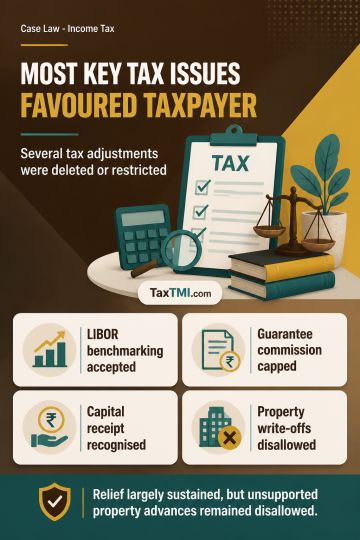
Transfer-pricing benchmarking and capital-receipt principles sustained taxpayer relief, while unsupported property-advance write-offs remained disallo...
The High Court held that GST Authorities cannot launch prosecution invoking penal provisions under the Indian Penal Code without invoking penal provisions of the GST Act, when the alleged offenses are covered under the GST Act provisions. This is especially true without obtaining sanction u/s 132(6) of the GST Act. The GST Act is a special legislation comprehensively dealing with GST-related procedures, penalties, and offenses. Allowing GST Authorities to bypass the prescribed procedure under the GST Act by simply invoking IPC provisions, without invoking GST Act penal provisions, especially when allegations constitute offenses covered under the GST Act, would amount to circumventing procedural safeguards like obtaining the Commissioner's sanction before initiating prosecution u/s 132(6). Such a course of action would be an abuse of the legal process, which cannot be permitted. Consequently, the prosecution launched without following the due process under the GST Act is hit by the legal bar and warrants quashment.
The High Court held that GST Authorities cannot launch prosecution invoking penal provisions under the Indian Penal Code without invoking penal provisions of the GST Act, when the alleged offenses are covered under the GST Act provisions. This is especially true without obtaining sanction u/s 132(6) of the GST Act. The GST Act is a special legislation comprehensively dealing with GST-related procedures, penalties, and offenses. Allowing GST Authorities to bypass the prescribed procedure under the GST Act by simply invoking IPC provisions, without invoking GST Act penal provisions, especially when allegations constitute offenses covered under the GST Act, would amount to circumventing procedural safeguards like obtaining the Commissioner's sanction before initiating prosecution u/s 132(6). Such a course of action would be an abuse of the legal process, which cannot be permitted. Consequently, the prosecution launched without following the due process under the GST Act is hit by the legal bar and warrants quashment.
Note: It is a system-generated summary and is for quick reference only.
 TaxTMI
 of 4805

















 Join Channel


 TaxTMI
