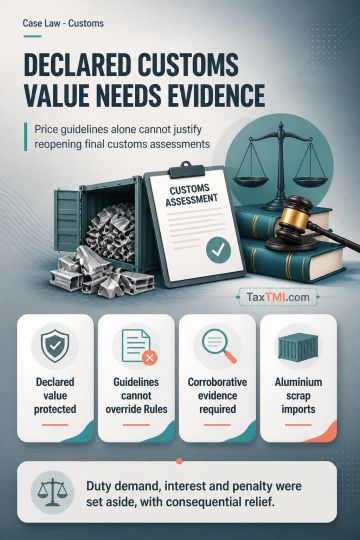
Transaction value cannot be rejected solely on non-statutory valuation guidelines without corroborative evidence supporting reassessment of final cust...
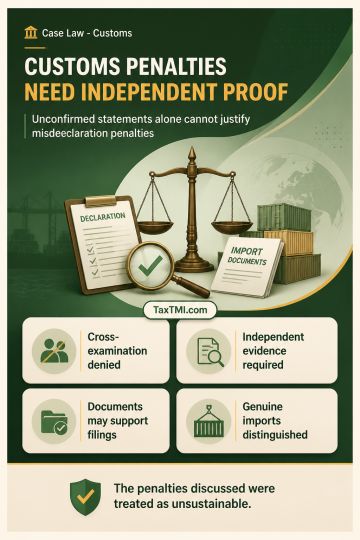
Cross-examination rights and corroborated evidence limit customs penalties for misdeclaration in genuine import transactions involving documented clea...
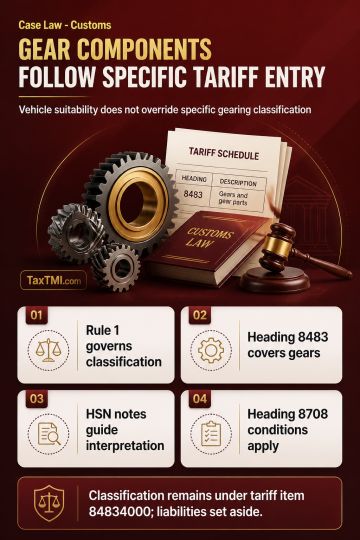
Tariff classification of vehicle gear components follows the specific gearing entry, displacing motor-vehicle parts classification and related liabili...
Necessary-party requirements limit impleadment of independent entities, while deferred consideration does not create an appealable adverse determinati...
Food supplement classification requires common parlance and authoritative tests, preventing treatment as proprietary Ayurvedic medicines without suppo...
The High Court held that GST Authorities cannot launch prosecution invoking penal provisions under the Indian Penal Code without invoking penal provisions of the GST Act, when the alleged offenses are covered under the GST Act provisions. This is especially true without obtaining sanction u/s 132(6) of the GST Act. The GST Act is a special legislation comprehensively dealing with GST-related procedures, penalties, and offenses. Allowing GST Authorities to bypass the prescribed procedure under the GST Act by simply invoking IPC provisions, without invoking GST Act penal provisions, especially when allegations constitute offenses covered under the GST Act, would amount to circumventing procedural safeguards like obtaining the Commissioner's sanction before initiating prosecution u/s 132(6). Such a course of action would be an abuse of the legal process, which cannot be permitted. Consequently, the prosecution launched without following the due process under the GST Act is hit by the legal bar and warrants quashment.
The High Court held that GST Authorities cannot launch prosecution invoking penal provisions under the Indian Penal Code without invoking penal provisions of the GST Act, when the alleged offenses are covered under the GST Act provisions. This is especially true without obtaining sanction u/s 132(6) of the GST Act. The GST Act is a special legislation comprehensively dealing with GST-related procedures, penalties, and offenses. Allowing GST Authorities to bypass the prescribed procedure under the GST Act by simply invoking IPC provisions, without invoking GST Act penal provisions, especially when allegations constitute offenses covered under the GST Act, would amount to circumventing procedural safeguards like obtaining the Commissioner's sanction before initiating prosecution u/s 132(6). Such a course of action would be an abuse of the legal process, which cannot be permitted. Consequently, the prosecution launched without following the due process under the GST Act is hit by the legal bar and warrants quashment.
Note: It is a system-generated summary and is for quick reference only.
 TaxTMI
 of 4805















 Join Channel


 TaxTMI
