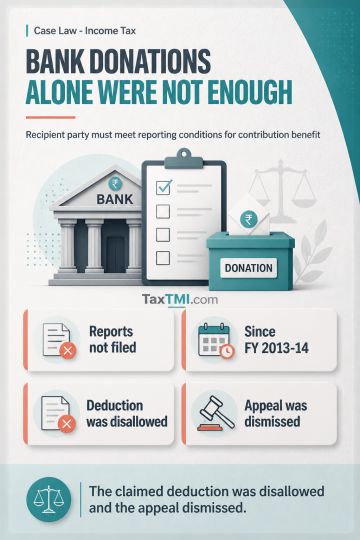
Political contribution deductions require recipient party compliance with contribution-reporting conditions; banking-channel donations alone do not qu...
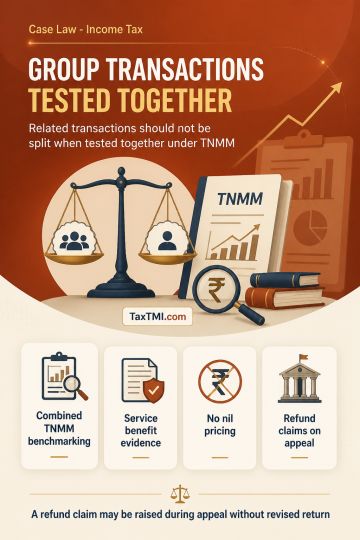
Aggregation under TNMM prevents selective testing of intra-group services without comparable uncontrolled transactions, while appellate additional cla...
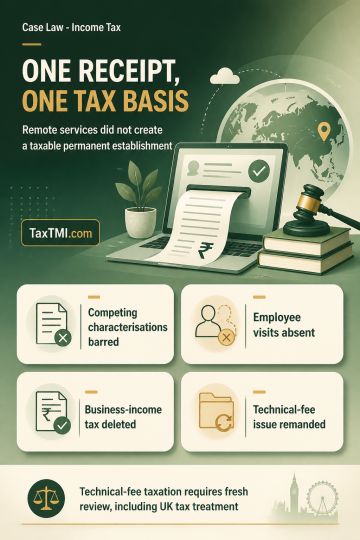
Protective assessment cannot duplicate identical receipts under competing characterisations; remote services did not establish a taxable permanent est...
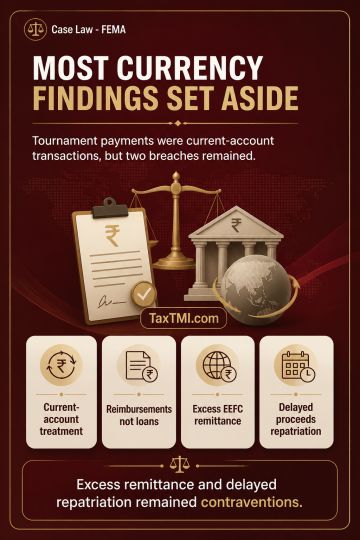
Current account treatment of overseas tournament services removed most FEMA findings, but excess EEFC remittance and delayed repatriation remained bre...
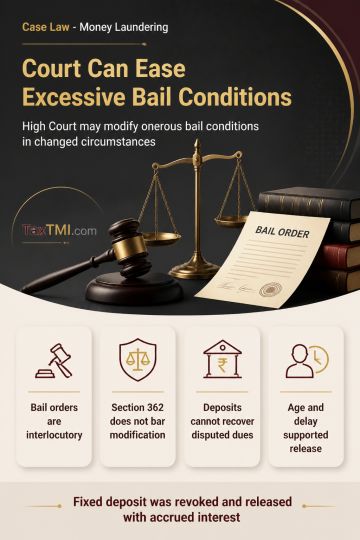
Modification of bail conditions remains available through inherent jurisdiction where onerous deposits undermine justice and cannot recover disputed d...
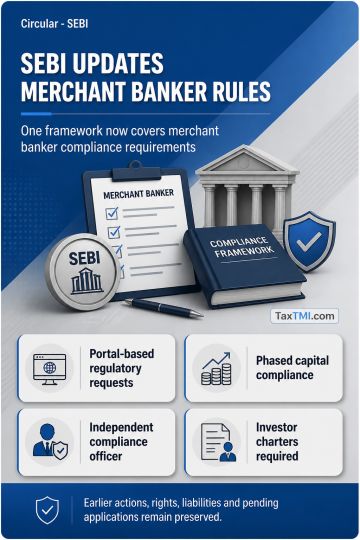
Merchant banker regulation consolidates registration, governance, capital, reporting, outsourcing and investor-protection requirements under an update...
Page of 4805
Press 'Enter' after typing page number.
741 to 760 of 96092 Results
❮
❯
❯❯
0 / 200
Expand Note
Add to Folder
No Folders have been created
+
Are you sure you want to delete "My most important" ?
The High Court held that GST Authorities cannot launch prosecution invoking penal provisions under the Indian Penal Code without invoking penal provisions of the GST Act, when the alleged offenses are covered under the GST Act provisions. This is especially true without obtaining sanction u/s 132(6) of the GST Act. The GST Act is a special legislation comprehensively dealing with GST-related procedures, penalties, and offenses. Allowing GST Authorities to bypass the prescribed procedure under the GST Act by simply invoking IPC provisions, without invoking GST Act penal provisions, especially when allegations constitute offenses covered under the GST Act, would amount to circumventing procedural safeguards like obtaining the Commissioner's sanction before initiating prosecution u/s 132(6). Such a course of action would be an abuse of the legal process, which cannot be permitted. Consequently, the prosecution launched without following the due process under the GST Act is hit by the legal bar and warrants quashment.
The High Court held that GST Authorities cannot launch prosecution invoking penal provisions under the Indian Penal Code without invoking penal provisions of the GST Act, when the alleged offenses are covered under the GST Act provisions. This is especially true without obtaining sanction u/s 132(6) of the GST Act. The GST Act is a special legislation comprehensively dealing with GST-related procedures, penalties, and offenses. Allowing GST Authorities to bypass the prescribed procedure under the GST Act by simply invoking IPC provisions, without invoking GST Act penal provisions, especially when allegations constitute offenses covered under the GST Act, would amount to circumventing procedural safeguards like obtaining the Commissioner's sanction before initiating prosecution u/s 132(6). Such a course of action would be an abuse of the legal process, which cannot be permitted. Consequently, the prosecution launched without following the due process under the GST Act is hit by the legal bar and warrants quashment.
Note: It is a system-generated summary and is for quick reference only.
 TaxTMI
 of 4805







 Join Channel


 TaxTMI