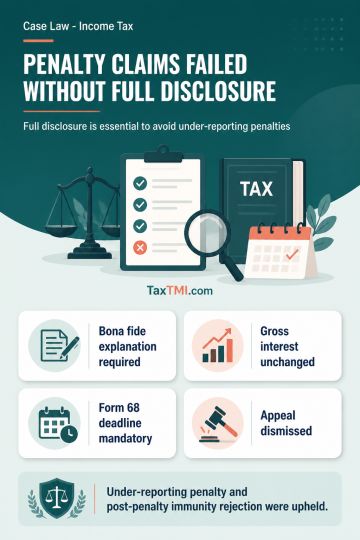
Bona fide disclosure requirements govern under-reporting penalties, and post-penalty immunity applications cannot secure available statutory protectio...
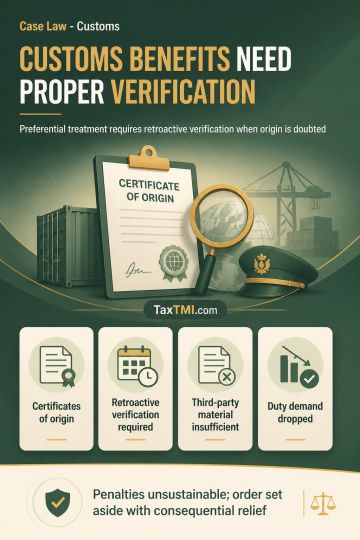
Certificate-of-origin verification procedure governs preferential customs benefits; denial without retroactive verification was set aside with consequ...
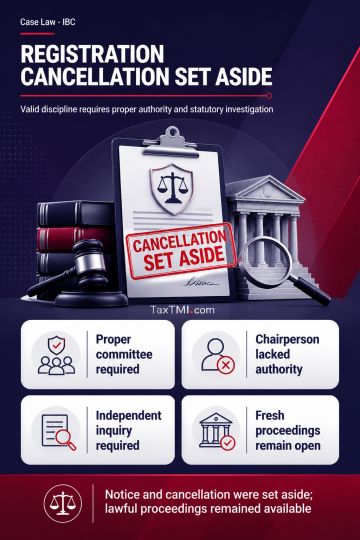
Disciplinary Committee jurisdiction and mandatory investigation requirements invalidated cancellation of an insolvency professional's registration and...
The case revolves around the interpretation of the definitions of "motor vehicle" and "vehicle" under the Motor Vehicles Act, 1988 and the Orissa Entry Tax Act, 1999, concerning the levy of entry tax on a tractor trailer. The High Court held that the product manufactured by the petitioner, being a tractor trailer without a motor, cannot be classified as a "motor vehicle" u/s 2(h) of the Entry Tax Act, which excludes tractors from the definition. It falls within the definition of "vehicle" u/s 2(28) of the Motor Vehicles Act, 1988. As there is no separate definition of "vehicle" in the Entry Tax Act, the levy of entry tax on the tractor trailer is not permissible. Consequently, the petition was allowed in favor of the petitioner.
The case revolves around the interpretation of the definitions of "motor vehicle" and "vehicle" under the Motor Vehicles Act, 1988 and the Orissa Entry Tax Act, 1999, concerning the levy of entry tax on a tractor trailer. The High Court held that the product manufactured by the petitioner, being a tractor trailer without a motor, cannot be classified as a "motor vehicle" u/s 2(h) of the Entry Tax Act, which excludes tractors from the definition. It falls within the definition of "vehicle" u/s 2(28) of the Motor Vehicles Act, 1988. As there is no separate definition of "vehicle" in the Entry Tax Act, the levy of entry tax on the tractor trailer is not permissible. Consequently, the petition was allowed in favor of the petitioner.
Note: It is a system-generated summary and is for quick reference only.
 TaxTMI
 of 4805




 Join Channel


 TaxTMI
