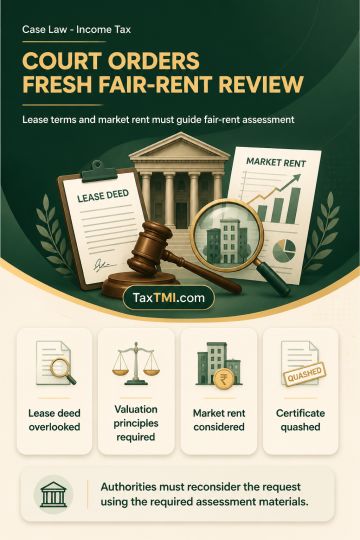
Fair-rent assessment requires consideration of lease terms, valuation principles and prevailing market rent; the certificate was quashed for fresh rev...
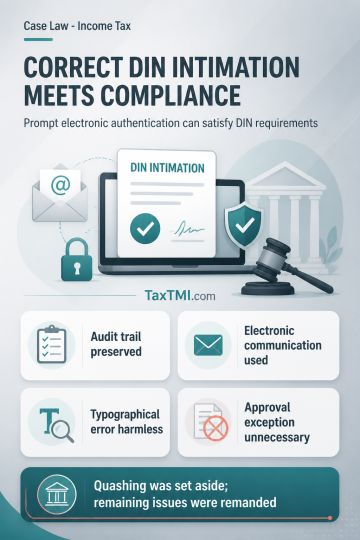
Document Identification Number compliance is satisfied when electronically communicated orders are promptly authenticated through a correctly identifi...
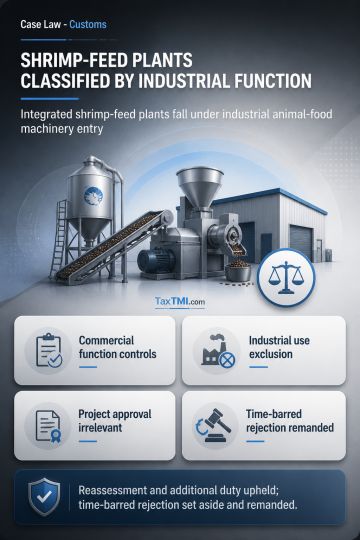
Industrial shrimp-feed machinery classification follows its commercial function, placing integrated production plants under the specific industrial fo...
The case revolves around the interpretation of the definitions of "motor vehicle" and "vehicle" under the Motor Vehicles Act, 1988 and the Orissa Entry Tax Act, 1999, concerning the levy of entry tax on a tractor trailer. The High Court held that the product manufactured by the petitioner, being a tractor trailer without a motor, cannot be classified as a "motor vehicle" u/s 2(h) of the Entry Tax Act, which excludes tractors from the definition. It falls within the definition of "vehicle" u/s 2(28) of the Motor Vehicles Act, 1988. As there is no separate definition of "vehicle" in the Entry Tax Act, the levy of entry tax on the tractor trailer is not permissible. Consequently, the petition was allowed in favor of the petitioner.
The case revolves around the interpretation of the definitions of "motor vehicle" and "vehicle" under the Motor Vehicles Act, 1988 and the Orissa Entry Tax Act, 1999, concerning the levy of entry tax on a tractor trailer. The High Court held that the product manufactured by the petitioner, being a tractor trailer without a motor, cannot be classified as a "motor vehicle" u/s 2(h) of the Entry Tax Act, which excludes tractors from the definition. It falls within the definition of "vehicle" u/s 2(28) of the Motor Vehicles Act, 1988. As there is no separate definition of "vehicle" in the Entry Tax Act, the levy of entry tax on the tractor trailer is not permissible. Consequently, the petition was allowed in favor of the petitioner.
Note: It is a system-generated summary and is for quick reference only.
 TaxTMI
 of 4805



 Join Channel


 TaxTMI
