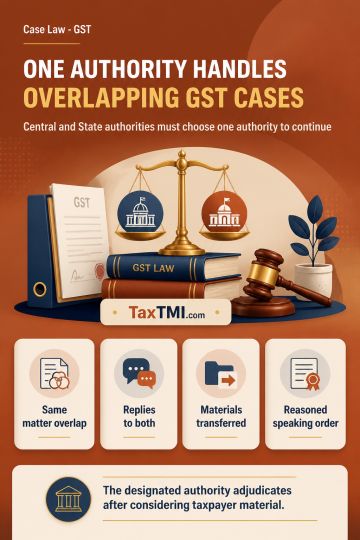
Overlapping GST proceedings require Central and State authorities to designate one competent authority for coordinated adjudication of the same matter...
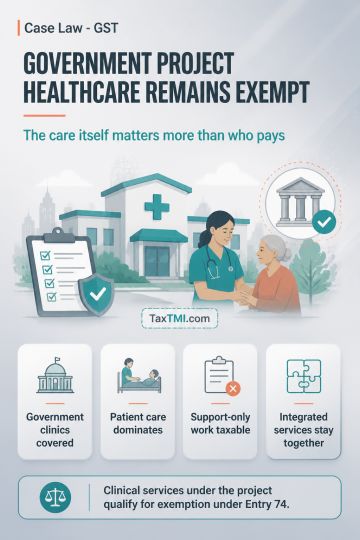
Composite healthcare supplies retain exemption when patient care is the contract's essential character, despite payment through an implementing agency...
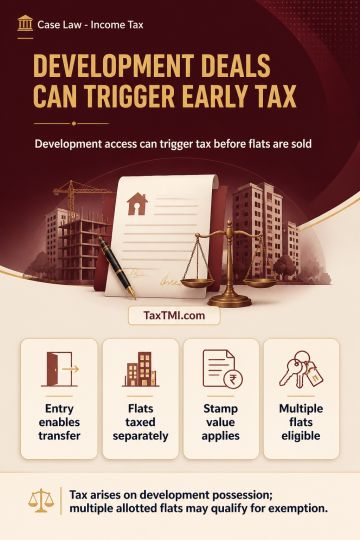
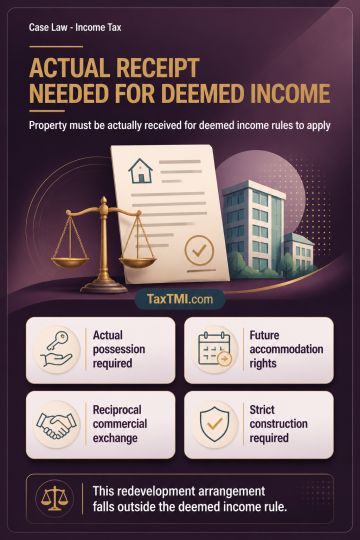
Receipt of immovable property requires actual possession or enjoyment; redevelopment allotments exchanged for tenancy rights fall outside deemed incom...
The case revolves around the interpretation of the definitions of "motor vehicle" and "vehicle" under the Motor Vehicles Act, 1988 and the Orissa Entry Tax Act, 1999, concerning the levy of entry tax on a tractor trailer. The High Court held that the product manufactured by the petitioner, being a tractor trailer without a motor, cannot be classified as a "motor vehicle" u/s 2(h) of the Entry Tax Act, which excludes tractors from the definition. It falls within the definition of "vehicle" u/s 2(28) of the Motor Vehicles Act, 1988. As there is no separate definition of "vehicle" in the Entry Tax Act, the levy of entry tax on the tractor trailer is not permissible. Consequently, the petition was allowed in favor of the petitioner.
The case revolves around the interpretation of the definitions of "motor vehicle" and "vehicle" under the Motor Vehicles Act, 1988 and the Orissa Entry Tax Act, 1999, concerning the levy of entry tax on a tractor trailer. The High Court held that the product manufactured by the petitioner, being a tractor trailer without a motor, cannot be classified as a "motor vehicle" u/s 2(h) of the Entry Tax Act, which excludes tractors from the definition. It falls within the definition of "vehicle" u/s 2(28) of the Motor Vehicles Act, 1988. As there is no separate definition of "vehicle" in the Entry Tax Act, the levy of entry tax on the tractor trailer is not permissible. Consequently, the petition was allowed in favor of the petitioner.
Note: It is a system-generated summary and is for quick reference only.
 TaxTMI
 of 4805




 Join Channel


 TaxTMI