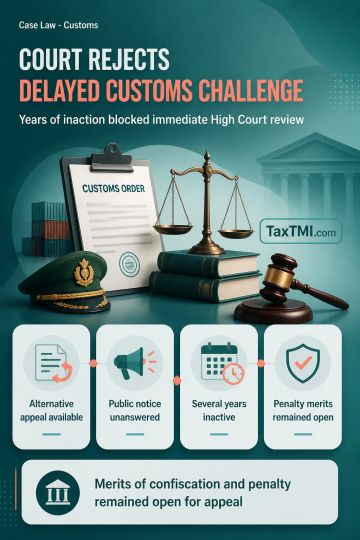
Alternative statutory remedy and unexplained delay barred writ review of customs confiscation adjudication, leaving merits for appellate consideration...
Authorised courier due diligence protects against penalties where declared exports conceal prohibited goods despite proper documentation and customs p...
Customs-controlled container movement now extends to DP World facilities, subject to segregation, inspections, reconciliation, and EXIM cargo priority...
This case deals with the issue of belated challenge to orders and the change of status from 'participant' to 'opposite party' in proceedings related to abuse of dominant position. The key points are: The court held there was no delay in filing the writ petitions as one of the impugned orders was provided to the petitioner only recently. The petitioner was initially treated as a 'third party' participant, but its status was later changed to an 'opposite party' without prior notice. The court observed that an entity is entitled to know its status and the applicable legal provisions, as the consequences and available protections vary based on the status. u/s 27 of the Act, serious consequences like discontinuation of agreements and penalties up to 10% of average turnover can be imposed on enterprises found guilty of abuse of dominant position. The court noted that despite being made an 'opposite party', the petitioner was not provided with the Director General's investigation report as required u/s 26(4) for 'parties' concerned. The court held that the petitioner should have been given prior notice before being impleaded as a party, and the authority's satisfaction for such impleadment should have been recorded through a speaking order. The petition was ultimately dismissed.
This case deals with the issue of belated challenge to orders and the change of status from 'participant' to 'opposite party' in proceedings related to abuse of dominant position. The key points are: The court held there was no delay in filing the writ petitions as one of the impugned orders was provided to the petitioner only recently. The petitioner was initially treated as a 'third party' participant, but its status was later changed to an 'opposite party' without prior notice. The court observed that an entity is entitled to know its status and the applicable legal provisions, as the consequences and available protections vary based on the status. u/s 27 of the Act, serious consequences like discontinuation of agreements and penalties up to 10% of average turnover can be imposed on enterprises found guilty of abuse of dominant position. The court noted that despite being made an 'opposite party', the petitioner was not provided with the Director General's investigation report as required u/s 26(4) for 'parties' concerned. The court held that the petitioner should have been given prior notice before being impleaded as a party, and the authority's satisfaction for such impleadment should have been recorded through a speaking order. The petition was ultimately dismissed.
Note: It is a system-generated summary and is for quick reference only.
 TaxTMI
  TaxTMI
 of 4828



















 Join Channel


