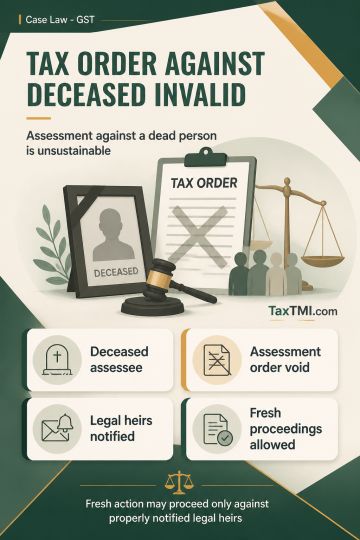
Mutual fund maturity rules require proper rollover, redemption, disclosure, and due diligence; investor gains cannot excuse regulatory breaches or pen...
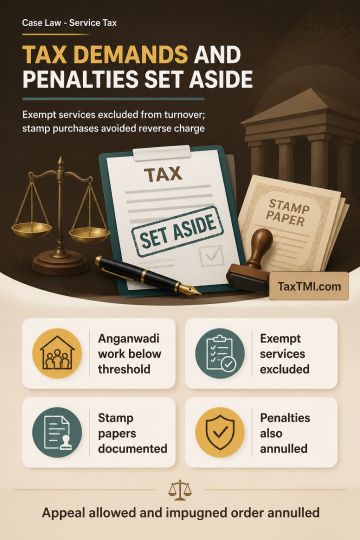
Threshold exemption excludes exempt services, while stamp-paper purchases avoid reverse charge; consequential service tax penalties were also set asid...
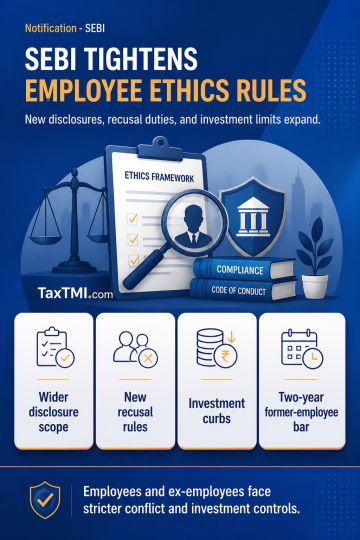
Employee conflict disclosures and investment restrictions expand with new recusal duties, post-employment limits, and compliance reporting requirement...
Determination of whether an outward supply of goods procured by the applicant from an Indian company undergoing liquidation can be considered a zero-rated supply under GST, allowing export without payment of tax against a Letter of Undertaking (LUT). The key points are: The place of supply is within India as the goods are delivered to the applicant's premises in India. The applicant lacks GST registration in India, and the transaction does not qualify as an export of goods under GST law. Consequently, the transaction cannot be treated as a zero-rated supply under the GST Act, 2017, precluding the applicant from exporting the goods without paying tax against an LUT.
Determination of whether an outward supply of goods procured by the applicant from an Indian company undergoing liquidation can be considered a zero-rated supply under GST, allowing export without payment of tax against a Letter of Undertaking (LUT). The key points are: The place of supply is within India as the goods are delivered to the applicant's premises in India. The applicant lacks GST registration in India, and the transaction does not qualify as an export of goods under GST law. Consequently, the transaction cannot be treated as a zero-rated supply under the GST Act, 2017, precluding the applicant from exporting the goods without paying tax against an LUT.
Note: It is a system-generated summary and is for quick reference only.
 TaxTMI
 of 4805




 Join Channel


 TaxTMI