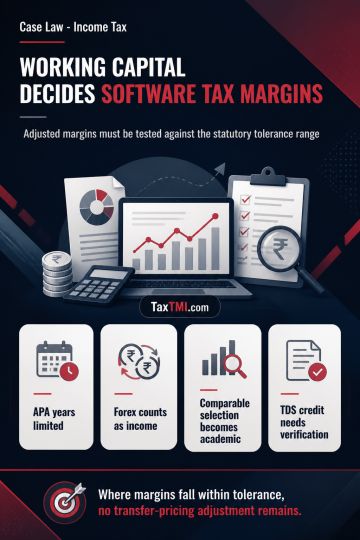
Working-capital adjustment determines whether software-services transfer-pricing margins fall within the statutory tolerance range, eliminating any ad...
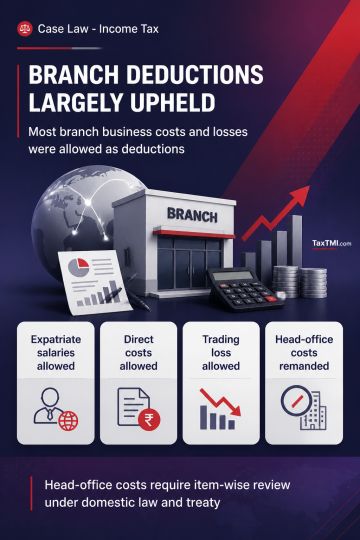
Permanent establishment deductions upheld for expatriate salaries, direct costs and trading losses, while head-office costs require fresh classificati...
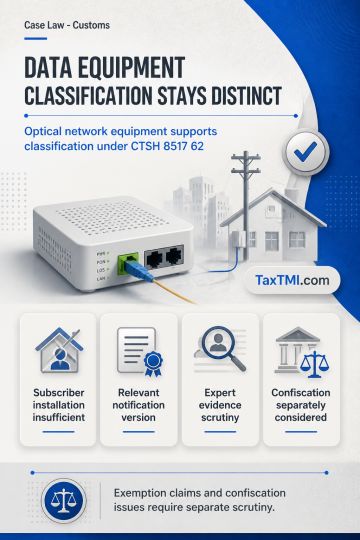
Data transmission equipment classification under CTSH 8517 62 remains distinct from residual classification, with exemption evidence requiring scrutin...
Determination of whether an outward supply of goods procured by the applicant from an Indian company undergoing liquidation can be considered a zero-rated supply under GST, allowing export without payment of tax against a Letter of Undertaking (LUT). The key points are: The place of supply is within India as the goods are delivered to the applicant's premises in India. The applicant lacks GST registration in India, and the transaction does not qualify as an export of goods under GST law. Consequently, the transaction cannot be treated as a zero-rated supply under the GST Act, 2017, precluding the applicant from exporting the goods without paying tax against an LUT.
Determination of whether an outward supply of goods procured by the applicant from an Indian company undergoing liquidation can be considered a zero-rated supply under GST, allowing export without payment of tax against a Letter of Undertaking (LUT). The key points are: The place of supply is within India as the goods are delivered to the applicant's premises in India. The applicant lacks GST registration in India, and the transaction does not qualify as an export of goods under GST law. Consequently, the transaction cannot be treated as a zero-rated supply under the GST Act, 2017, precluding the applicant from exporting the goods without paying tax against an LUT.
Note: It is a system-generated summary and is for quick reference only.
 TaxTMI
 of 4805






 Join Channel


 TaxTMI