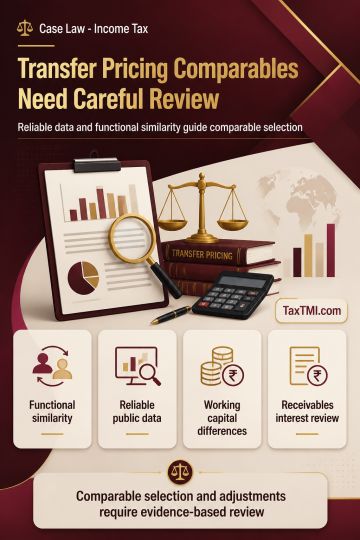
Transfer pricing comparability requires functional alignment, reliable financial data, and careful review of working capital and receivables adjustmen...
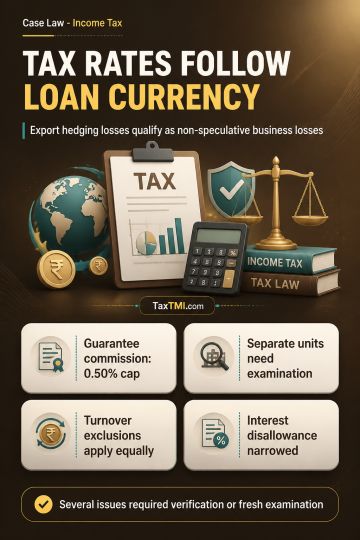
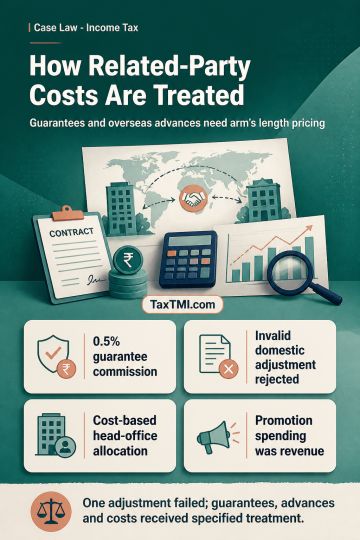
Transfer pricing rules require benchmarking corporate guarantees and associated-enterprise advances, while invalid domestic-transaction adjustments ca...
Determination of whether an outward supply of goods procured by the applicant from an Indian company undergoing liquidation can be considered a zero-rated supply under GST, allowing export without payment of tax against a Letter of Undertaking (LUT). The key points are: The place of supply is within India as the goods are delivered to the applicant's premises in India. The applicant lacks GST registration in India, and the transaction does not qualify as an export of goods under GST law. Consequently, the transaction cannot be treated as a zero-rated supply under the GST Act, 2017, precluding the applicant from exporting the goods without paying tax against an LUT.
Determination of whether an outward supply of goods procured by the applicant from an Indian company undergoing liquidation can be considered a zero-rated supply under GST, allowing export without payment of tax against a Letter of Undertaking (LUT). The key points are: The place of supply is within India as the goods are delivered to the applicant's premises in India. The applicant lacks GST registration in India, and the transaction does not qualify as an export of goods under GST law. Consequently, the transaction cannot be treated as a zero-rated supply under the GST Act, 2017, precluding the applicant from exporting the goods without paying tax against an LUT.
Note: It is a system-generated summary and is for quick reference only.
 TaxTMI
 of 4803




 Join Channel


 TaxTMI
