TNMM functional comparability requires excluding rice manufacturers from a pure Basmati rice trader's benchmark and recognising operating export recei...
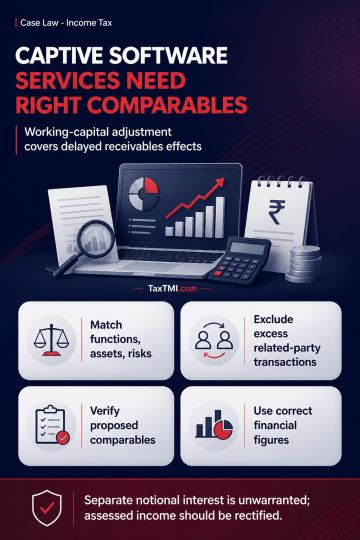
Working-capital adjustment subsumes delayed-receivable effects in TNMM benchmarking of captive software-development services, avoiding separate notion...
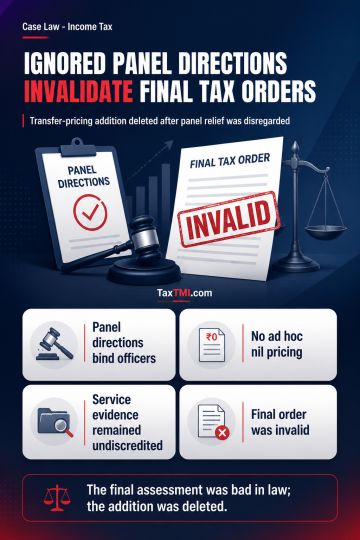
Transfer-pricing comparability requires exclusion of financially illogical super-profit comparables and correction of unsupported annual-report and ma...
Charitable character assessment preserves Section 80G approval despite inclusive spiritual teachings and incidental religious expenditure within the s...
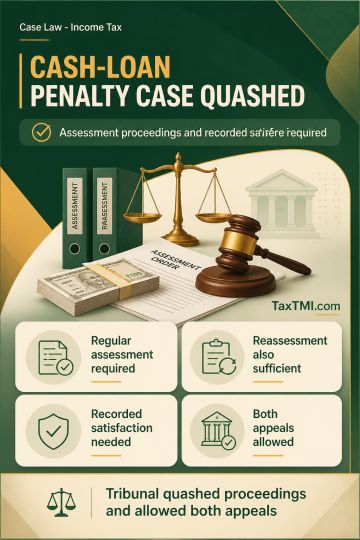
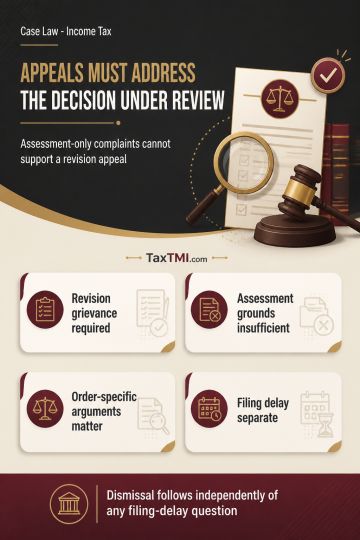
Penalty proceedings for cash-loan acceptance require assessment proceedings and recorded Assessing Officer satisfaction; absent these, the proceedings...
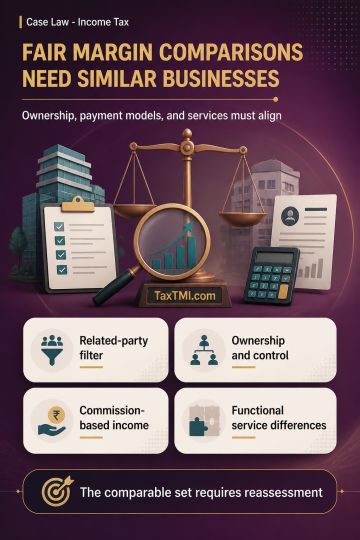
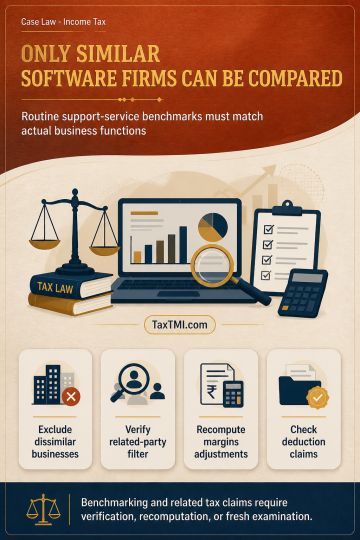
Functional comparability governs software-service benchmarking: dissimilar companies are excluded, while related-party filters, margins and working-ca...
The case pertains to the disallowance of a provision for contract losses by the CIT(A) and AO, who erroneously concluded it as an unascertained liability not deductible u/s 37. The provision represents the excess of estimated contract expenditure over estimated contract revenues. The ITAT held that the provision constitutes an ascertained liability/probable loss for the assessee, made on a scientific basis. Both lower authorities erred in appreciating that revenue from the contract was also recognized on a percentage of completion basis. The case laws cited by the assessee support this view. The FLSmidth case is distinguishable as the assessee couldn't explain how contract costs would exceed revenues. However, in the present case, the assessee recognized revenue and expenses on the same methodology, supported by computations, and the provision was reversed in subsequent years. The Triveni Engg case is on similar facts, where the court allowed the deduction for such a provision. Therefore, the impugned provision is an allowable deduction, and the question of adding it to book profits does not arise. The assessee's appeal is allowed.
The case pertains to the disallowance of a provision for contract losses by the CIT(A) and AO, who erroneously concluded it as an unascertained liability not deductible u/s 37. The provision represents the excess of estimated contract expenditure over estimated contract revenues. The ITAT held that the provision constitutes an ascertained liability/probable loss for the assessee, made on a scientific basis. Both lower authorities erred in appreciating that revenue from the contract was also recognized on a percentage of completion basis. The case laws cited by the assessee support this view. The FLSmidth case is distinguishable as the assessee couldn't explain how contract costs would exceed revenues. However, in the present case, the assessee recognized revenue and expenses on the same methodology, supported by computations, and the provision was reversed in subsequent years. The Triveni Engg case is on similar facts, where the court allowed the deduction for such a provision. Therefore, the impugned provision is an allowable deduction, and the question of adding it to book profits does not arise. The assessee's appeal is allowed.
Note: It is a system-generated summary and is for quick reference only.
 TaxTMI
  TaxTMI
 of 4830








 Join Channel


