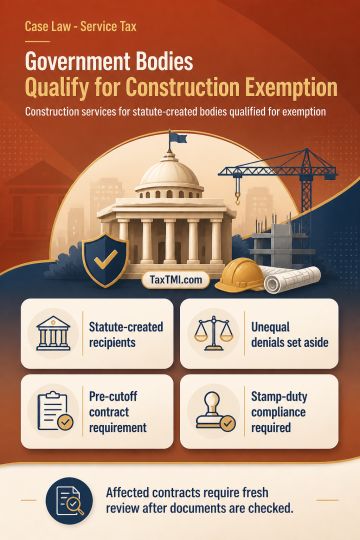
Governmental authority status supports construction-service exemption, while pre-cutoff contract and stamp-duty compliance requires verification on re...
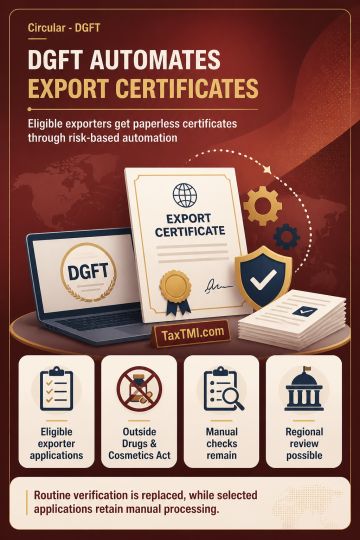
Automated Free Sale and Commerce Certificates enable paperless processing while retaining risk-based manual verification for selected exporter applica...
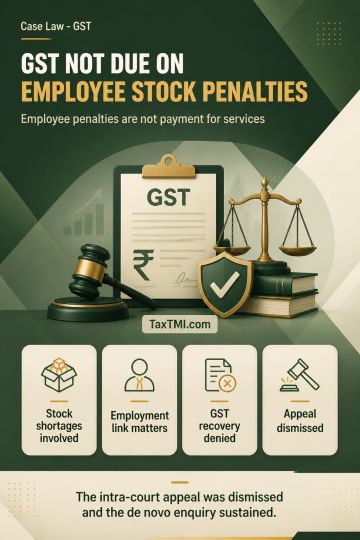
Employee stock-shortage penalties do not constitute consideration for services, preventing GST collection under Schedule II in employment relationship...
The case pertains to the allegation of clandestine manufacture and clearance of structural items/rolled products by the appellant. The revenue's case rested solely on private records of a third party (billet manufacturer) and statements of persons who were not cross-examined. The Tribunal held that there was no evidence of clandestine manufacture of the appellant's final product, no evidence of receipt of sale proceeds, and no evidence of transport of allegedly clandestinely removed goods. The third party's statements, which formed the root of the evidence, could not be relied upon as cross-examination was not allowed as mandated u/s 9D of the Central Excise Act, 1944. Relying on the Supreme Court's decision in Andaman Timber Industries, the Tribunal held that in the absence of cross-examination, the statements lose evidentiary value. Consequently, the revenue failed to establish its case of clandestine removal, and the demand was set aside by allowing the appeals.
The case pertains to the allegation of clandestine manufacture and clearance of structural items/rolled products by the appellant. The revenue's case rested solely on private records of a third party (billet manufacturer) and statements of persons who were not cross-examined. The Tribunal held that there was no evidence of clandestine manufacture of the appellant's final product, no evidence of receipt of sale proceeds, and no evidence of transport of allegedly clandestinely removed goods. The third party's statements, which formed the root of the evidence, could not be relied upon as cross-examination was not allowed as mandated u/s 9D of the Central Excise Act, 1944. Relying on the Supreme Court's decision in Andaman Timber Industries, the Tribunal held that in the absence of cross-examination, the statements lose evidentiary value. Consequently, the revenue failed to establish its case of clandestine removal, and the demand was set aside by allowing the appeals.
Note: It is a system-generated summary and is for quick reference only.
 TaxTMI
  TaxTMI
 of 4828






 Join Channel


