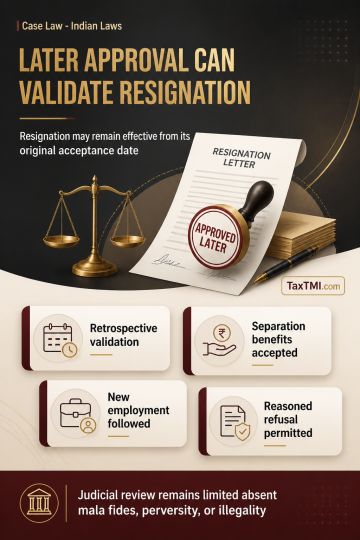
Ratification of resignation acceptance validates separation retrospectively, while withdrawal may be refused through reasoned administrative discretio...
Nature-dependent electricity contracts receive new Ind AS accounting, hedge designation, transition and financial-statement disclosure requirements fr...
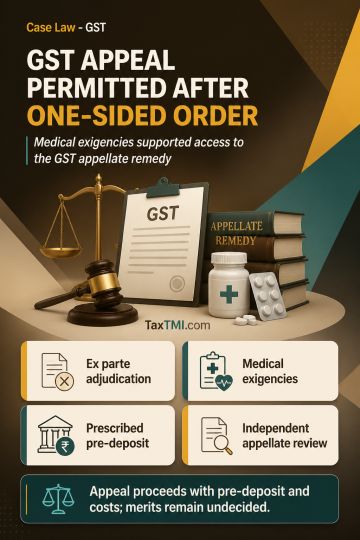
Alternative GST remedy permitted protective writ intervention for ex parte adjudication, preserving independent appellate review of input tax credit d...
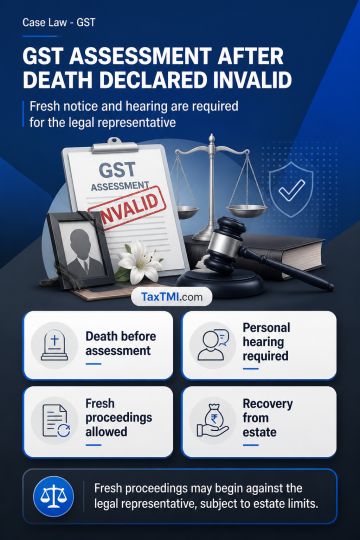
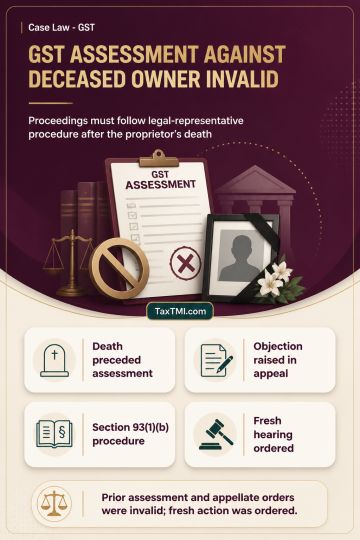
Assessment against deceased sole proprietor requires proceedings against the legal representative, rendering prior assessment and appellate orders inv...
Residential waste collection classification under SAC 999423 defeats composite-supply exemption where facilitating goods are not transferred to the lo...
Page of 4800
Press 'Enter' after typing page number.
161 to 180 of 96000 Results
❮
❯
❯❯
0 / 200
Expand Note
Add to Folder
No Folders have been created
+
Are you sure you want to delete "My most important" ?
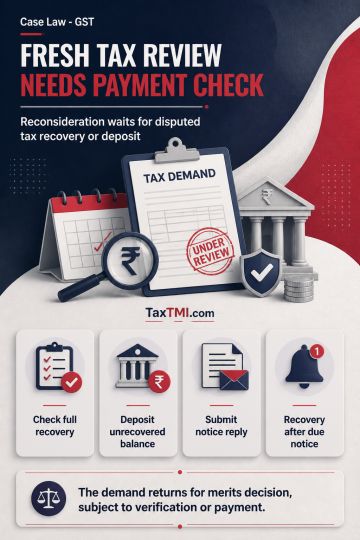
The High Court examined the challenge to the assessment and demand orders, validity of the show cause notice (SCN), discrepancy in the assessment amount compared to the proposal, and violation of Section 75(7) of the GST Act. The court held that the SCN covered the proposal for assessing tax, interest, and penalty. The assessment amount matched the total proposal under nine heads mentioned in the SCN and final order. The court rejected the contention of violating Section 75(7). Finding no reason to interfere with the writ court's order, the High Court affirmed it with a slight modification, requiring payment of 7.5% of the disputed tax instead of 10% within three months. Upon such payment, the assessing authority shall proceed with re-assessment, provide an opportunity of being heard, and make a final decision on merits and in accordance with the law. Non-compliance with the modified condition will result in dismissal of the appeal.
The High Court examined the challenge to the assessment and demand orders, validity of the show cause notice (SCN), discrepancy in the assessment amount compared to the proposal, and violation of Section 75(7) of the GST Act. The court held that the SCN covered the proposal for assessing tax, interest, and penalty. The assessment amount matched the total proposal under nine heads mentioned in the SCN and final order. The court rejected the contention of violating Section 75(7). Finding no reason to interfere with the writ court's order, the High Court affirmed it with a slight modification, requiring payment of 7.5% of the disputed tax instead of 10% within three months. Upon such payment, the assessing authority shall proceed with re-assessment, provide an opportunity of being heard, and make a final decision on merits and in accordance with the law. Non-compliance with the modified condition will result in dismissal of the appeal.
Note: It is a system-generated summary and is for quick reference only.
 TaxTMI
 of 4800










 Join Channel


 TaxTMI