Retention of seized property survives where recorded reasons support proceeds of crime, while stayed investigation periods are excluded from limitatio...
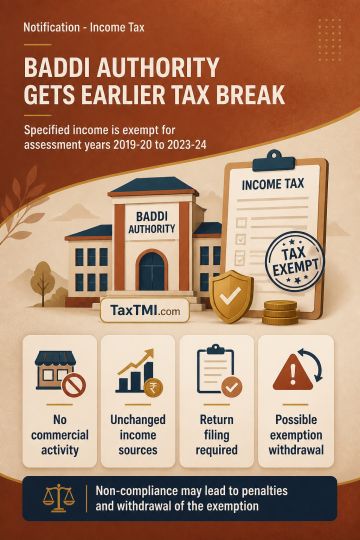
Specified income of Baddi Barotiwala Nalagarh Development Authority receives conditional tax exemption, retrospectively covering its designated assess...
Specified development authority income receives retrospective tax exemption, subject to non-commercial activity, unchanged income sources, and return-...
Unified Brand India framework introduces voluntary Trust Mark certification and funding support for export branding, packaging and global promotional ...
Origin Declaration authentication governs preferential tariff claims under India-UK CETA, requiring a validated reference number before import clearan...
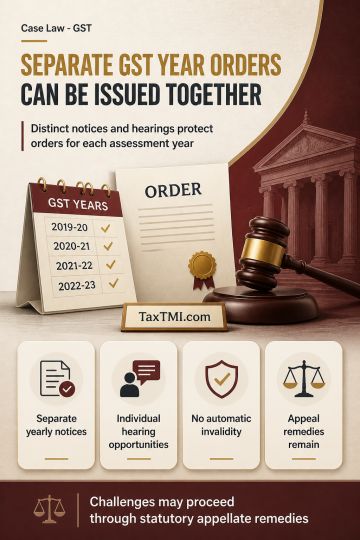
Separate assessment orders for different years remain valid when distinct notices and hearing opportunities prevent prejudice from combined proceeding...
The High Court examined the challenge to the assessment and demand orders, validity of the show cause notice (SCN), discrepancy in the assessment amount compared to the proposal, and violation of Section 75(7) of the GST Act. The court held that the SCN covered the proposal for assessing tax, interest, and penalty. The assessment amount matched the total proposal under nine heads mentioned in the SCN and final order. The court rejected the contention of violating Section 75(7). Finding no reason to interfere with the writ court's order, the High Court affirmed it with a slight modification, requiring payment of 7.5% of the disputed tax instead of 10% within three months. Upon such payment, the assessing authority shall proceed with re-assessment, provide an opportunity of being heard, and make a final decision on merits and in accordance with the law. Non-compliance with the modified condition will result in dismissal of the appeal.
The High Court examined the challenge to the assessment and demand orders, validity of the show cause notice (SCN), discrepancy in the assessment amount compared to the proposal, and violation of Section 75(7) of the GST Act. The court held that the SCN covered the proposal for assessing tax, interest, and penalty. The assessment amount matched the total proposal under nine heads mentioned in the SCN and final order. The court rejected the contention of violating Section 75(7). Finding no reason to interfere with the writ court's order, the High Court affirmed it with a slight modification, requiring payment of 7.5% of the disputed tax instead of 10% within three months. Upon such payment, the assessing authority shall proceed with re-assessment, provide an opportunity of being heard, and make a final decision on merits and in accordance with the law. Non-compliance with the modified condition will result in dismissal of the appeal.
Note: It is a system-generated summary and is for quick reference only.
 TaxTMI
 of 4805













 Join Channel


 TaxTMI
