Defined public benefit can retain charitable character; registration renewal requires examining genuine activities and legal compliance, not surplus a...
Capital reduction is distinct from share buy-back, preventing buy-back tax; restructuring interest and related business deductions also survive scruti...
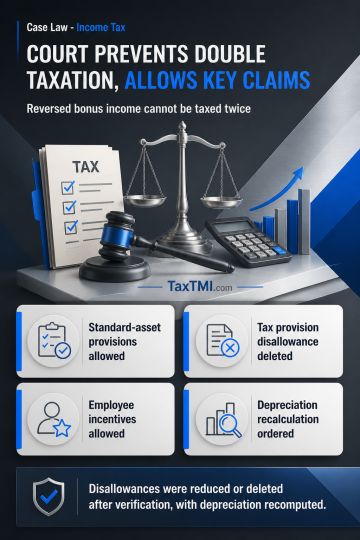
Transfer pricing and tax deductions upheld on established principles, while employee contributions and warranty provisions returned for fresh examinat...
Captive transfer pricing relies on industrial consumer tariffs, while genuine quotations can benchmark effluent treatment transfers under the Other Me...
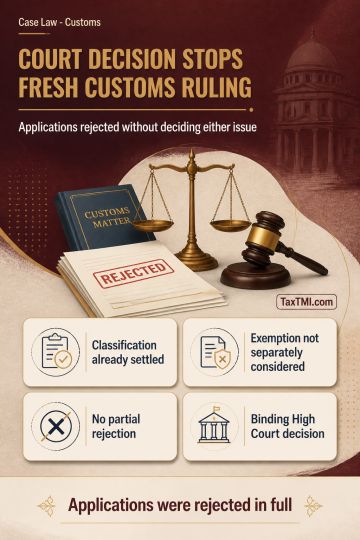
Specific tariff classification for ophthalmic instruments and extended limitation principles determine the treatment of duty demands, confiscation, an...
Integrated golf function determines classification, placing launch monitors and simulators under other golf equipment rather than measuring instrument...
The High Court set aside the order cancelling the petitioner's registration under the Central Goods and Services Tax Act, 2017 and the West Bengal Goods and Services Tax Act, 2017, subject to the condition that the petitioner files returns for the entire period of default and pays the requisite amount of tax, interest, fine, and penalty, if not already paid. The cancellation was due to the petitioner's failure to comply with statutory provisions by not filing returns, but the Court noted that suspension/revocation would be counterproductive and against revenue interests as it would prevent the petitioner from carrying on business and raising invoices, ultimately impacting tax recovery. The Court took a pragmatic view, considering that the respondents did not allege dubious processes to evade tax.
The High Court set aside the order cancelling the petitioner's registration under the Central Goods and Services Tax Act, 2017 and the West Bengal Goods and Services Tax Act, 2017, subject to the condition that the petitioner files returns for the entire period of default and pays the requisite amount of tax, interest, fine, and penalty, if not already paid. The cancellation was due to the petitioner's failure to comply with statutory provisions by not filing returns, but the Court noted that suspension/revocation would be counterproductive and against revenue interests as it would prevent the petitioner from carrying on business and raising invoices, ultimately impacting tax recovery. The Court took a pragmatic view, considering that the respondents did not allege dubious processes to evade tax.
Note: It is a system-generated summary and is for quick reference only.
 TaxTMI
 of 4807




















 Join Channel


 TaxTMI
