Specified development authority income receives retrospective tax exemption, subject to non-commercial activity, unchanged income sources, and return-...
Unified Brand India framework introduces voluntary Trust Mark certification and funding support for export branding, packaging and global promotional ...
Origin Declaration authentication governs preferential tariff claims under India-UK CETA, requiring a validated reference number before import clearan...
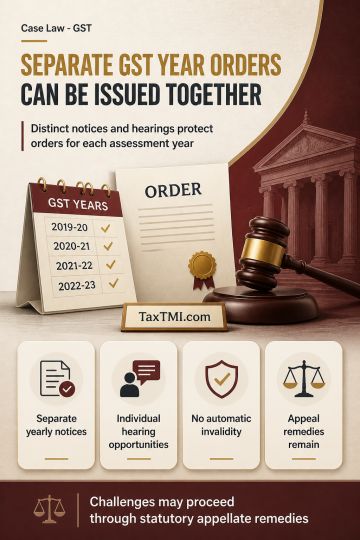
Separate assessment orders for different years remain valid when distinct notices and hearing opportunities prevent prejudice from combined proceeding...
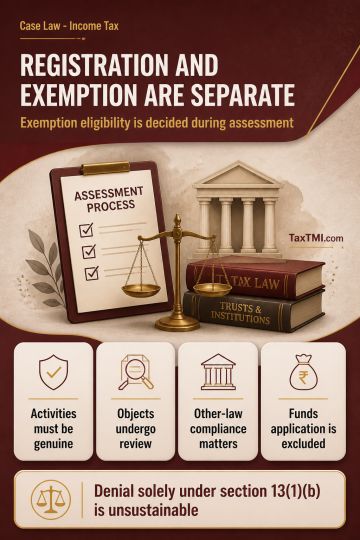
Defined public benefit can retain charitable character; registration renewal requires examining genuine activities and legal compliance, not surplus a...
Capital reduction is distinct from share buy-back, preventing buy-back tax; restructuring interest and related business deductions also survive scruti...
A review application is maintainable on (i) discovery of new and important evidence which could not be produced earlier despite due diligence, (ii) mistake or error apparent on the face of record, or (iii) any other sufficient reason. The Supreme Court held that review cannot be done unless a material error manifestly apparent on the face of the order would result in miscarriage of justice. Review proceedings are strictly confined to the ambit of Order 47 Rule 1 CPC. A party cannot repeat old arguments under the guise of a review petition. The power of review is distinct from appellate power to correct errors. In the present case, the HC found no error apparent on the record to warrant interference with its earlier order holding that the respondent is entitled to receive original non-relied documents u/s 67(3) of CGST Act and Rule 27 of Central Excise Rules 2017. Consequently, the review petition was dismissed.
A review application is maintainable on (i) discovery of new and important evidence which could not be produced earlier despite due diligence, (ii) mistake or error apparent on the face of record, or (iii) any other sufficient reason. The Supreme Court held that review cannot be done unless a material error manifestly apparent on the face of the order would result in miscarriage of justice. Review proceedings are strictly confined to the ambit of Order 47 Rule 1 CPC. A party cannot repeat old arguments under the guise of a review petition. The power of review is distinct from appellate power to correct errors. In the present case, the HC found no error apparent on the record to warrant interference with its earlier order holding that the respondent is entitled to receive original non-relied documents u/s 67(3) of CGST Act and Rule 27 of Central Excise Rules 2017. Consequently, the review petition was dismissed.
Note: It is a system-generated summary and is for quick reference only.
 TaxTMI
 of 4805















 Join Channel


 TaxTMI
