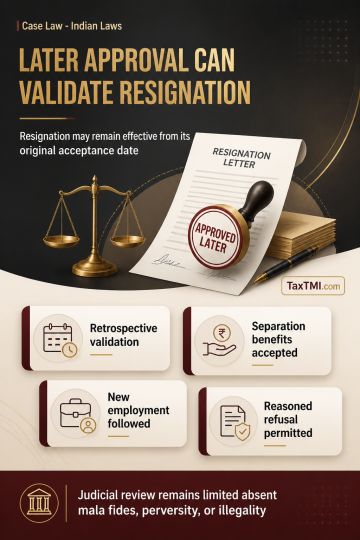
Ratification of resignation acceptance validates separation retrospectively, while withdrawal may be refused through reasoned administrative discretio...
Nature-dependent electricity contracts receive new Ind AS accounting, hedge designation, transition and financial-statement disclosure requirements fr...
Alternative GST remedy permitted protective writ intervention for ex parte adjudication, preserving independent appellate review of input tax credit d...
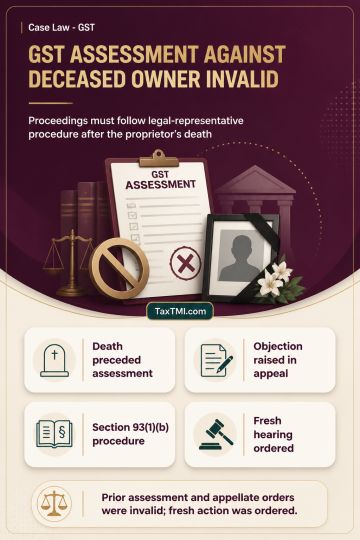
Assessment against deceased sole proprietor requires proceedings against the legal representative, rendering prior assessment and appellate orders inv...
Residential waste collection classification under SAC 999423 defeats composite-supply exemption where facilitating goods are not transferred to the lo...
A review application is maintainable on (i) discovery of new and important evidence which could not be produced earlier despite due diligence, (ii) mistake or error apparent on the face of record, or (iii) any other sufficient reason. The Supreme Court held that review cannot be done unless a material error manifestly apparent on the face of the order would result in miscarriage of justice. Review proceedings are strictly confined to the ambit of Order 47 Rule 1 CPC. A party cannot repeat old arguments under the guise of a review petition. The power of review is distinct from appellate power to correct errors. In the present case, the HC found no error apparent on the record to warrant interference with its earlier order holding that the respondent is entitled to receive original non-relied documents u/s 67(3) of CGST Act and Rule 27 of Central Excise Rules 2017. Consequently, the review petition was dismissed.
A review application is maintainable on (i) discovery of new and important evidence which could not be produced earlier despite due diligence, (ii) mistake or error apparent on the face of record, or (iii) any other sufficient reason. The Supreme Court held that review cannot be done unless a material error manifestly apparent on the face of the order would result in miscarriage of justice. Review proceedings are strictly confined to the ambit of Order 47 Rule 1 CPC. A party cannot repeat old arguments under the guise of a review petition. The power of review is distinct from appellate power to correct errors. In the present case, the HC found no error apparent on the record to warrant interference with its earlier order holding that the respondent is entitled to receive original non-relied documents u/s 67(3) of CGST Act and Rule 27 of Central Excise Rules 2017. Consequently, the review petition was dismissed.
Note: It is a system-generated summary and is for quick reference only.
 TaxTMI
 of 4796


















 Join Channel


 TaxTMI
