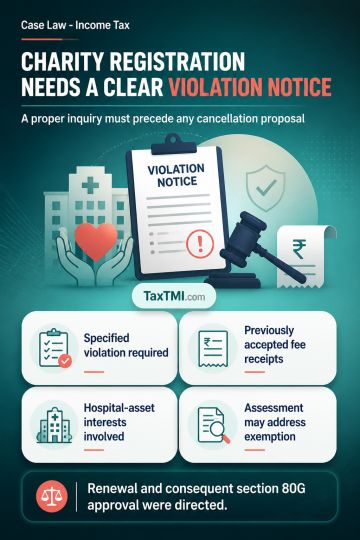
Charitable trust registration requires a specified-violation notice; settled cash deposits and related-party payments did not justify cancellation or ...
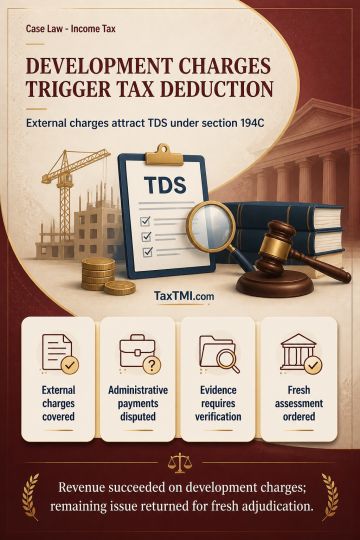
External development charges trigger TDS under section 194C, while disputed administrative payments require factual verification and fresh adjudicatio...
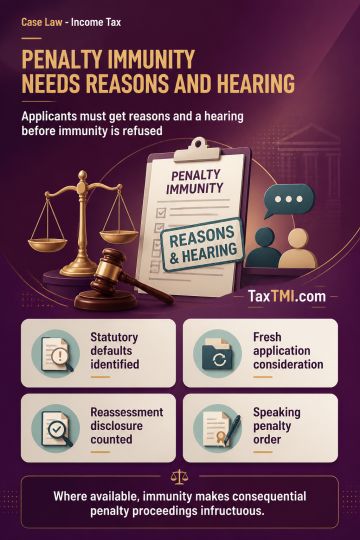
Section 270AA penalty immunity requires identified statutory defaults and a hearing before rejection; reassessment disclosure may constitute under-rep...
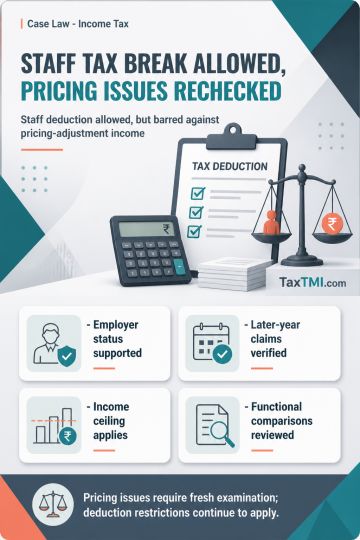
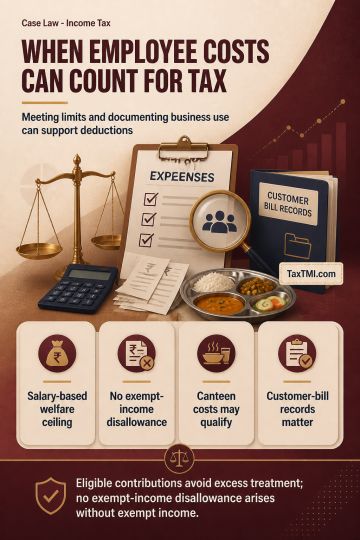
Section 80JJAA employee-cost deduction allowed for deployed staff but barred against transfer-pricing income enhancement, with pricing issues remanded...
Transfer-pricing methodology protects commercially genuine associated-enterprise payments, while pre-2016 secondary adjustments and related notional i...
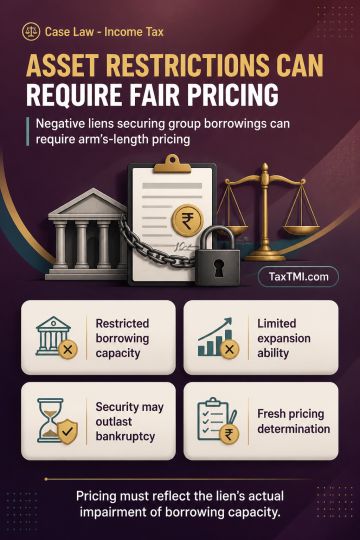
Negative liens over operating assets can constitute international transactions requiring arm's-length pricing reflecting restricted borrowing and expa...
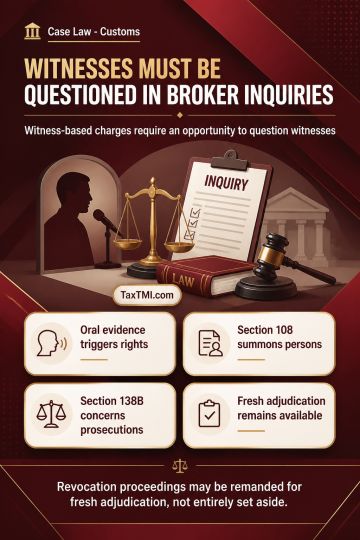
Cross-examination rights in Customs Broker revocation inquiries require witness examination; procedural denial may be cured through fresh adjudication...
Insolvency and BankruptcySeptember 7, 2024Case LawsAT
The summary focuses on the approval of a resolution plan by the Committee of Creditors (CoC) and the limited scope of judicial review by the adjudicating authority. The key points are: The decision of the CoC to approve a resolution plan with the requisite majority (66% vote share) is a collective business decision and is sacrosanct and binding on all stakeholders, irrespective of the composition of the CoC. The commercial wisdom of the CoC cannot be fettered. The adjudicating authority has limited jurisdiction in approving the resolution plan and cannot evaluate the merits or rationale underlying the CoC's commercial decision. Merely because there is a reduction in the claim of any creditor does not make the resolution plan violative of the law. Any clause in the resolution plan requiring creditors to take a haircut cannot be construed as violative of the relevant section. The adjudicating authority did not err in approving the resolution plan, and the appellate tribunal dismissed the appeal, finding no transgression causing serious miscarriage of justice.
The summary focuses on the approval of a resolution plan by the Committee of Creditors (CoC) and the limited scope of judicial review by the adjudicating authority. The key points are: The decision of the CoC to approve a resolution plan with the requisite majority (66% vote share) is a collective business decision and is sacrosanct and binding on all stakeholders, irrespective of the composition of the CoC. The commercial wisdom of the CoC cannot be fettered. The adjudicating authority has limited jurisdiction in approving the resolution plan and cannot evaluate the merits or rationale underlying the CoC's commercial decision. Merely because there is a reduction in the claim of any creditor does not make the resolution plan violative of the law. Any clause in the resolution plan requiring creditors to take a haircut cannot be construed as violative of the relevant section. The adjudicating authority did not err in approving the resolution plan, and the appellate tribunal dismissed the appeal, finding no transgression causing serious miscarriage of justice.
Note: It is a system-generated summary and is for quick reference only.
 TaxTMI
  TaxTMI
 of 4828















 Join Channel


