Service of notice and contractual debt acknowledgment preserved insolvency admission against a corporate guarantor despite limitation and natural just...
Original works exemption excludes standalone boulder transportation, leaving subcontracted railway-project transport services subject to service tax l...
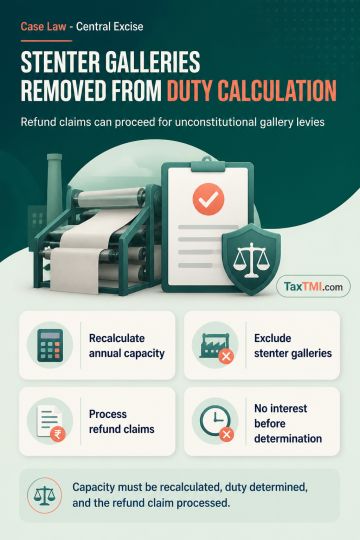
Annual production capacity determinations excluding stenter galleries support refunds for unconstitutional excise levies without an unjust-enrichment ...
Vicarious liability for cheque dishonour requires specific allegations of responsibility and cheque signatory; generic director allegations cannot sus...
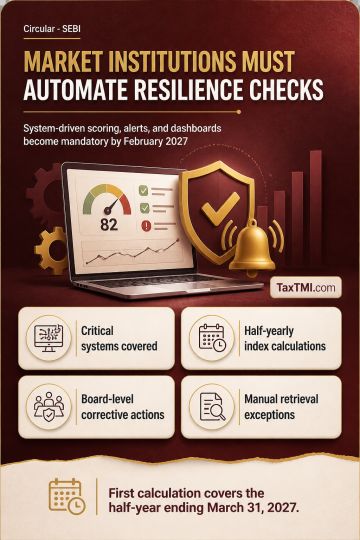
IT Resilience Index requires market infrastructure institutions to automate resilience scoring, early warnings, and continuous service-delivery monito...
The case pertains to the valuation of imported goods, specifically 1,2-Benzisothiazolin-3-ONE 85% (BIT PASTE 85%) originating from China. The appellant challenged the rejection of the declared transaction cost and the redetermination of assessable value u/s 17(5) of the Customs Act, 1962, as well as the enhancement of the assessable value based on contemporaneous import prices. The appellant submitted relevant bill of entries and literature indicating an explosion in Xiangshui Industrial Park, Yancheng, Jiangsu, which caused a temporary spike in prices from August 2019 to April 2020, before cooling down. The Appellate Tribunal found the appellant's explanation reasonable and set aside the impugned order, allowing the appeal.
The case pertains to the valuation of imported goods, specifically 1,2-Benzisothiazolin-3-ONE 85% (BIT PASTE 85%) originating from China. The appellant challenged the rejection of the declared transaction cost and the redetermination of assessable value u/s 17(5) of the Customs Act, 1962, as well as the enhancement of the assessable value based on contemporaneous import prices. The appellant submitted relevant bill of entries and literature indicating an explosion in Xiangshui Industrial Park, Yancheng, Jiangsu, which caused a temporary spike in prices from August 2019 to April 2020, before cooling down. The Appellate Tribunal found the appellant's explanation reasonable and set aside the impugned order, allowing the appeal.
Note: It is a system-generated summary and is for quick reference only.
 TaxTMI
  TaxTMI
 of 4828








 Join Channel