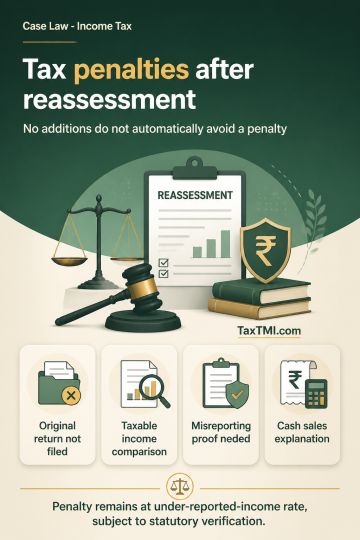
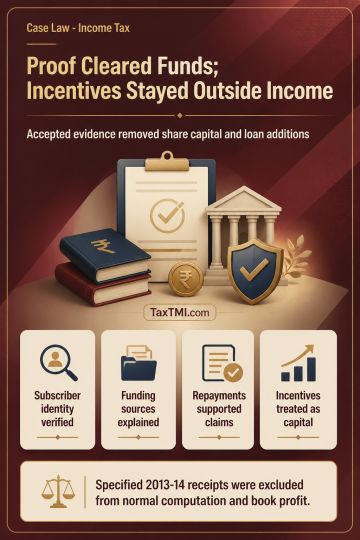
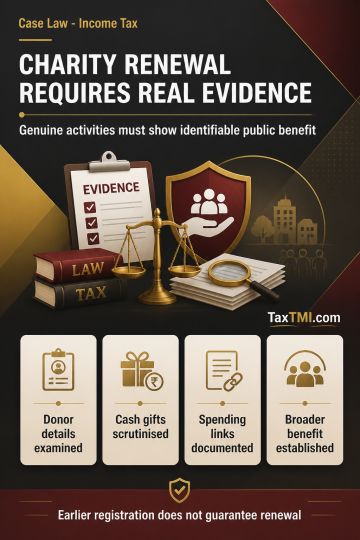
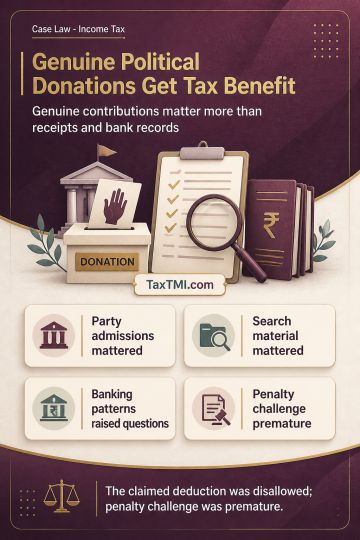
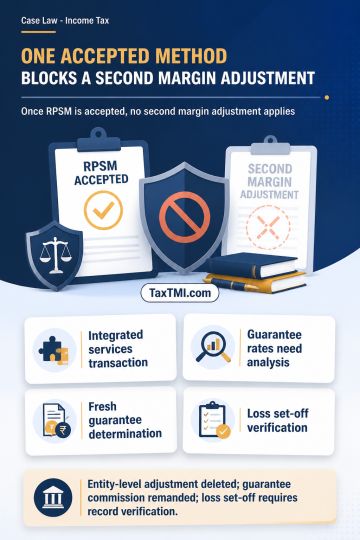
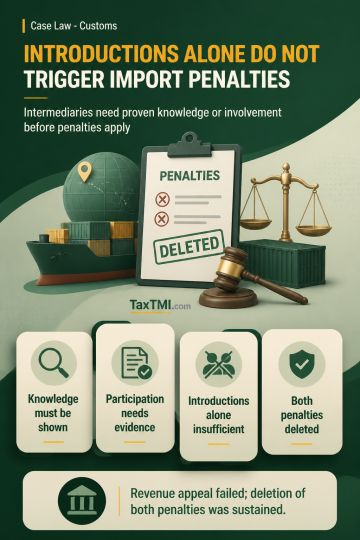
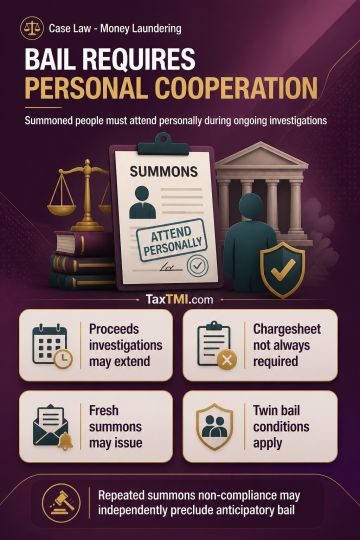
Under-reporting on a first reassessment return attracts penalty, while enhanced misreporting penalty requires proof of a statutory misreporting catego...
Form 26AS evidence requires successor-entity accounting verification after business transfer, while invoice-supported related-party advertising expend...
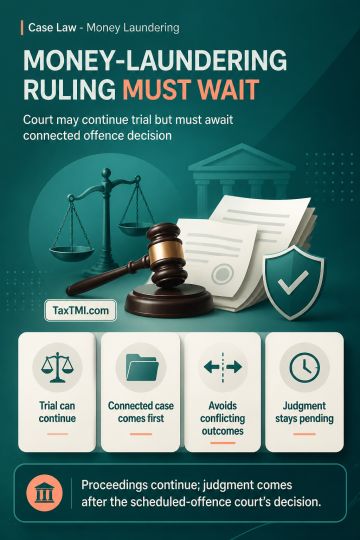
Money-laundering judgment timing requires awaiting the scheduled-offence decision despite continuation of the underlying trial where outcomes directly...
Page of 4921
Press 'Enter' after typing page number.
141 to 160 of 98411 Results
❮
❯
❯❯
0 / 200
Expand Note
Add to Folder
No Folders have been created
+
Are you sure you want to delete "My most important" ?
The court dismissed the petition challenging the order granting a three-month extension to hold the Annual General Meeting. The respondent No. 1 did not spell out 'special reasons' for allowing the extension as mandated by Section 96 of the Act. However, the reasons were outlined in the request letter by respondent No. 2. The court held that the sufficiency of reasons cannot be assessed by respondent No. 1 unless evidence of ulterior motives or detriment to stakeholders is presented. The petitioners failed to demonstrate exceptional grounds for rejecting the extension. Issues regarding mismanagement should have been addressed by approaching the Tribunal u/s 241 for oppression or removal of directors. The Act does not require shareholders to be heard before granting an extension.
The court dismissed the petition challenging the order granting a three-month extension to hold the Annual General Meeting. The respondent No. 1 did not spell out 'special reasons' for allowing the extension as mandated by Section 96 of the Act. However, the reasons were outlined in the request letter by respondent No. 2. The court held that the sufficiency of reasons cannot be assessed by respondent No. 1 unless evidence of ulterior motives or detriment to stakeholders is presented. The petitioners failed to demonstrate exceptional grounds for rejecting the extension. Issues regarding mismanagement should have been addressed by approaching the Tribunal u/s 241 for oppression or removal of directors. The Act does not require shareholders to be heard before granting an extension.
Note: It is a system-generated summary and is for quick reference only.
 TaxTMI
  TaxTMI
 of 4921