Defined public benefit can retain charitable character; registration renewal requires examining genuine activities and legal compliance, not surplus a...
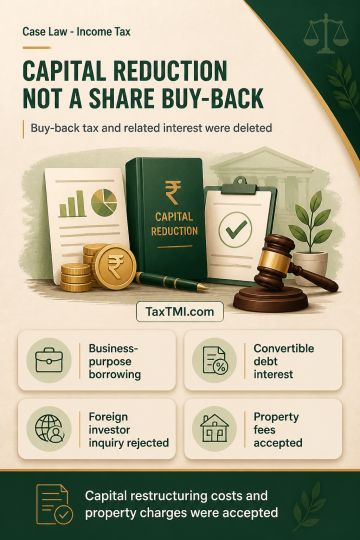
Capital reduction is distinct from share buy-back, preventing buy-back tax; restructuring interest and related business deductions also survive scruti...
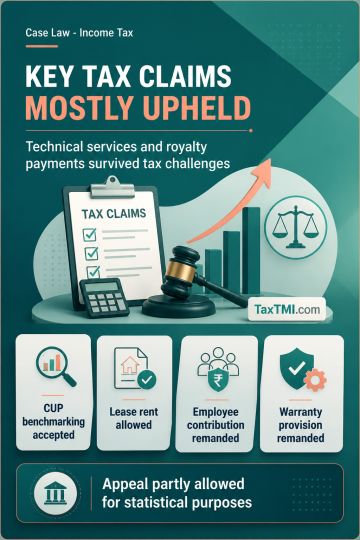
Transfer pricing and tax deductions upheld on established principles, while employee contributions and warranty provisions returned for fresh examinat...
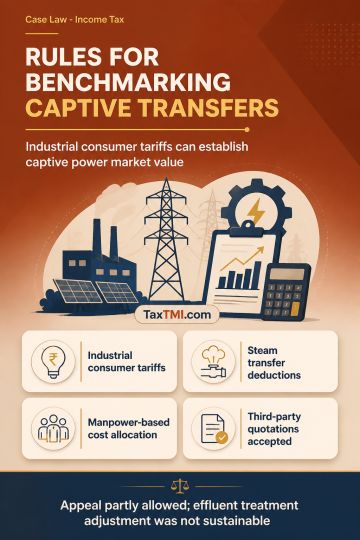
Captive transfer pricing relies on industrial consumer tariffs, while genuine quotations can benchmark effluent treatment transfers under the Other Me...
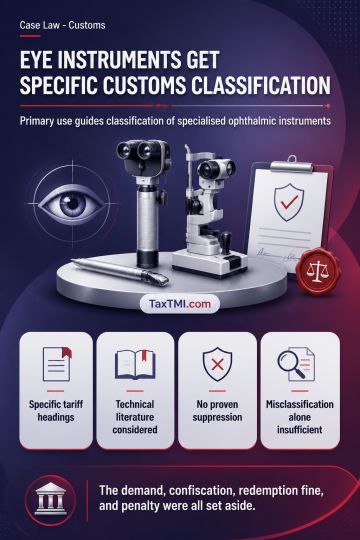
Specific tariff classification for ophthalmic instruments and extended limitation principles determine the treatment of duty demands, confiscation, an...
Integrated golf function determines classification, placing launch monitors and simulators under other golf equipment rather than measuring instrument...
Depreciation on glow sign boards and oxygen gas cylinders was rejected by the Assessing Officer, holding that the transaction on the last day of the accounting year cannot constitute business, and glow sign boards were advertising material, not plant. The ITAT held that sale proceeds of an asset on which deduction u/s 32(1)(ii) was claimed and allowed are required to be taxed as short-term capital gain u/s 50. The Supreme Court decision in Nectar Beverages case clarified that bottles and crates purchased before 31.03.1995 did not form part of the block of assets, and profits on their sale were not taxable as balancing charge u/s 41(1) or Section 50. However, for bottles and crates purchased after 01.04.1995, due to deletion of proviso to Section 31(1)(ii), such assets formed part of the block of assets and were exigible to capital gains tax u/s 50. The question of law was answered in favor of the assessee, holding that the Tribunal was incorrect in ruling that sale proceeds of an asset on which deduction u/s 32(1)(ii) was claimed and allowed are required to be taxed as short-term capital gain u/s 50.
Depreciation on glow sign boards and oxygen gas cylinders was rejected by the Assessing Officer, holding that the transaction on the last day of the accounting year cannot constitute business, and glow sign boards were advertising material, not plant. The ITAT held that sale proceeds of an asset on which deduction u/s 32(1)(ii) was claimed and allowed are required to be taxed as short-term capital gain u/s 50. The Supreme Court decision in Nectar Beverages case clarified that bottles and crates purchased before 31.03.1995 did not form part of the block of assets, and profits on their sale were not taxable as balancing charge u/s 41(1) or Section 50. However, for bottles and crates purchased after 01.04.1995, due to deletion of proviso to Section 31(1)(ii), such assets formed part of the block of assets and were exigible to capital gains tax u/s 50. The question of law was answered in favor of the assessee, holding that the Tribunal was incorrect in ruling that sale proceeds of an asset on which deduction u/s 32(1)(ii) was claimed and allowed are required to be taxed as short-term capital gain u/s 50.
Note: It is a system-generated summary and is for quick reference only.
 TaxTMI
 of 4794







 Join Channel


 TaxTMI
