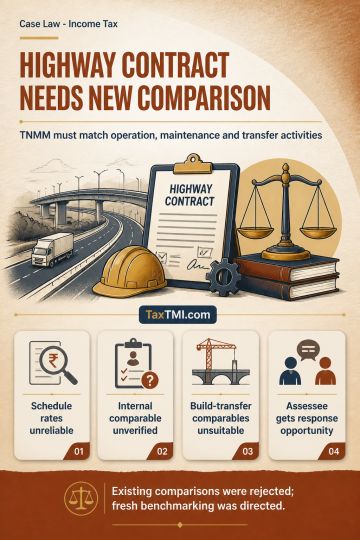
Functional comparability under TNMM requires highway contract benchmarks to reflect operation, maintenance and transfer activities, requiring fresh be...
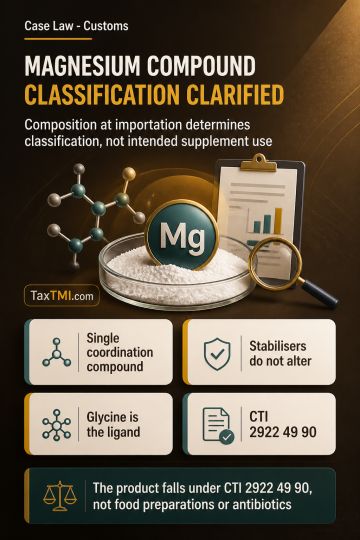
Objective characteristics govern magnesium bis-glycinate chelate classification as an amino-acid coordination compound, not a food preparation or anti...
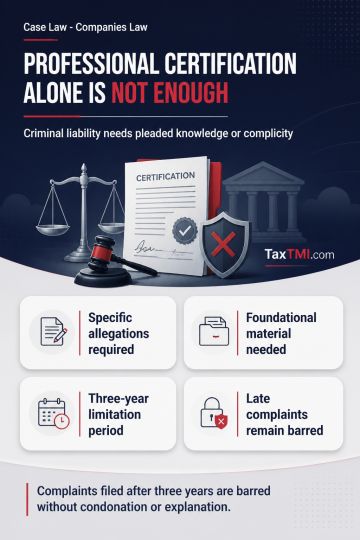
Independent professional certification requires pleaded knowledge or complicity for criminal liability; untimely complaints remain barred by limitatio...
Depreciation on glow sign boards and oxygen gas cylinders was rejected by the Assessing Officer, holding that the transaction on the last day of the accounting year cannot constitute business, and glow sign boards were advertising material, not plant. The ITAT held that sale proceeds of an asset on which deduction u/s 32(1)(ii) was claimed and allowed are required to be taxed as short-term capital gain u/s 50. The Supreme Court decision in Nectar Beverages case clarified that bottles and crates purchased before 31.03.1995 did not form part of the block of assets, and profits on their sale were not taxable as balancing charge u/s 41(1) or Section 50. However, for bottles and crates purchased after 01.04.1995, due to deletion of proviso to Section 31(1)(ii), such assets formed part of the block of assets and were exigible to capital gains tax u/s 50. The question of law was answered in favor of the assessee, holding that the Tribunal was incorrect in ruling that sale proceeds of an asset on which deduction u/s 32(1)(ii) was claimed and allowed are required to be taxed as short-term capital gain u/s 50.
Depreciation on glow sign boards and oxygen gas cylinders was rejected by the Assessing Officer, holding that the transaction on the last day of the accounting year cannot constitute business, and glow sign boards were advertising material, not plant. The ITAT held that sale proceeds of an asset on which deduction u/s 32(1)(ii) was claimed and allowed are required to be taxed as short-term capital gain u/s 50. The Supreme Court decision in Nectar Beverages case clarified that bottles and crates purchased before 31.03.1995 did not form part of the block of assets, and profits on their sale were not taxable as balancing charge u/s 41(1) or Section 50. However, for bottles and crates purchased after 01.04.1995, due to deletion of proviso to Section 31(1)(ii), such assets formed part of the block of assets and were exigible to capital gains tax u/s 50. The question of law was answered in favor of the assessee, holding that the Tribunal was incorrect in ruling that sale proceeds of an asset on which deduction u/s 32(1)(ii) was claimed and allowed are required to be taxed as short-term capital gain u/s 50.
Note: It is a system-generated summary and is for quick reference only.
 TaxTMI
 of 4782






 Join Channel


 TaxTMI