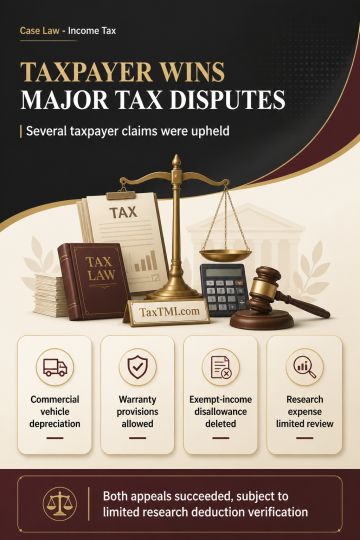
Commercial vehicle depreciation, scientifically determined warranty provisions and exempt-income disallowances were resolved in favour of the taxpayer...
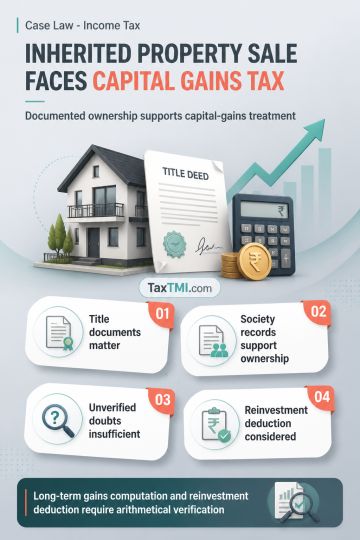
Inherited property sale proceeds require capital-gains treatment where ownership is supported by evidence, not suspicion or unverified signature doubt...
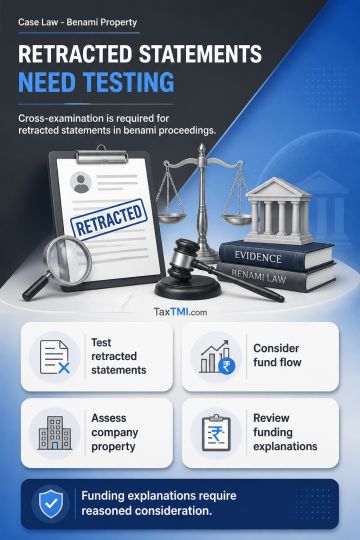
Cross-examination of retracted statements is essential where foundational evidence supports a benami allegation and documented funding explanations re...
Capital-goods exemption covers plant-modernisation accessories, while the import restriction applies only to earlier capital-goods components and spar...
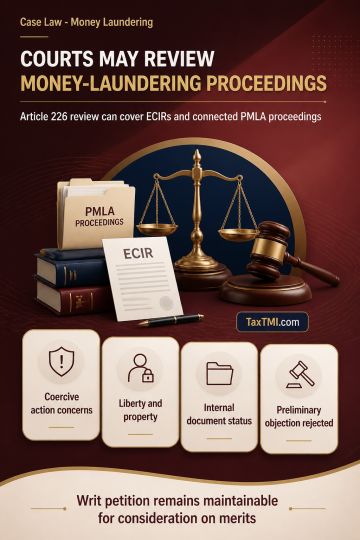
Constitutional judicial review permits challenges to ECIRs and connected money-laundering proceedings where coercive action affects fundamental intere...
The High Court held that the reassessment notice issued beyond the period of limitation was invalid and without jurisdiction. The impugned notice itself was illegal, and there was no foundation for an assessment order based on a time-barred notice u/s 148. The assessment order passed u/s 148A(d) was also barred by limitation as per the first proviso to Section 149. The inherent illegality of the time-barred notice u/s 148 percolated into the assessment order, rendering it an incurable defect. The Assessing Officer proceeded without jurisdiction, possibly applying the amended provisions of Section 149 erroneously. An order that is void ab initio cannot be saved, and acquiescence to an illegal order cannot render it legal. The Court allowed the assessee's appeal, holding that giving effect to an illegal and void order cannot be permitted.
The High Court held that the reassessment notice issued beyond the period of limitation was invalid and without jurisdiction. The impugned notice itself was illegal, and there was no foundation for an assessment order based on a time-barred notice u/s 148. The assessment order passed u/s 148A(d) was also barred by limitation as per the first proviso to Section 149. The inherent illegality of the time-barred notice u/s 148 percolated into the assessment order, rendering it an incurable defect. The Assessing Officer proceeded without jurisdiction, possibly applying the amended provisions of Section 149 erroneously. An order that is void ab initio cannot be saved, and acquiescence to an illegal order cannot render it legal. The Court allowed the assessee's appeal, holding that giving effect to an illegal and void order cannot be permitted.
Note: It is a system-generated summary and is for quick reference only.
 TaxTMI
 of 4782









 Join Channel


 TaxTMI
