Statutory transfer formalities invalidated alleged share and property transfers, while retrospective record manipulation constituted oppression and mi...
Provisional attachment of laundered funds and equivalent-value property sustained, with statutory protection limited to pension, gratuity and providen...
Insolvency moratorium does not shield company officers from cheque dishonour prosecution for liability arising before corporate insolvency proceedings...
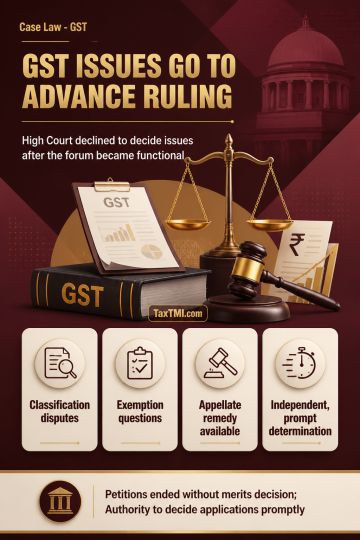
Advance-ruling mechanism governs pending GST classification, exemption and taxability disputes, limiting writ review once the specialised forum functi...
Page of 4788
Press 'Enter' after typing page number.
581 to 600 of 95752 Results
❮
❯
❯❯
0 / 200
Expand Note
Add to Folder
No Folders have been created
+
Are you sure you want to delete "My most important" ?
Charitable trust provided educational grants to Indian students for pursuing higher education abroad. The issue pertained to whether such grants constituted "application of income" within Indian territories as required for tax exemption u/s 11. It was held that the application of income was complete when the trust disbursed grants in India to Indian students, despite their subsequent utilization for education outside India. The grants facilitated education of Indian persons, fulfilling the charitable purpose within India itself. The revenue's reliance on contrary precedents was incorrect as the application occurred in India for Indian beneficiaries. The Tribunal upheld the exemption, dismissing the revenue's appeal as no new material warranted interference with the findings that disbursal of scholarships in India for overseas study amounted to application of income for charitable purposes in India.
Charitable trust provided educational grants to Indian students for pursuing higher education abroad. The issue pertained to whether such grants constituted "application of income" within Indian territories as required for tax exemption u/s 11. It was held that the application of income was complete when the trust disbursed grants in India to Indian students, despite their subsequent utilization for education outside India. The grants facilitated education of Indian persons, fulfilling the charitable purpose within India itself. The revenue's reliance on contrary precedents was incorrect as the application occurred in India for Indian beneficiaries. The Tribunal upheld the exemption, dismissing the revenue's appeal as no new material warranted interference with the findings that disbursal of scholarships in India for overseas study amounted to application of income for charitable purposes in India.
Note: It is a system-generated summary and is for quick reference only.
 TaxTMI
 of 4788















 Join Channel


 TaxTMI