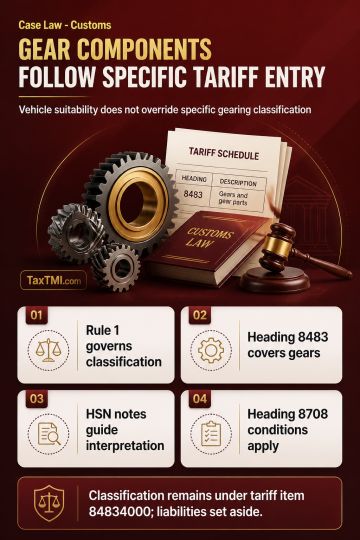
Tariff classification of vehicle gear components follows the specific gearing entry, displacing motor-vehicle parts classification and related liabili...
Necessary-party requirements limit impleadment of independent entities, while deferred consideration does not create an appealable adverse determinati...
Food supplement classification requires common parlance and authoritative tests, preventing treatment as proprietary Ayurvedic medicines without suppo...
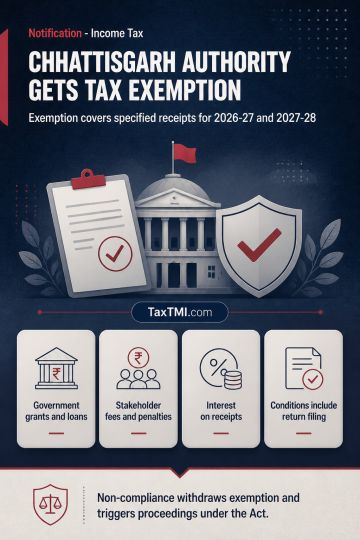
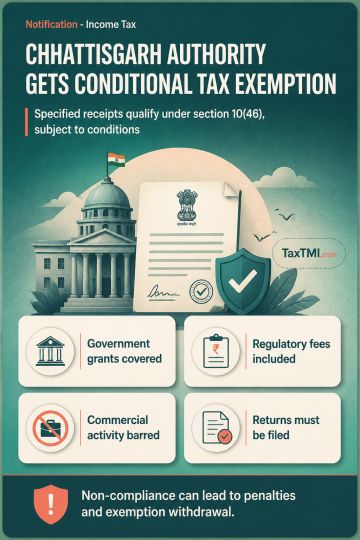
Specified regulatory authority income receives conditional tax exemption, subject to non-commercial activity, unchanged income character, and return f...
Tax exemption for regulatory authority income applies retrospectively, subject to non-commercial activity, unchanged income sources, and return-filing...
Charitable trust provided educational grants to Indian students for pursuing higher education abroad. The issue pertained to whether such grants constituted "application of income" within Indian territories as required for tax exemption u/s 11. It was held that the application of income was complete when the trust disbursed grants in India to Indian students, despite their subsequent utilization for education outside India. The grants facilitated education of Indian persons, fulfilling the charitable purpose within India itself. The revenue's reliance on contrary precedents was incorrect as the application occurred in India for Indian beneficiaries. The Tribunal upheld the exemption, dismissing the revenue's appeal as no new material warranted interference with the findings that disbursal of scholarships in India for overseas study amounted to application of income for charitable purposes in India.
Charitable trust provided educational grants to Indian students for pursuing higher education abroad. The issue pertained to whether such grants constituted "application of income" within Indian territories as required for tax exemption u/s 11. It was held that the application of income was complete when the trust disbursed grants in India to Indian students, despite their subsequent utilization for education outside India. The grants facilitated education of Indian persons, fulfilling the charitable purpose within India itself. The revenue's reliance on contrary precedents was incorrect as the application occurred in India for Indian beneficiaries. The Tribunal upheld the exemption, dismissing the revenue's appeal as no new material warranted interference with the findings that disbursal of scholarships in India for overseas study amounted to application of income for charitable purposes in India.
Note: It is a system-generated summary and is for quick reference only.
 TaxTMI
 of 4782














 Join Channel


 TaxTMI
