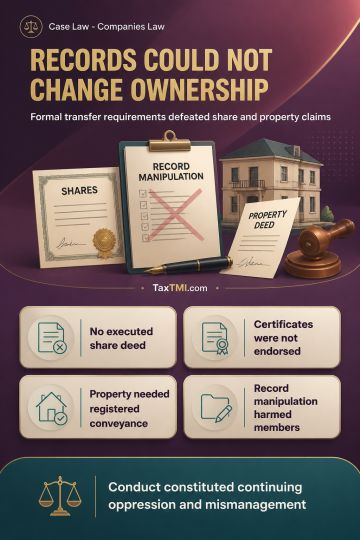
Statutory transfer formalities invalidated alleged share and property transfers, while retrospective record manipulation constituted oppression and mi...
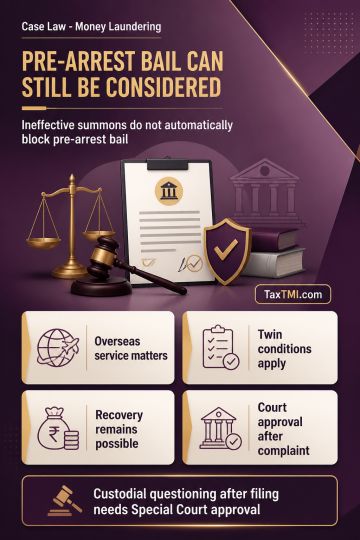
Provisional attachment of laundered funds and equivalent-value property sustained, with statutory protection limited to pension, gratuity and providen...
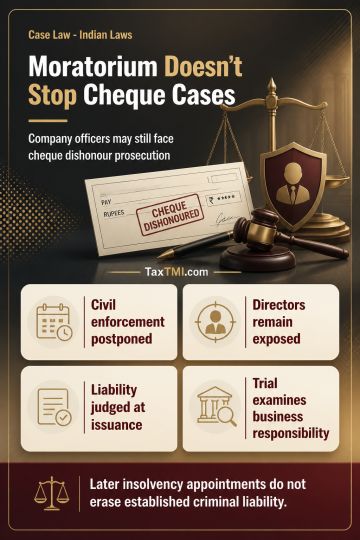
Insolvency moratorium does not shield company officers from cheque dishonour prosecution for liability arising before corporate insolvency proceedings...
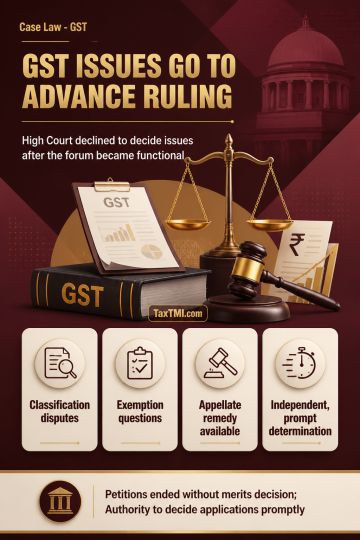
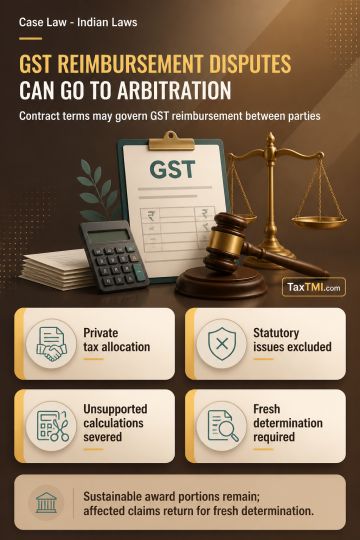
Advance-ruling mechanism governs pending GST classification, exemption and taxability disputes, limiting writ review once the specialised forum functi...
Page of 4788
Press 'Enter' after typing page number.
581 to 600 of 95752 Results
❮
❯
❯❯
0 / 200
Expand Note
Add to Folder
No Folders have been created
+
Are you sure you want to delete "My most important" ?
The assessee filed an original return u/s 139(4) and later discovered an omission, wrongly claiming deduction u/s 57 for interest paid on borrowed capital under 'Income from Other Sources' instead of 'Business Income'. As per Section 139(5), a revised return can be filed within one year from the end of the relevant assessment year or before completion of assessment, whichever is earlier. The assessee filed a revised return within the stipulated timeframe, correctly claiming the deduction under 'Business Income'. The CIT(A) decided the matter without affording an opportunity to the assessee. The ITAT set aside the matter to the CIT(A) to decide afresh after providing reasonable opportunity to the assessee, allowing the appeal for statistical purposes. The revised return needs to be considered to examine the claim of deduction.
The assessee filed an original return u/s 139(4) and later discovered an omission, wrongly claiming deduction u/s 57 for interest paid on borrowed capital under 'Income from Other Sources' instead of 'Business Income'. As per Section 139(5), a revised return can be filed within one year from the end of the relevant assessment year or before completion of assessment, whichever is earlier. The assessee filed a revised return within the stipulated timeframe, correctly claiming the deduction under 'Business Income'. The CIT(A) decided the matter without affording an opportunity to the assessee. The ITAT set aside the matter to the CIT(A) to decide afresh after providing reasonable opportunity to the assessee, allowing the appeal for statistical purposes. The revised return needs to be considered to examine the claim of deduction.
Note: It is a system-generated summary and is for quick reference only.
 TaxTMI
 of 4788









 Join Channel


 TaxTMI