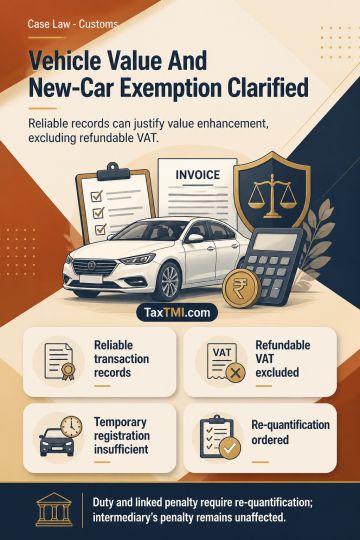
Transaction value rejection requires reliable corroboration; refundable VAT is excluded and temporary registration does not defeat new-vehicle exempti...
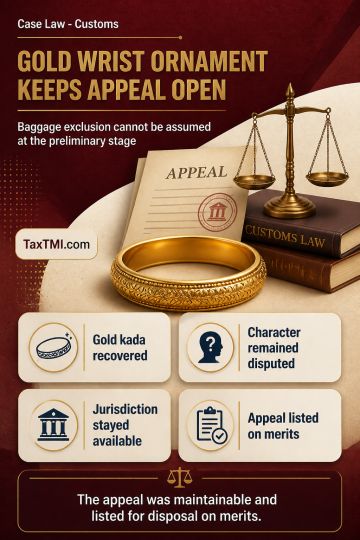
Appellate jurisdiction remains available where a wrist-worn gold ornament cannot conclusively be characterised as imported baggage at the preliminary ...
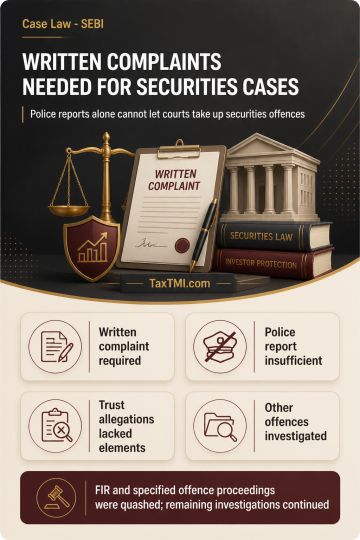
Written complaint requirement bars cognizance on police reports for securities offences, while unsupported breach of trust and cheating allegations fa...
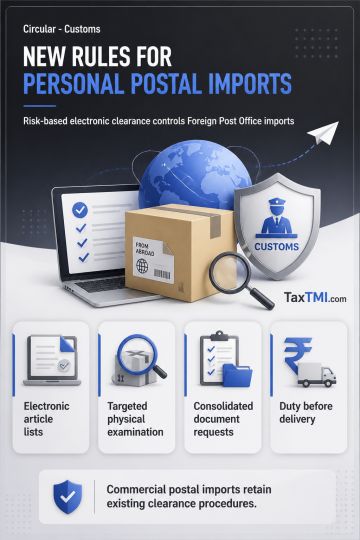
Risk-based postal import clearance standardises electronic assessment, document requests, duty realisation and delivery controls at Foreign Post Offic...
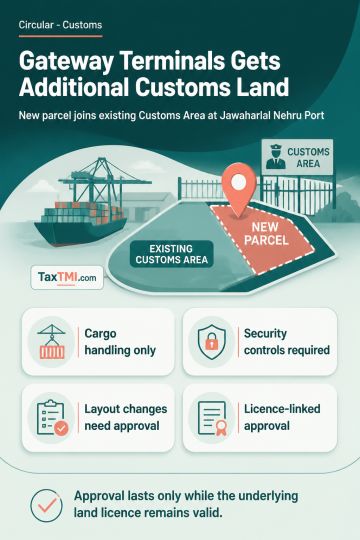
Customs Cargo Service Provider appointment extends custodianship to additional terminal land, subject to cargo-control, security and licence condition...
The appellant wrongly availed Cenvat credit on input services for unsold flats after issuance of completion certificate, contravening Rules 6(3) and 6(3A) of the Cenvat Credit Rules, 2004. Section 73(2) of the Finance Act, 1994, read with Rule 14 of the Cenvat Credit Rules, 2004, was invoked for extended period of limitation, interest, and penalty. The appellant admitted that after receiving the completion certificate, the building became immovable property, and booking receipts were for sale of property, not service. The appellant had the option to take proportionate credit for sold flats and reverse the balance for unsold flats. Cenvat credit eligibility has a direct nexus with tax payment liability. Since the appellant had no service tax liability for unsold flats, they were ineligible to retain the availed Cenvat credit. The Tribunal affirmed the invocation of extended period, penalty, and interest, as the appellant suppressed material facts with intent to evade service tax liability. The appeal was dismissed.
The appellant wrongly availed Cenvat credit on input services for unsold flats after issuance of completion certificate, contravening Rules 6(3) and 6(3A) of the Cenvat Credit Rules, 2004. Section 73(2) of the Finance Act, 1994, read with Rule 14 of the Cenvat Credit Rules, 2004, was invoked for extended period of limitation, interest, and penalty. The appellant admitted that after receiving the completion certificate, the building became immovable property, and booking receipts were for sale of property, not service. The appellant had the option to take proportionate credit for sold flats and reverse the balance for unsold flats. Cenvat credit eligibility has a direct nexus with tax payment liability. Since the appellant had no service tax liability for unsold flats, they were ineligible to retain the availed Cenvat credit. The Tribunal affirmed the invocation of extended period, penalty, and interest, as the appellant suppressed material facts with intent to evade service tax liability. The appeal was dismissed.
Note: It is a system-generated summary and is for quick reference only.
 TaxTMI
 of 4784



 Join Channel


 TaxTMI