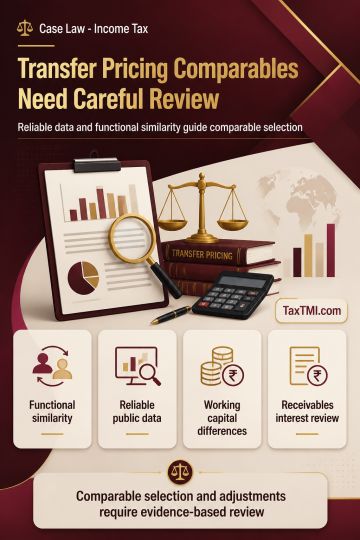
Transfer pricing comparability requires functional alignment, reliable financial data, and careful review of working capital and receivables adjustmen...
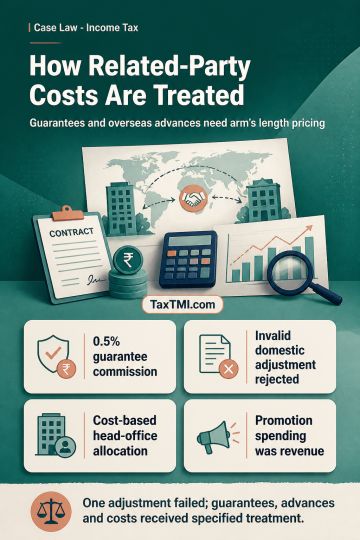
Transfer pricing rules require benchmarking corporate guarantees and associated-enterprise advances, while invalid domestic-transaction adjustments ca...
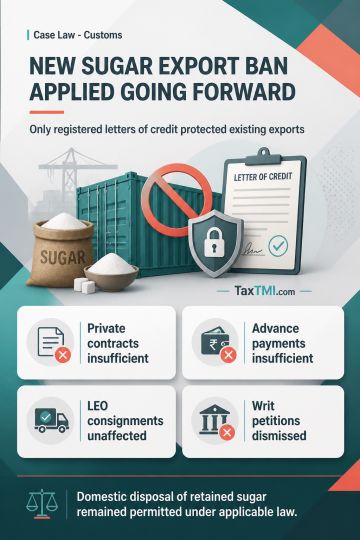
Prospective sugar export prohibition required registered letters of credit; private contracts and export quotas created no enforceable continuation ri...
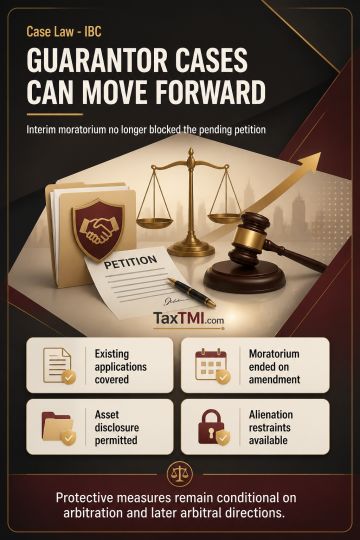
Retroactive interim-moratorium exclusion permits protective asset disclosure and preservation measures against personal guarantors pending arbitration...
The appellant wrongly availed Cenvat credit on input services for unsold flats after issuance of completion certificate, contravening Rules 6(3) and 6(3A) of the Cenvat Credit Rules, 2004. Section 73(2) of the Finance Act, 1994, read with Rule 14 of the Cenvat Credit Rules, 2004, was invoked for extended period of limitation, interest, and penalty. The appellant admitted that after receiving the completion certificate, the building became immovable property, and booking receipts were for sale of property, not service. The appellant had the option to take proportionate credit for sold flats and reverse the balance for unsold flats. Cenvat credit eligibility has a direct nexus with tax payment liability. Since the appellant had no service tax liability for unsold flats, they were ineligible to retain the availed Cenvat credit. The Tribunal affirmed the invocation of extended period, penalty, and interest, as the appellant suppressed material facts with intent to evade service tax liability. The appeal was dismissed.
The appellant wrongly availed Cenvat credit on input services for unsold flats after issuance of completion certificate, contravening Rules 6(3) and 6(3A) of the Cenvat Credit Rules, 2004. Section 73(2) of the Finance Act, 1994, read with Rule 14 of the Cenvat Credit Rules, 2004, was invoked for extended period of limitation, interest, and penalty. The appellant admitted that after receiving the completion certificate, the building became immovable property, and booking receipts were for sale of property, not service. The appellant had the option to take proportionate credit for sold flats and reverse the balance for unsold flats. Cenvat credit eligibility has a direct nexus with tax payment liability. Since the appellant had no service tax liability for unsold flats, they were ineligible to retain the availed Cenvat credit. The Tribunal affirmed the invocation of extended period, penalty, and interest, as the appellant suppressed material facts with intent to evade service tax liability. The appeal was dismissed.
Note: It is a system-generated summary and is for quick reference only.
 TaxTMI
 of 4789





 Join Channel


 TaxTMI
