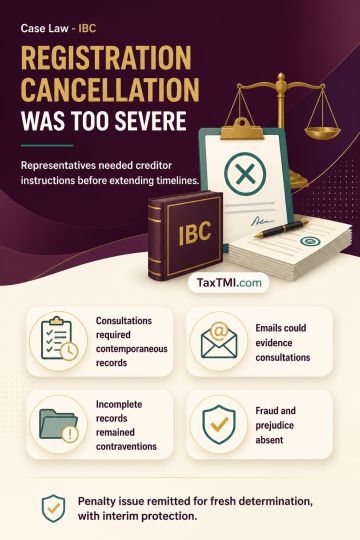
Disciplinary proportionality requires penalties for Authorised Representative misconduct to match proven harm, leading to reconsideration of registrat...
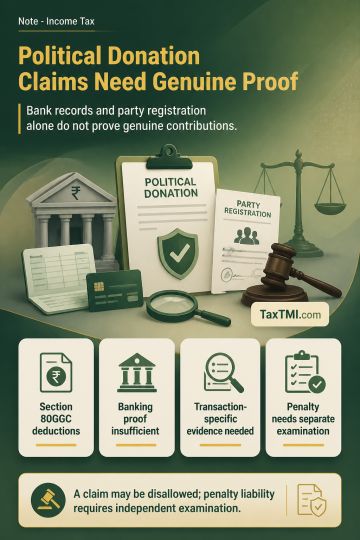
Political contribution deductions require genuine transactions; banking records and party registration alone cannot defeat evidence of accommodation e...
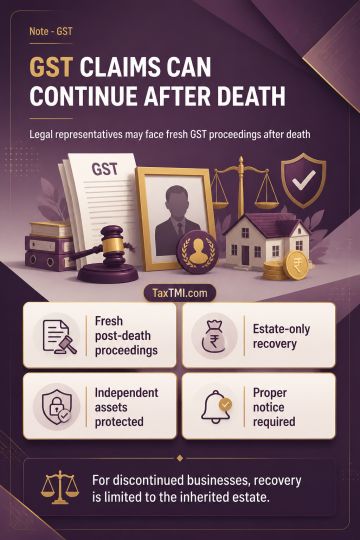
Post-death GST liability permits fresh proceedings against legal representatives, while discontinued-business recovery remains limited to the inherite...
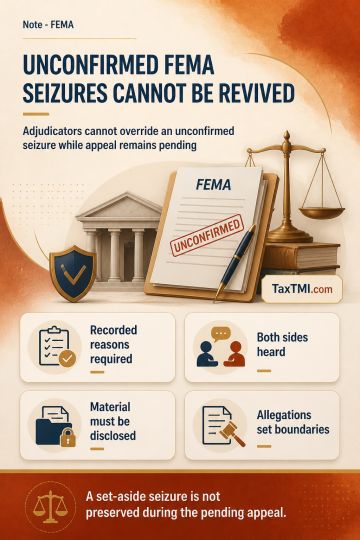
Non-confirmation of FEMA seizure prevents adjudicators from overriding pending appellate findings on recorded reasons and suspected foreign asset hold...
Page of 4920
Press 'Enter' after typing page number.
81 to 100 of 98394 Results
❮
❯
❯❯
0 / 200
Expand Note
Add to Folder
No Folders have been created
+
Are you sure you want to delete "My most important" ?
Reassessment proceedings were initiated based on the belief that the assessee failed to disclose all material facts necessary for completing the assessment u/s 143(3) of the Income Tax Act, 1961. The Appellate Tribunal, being the ultimate fact-finding authority, upheld the Assessing Officer's decision to reopen the assessment, concluding that the assessee did not furnish the required information. The High Court held that no substantial question of law arises for consideration, as the Appellate Tribunal's factual findings cannot be disturbed u/s 260A, which is limited to substantial questions of law. The Appellate Tribunal's role as the ultimate fact-finding authority was affirmed.
Reassessment proceedings were initiated based on the belief that the assessee failed to disclose all material facts necessary for completing the assessment u/s 143(3) of the Income Tax Act, 1961. The Appellate Tribunal, being the ultimate fact-finding authority, upheld the Assessing Officer's decision to reopen the assessment, concluding that the assessee did not furnish the required information. The High Court held that no substantial question of law arises for consideration, as the Appellate Tribunal's factual findings cannot be disturbed u/s 260A, which is limited to substantial questions of law. The Appellate Tribunal's role as the ultimate fact-finding authority was affirmed.
Note: It is a system-generated summary and is for quick reference only.
 TaxTMI
  TaxTMI
 of 4920