Service of notice and contractual debt acknowledgment preserved insolvency admission against a corporate guarantor despite limitation and natural just...
Original works exemption excludes standalone boulder transportation, leaving subcontracted railway-project transport services subject to service tax l...
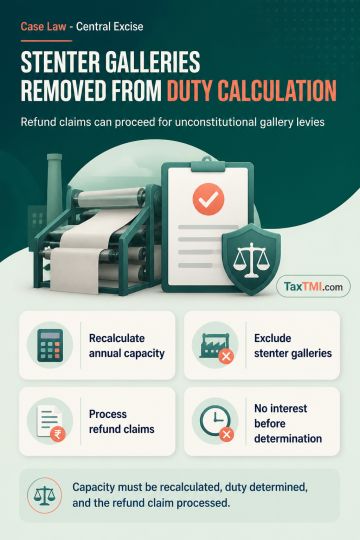
Annual production capacity determinations excluding stenter galleries support refunds for unconstitutional excise levies without an unjust-enrichment ...
Vicarious liability for cheque dishonour requires specific allegations of responsibility and cheque signatory; generic director allegations cannot sus...
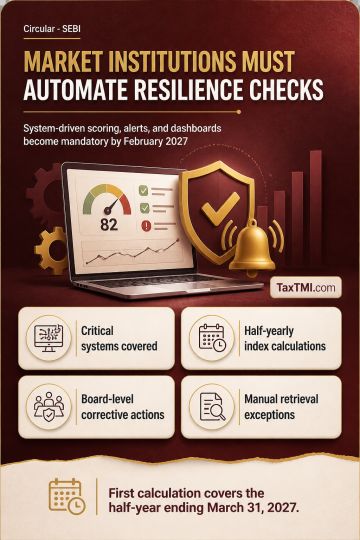
IT Resilience Index requires market infrastructure institutions to automate resilience scoring, early warnings, and continuous service-delivery monito...
Taxability of employee cost reimbursements as Fee for Technical Services (FTS) under the India-Japan tax treaty. The assessee, a Japanese company, seconded employees (expats) to its Indian associated enterprises (AEs). The Revenue contended that the expats rendered managerial/technical services, and the reimbursements received were taxable as FTS. However, the assessee argued that the expats worked as employees of the Indian AEs, and the payments were pure salary reimbursements. The Tribunal examined the terms of the secondment agreements and memorandums of understanding, which indicated that the expats worked under the direct control and supervision of the Indian AEs. The Tribunal held that no evidence was provided to substantiate the Revenue's claim of managerial/consultancy services rendered. The reimbursements were mere cross-charges of salary costs, taxable as salary income in the hands of the expat employees, not as FTS in the hands of the assessee. Consequently, the addition of FTS was deleted.
Taxability of employee cost reimbursements as Fee for Technical Services (FTS) under the India-Japan tax treaty. The assessee, a Japanese company, seconded employees (expats) to its Indian associated enterprises (AEs). The Revenue contended that the expats rendered managerial/technical services, and the reimbursements received were taxable as FTS. However, the assessee argued that the expats worked as employees of the Indian AEs, and the payments were pure salary reimbursements. The Tribunal examined the terms of the secondment agreements and memorandums of understanding, which indicated that the expats worked under the direct control and supervision of the Indian AEs. The Tribunal held that no evidence was provided to substantiate the Revenue's claim of managerial/consultancy services rendered. The reimbursements were mere cross-charges of salary costs, taxable as salary income in the hands of the expat employees, not as FTS in the hands of the assessee. Consequently, the addition of FTS was deleted.
Note: It is a system-generated summary and is for quick reference only.
 TaxTMI
  TaxTMI
 of 4828

















 Join Channel