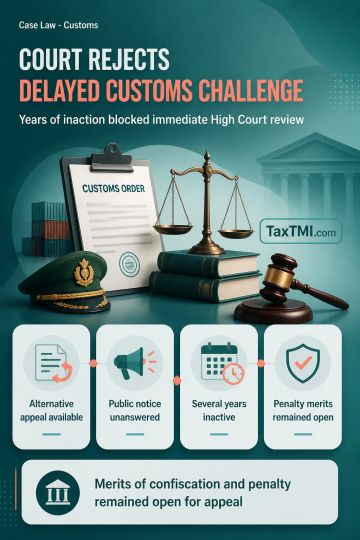
Alternative statutory remedy and unexplained delay barred writ review of customs confiscation adjudication, leaving merits for appellate consideration...
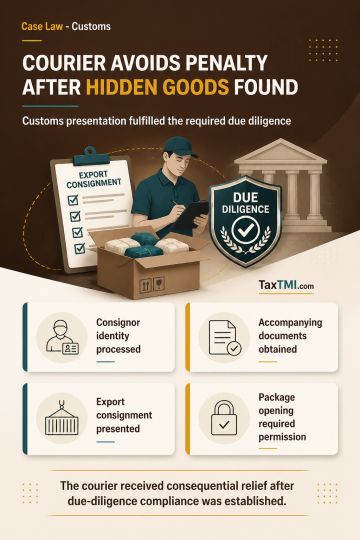
Authorised courier due diligence protects against penalties where declared exports conceal prohibited goods despite proper documentation and customs p...
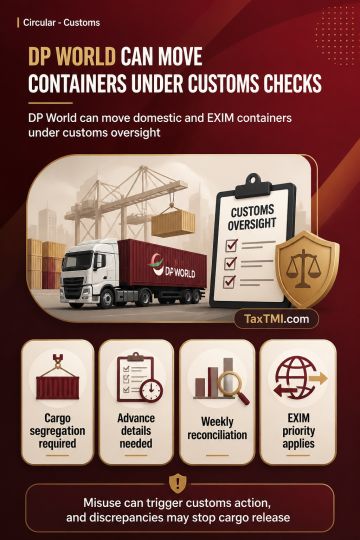
Customs-controlled container movement now extends to DP World facilities, subject to segregation, inspections, reconciliation, and EXIM cargo priority...
The assessee, incorporated under Canadian laws, rendered pre-clinical laboratory services to Indian customers in the pharmaceutical, medical device, and biotechnology industries. These services involved conducting in vitro and in vivo tests and trials to determine safe dosages and assess potential toxicity of new drugs before human clinical trials. The Indian customers provided samples for testing by the assessee. The Tribunal held that the pre-clinical laboratory services rendered by the assessee did not constitute "making available" technical knowledge, experience, skill, know-how, or processes to the Indian customers. The utility of the services was limited to a report, which did not independently transfer technological knowledge enabling the clients to conduct future clinical tests. The clients had to continuously refer to the assessee for understanding the report. Therefore, the receipts from such services did not qualify as Fees for Included Services (FIS) or Fees for Technical Services (FTS) under the India-Canada Tax Treaty.
The assessee, incorporated under Canadian laws, rendered pre-clinical laboratory services to Indian customers in the pharmaceutical, medical device, and biotechnology industries. These services involved conducting in vitro and in vivo tests and trials to determine safe dosages and assess potential toxicity of new drugs before human clinical trials. The Indian customers provided samples for testing by the assessee. The Tribunal held that the pre-clinical laboratory services rendered by the assessee did not constitute "making available" technical knowledge, experience, skill, know-how, or processes to the Indian customers. The utility of the services was limited to a report, which did not independently transfer technological knowledge enabling the clients to conduct future clinical tests. The clients had to continuously refer to the assessee for understanding the report. Therefore, the receipts from such services did not qualify as Fees for Included Services (FIS) or Fees for Technical Services (FTS) under the India-Canada Tax Treaty.
Note: It is a system-generated summary and is for quick reference only.
 TaxTMI
  TaxTMI
 of 4827






 Join Channel


