Online bond platforms may offer overseas-regulated products and tax-specific bonds subject to disclosures, compliance safeguards and revised complianc...
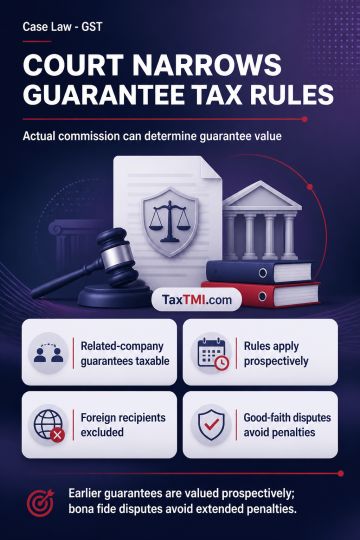
Corporate guarantee valuation permits actual ascertainable commission while barring retroactive application and extended-period penalties for bona fid...
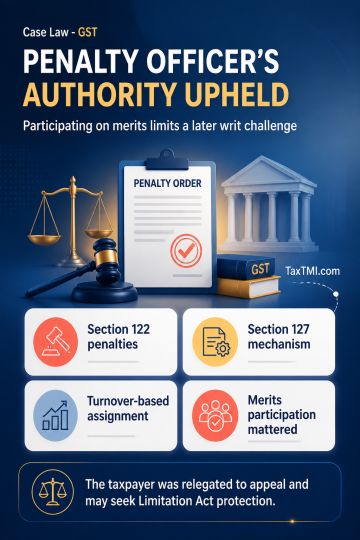
Proper-officer jurisdiction under UPGST penalty provisions upheld; participation on merits prevents bypassing the statutory appellate remedy through w...
Transitioned CENVAT credit may validly satisfy mandatory pre-deposit requirements for legacy service tax appeals through Electronic Credit Ledger debi...
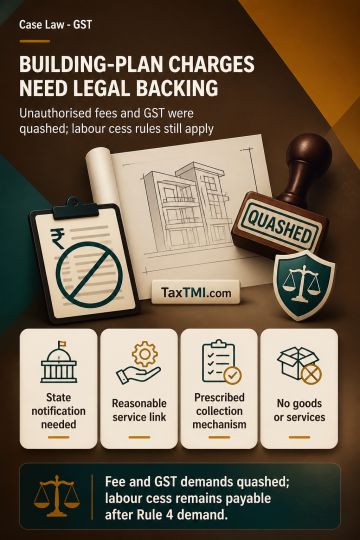
Building-plan sanction charges require statutory authority; unauthorised fees and GST were quashed, while labour cess must follow prescribed collectio...
Pure-agent exclusion fails where hotel booking facilitators receive third-party services themselves, making entire customer consideration taxable as r...
The court granted bail to the accused applicant, considering the following factors: the trial has not yet commenced, the applicant's complicity is yet to be determined, relevant evidence is under the department's control, and there is no indication that the applicant's release would adversely affect the trial. Additionally, the alleged offense carries a maximum punishment of five years' imprisonment, and the applicant has already been in jail for a substantial period. The court opined that the applicant has made a case for bail, subject to furnishing personal bonds and sureties to the satisfaction of the concerned court and fulfilling imposed conditions. The decision was based on the Supreme Court's precedents, which emphasize considering the gravity of the offense, the object of the relevant Act, and the attending circumstances, rather than categorizing all economic offenses as one group and denying bail.
The court granted bail to the accused applicant, considering the following factors: the trial has not yet commenced, the applicant's complicity is yet to be determined, relevant evidence is under the department's control, and there is no indication that the applicant's release would adversely affect the trial. Additionally, the alleged offense carries a maximum punishment of five years' imprisonment, and the applicant has already been in jail for a substantial period. The court opined that the applicant has made a case for bail, subject to furnishing personal bonds and sureties to the satisfaction of the concerned court and fulfilling imposed conditions. The decision was based on the Supreme Court's precedents, which emphasize considering the gravity of the offense, the object of the relevant Act, and the attending circumstances, rather than categorizing all economic offenses as one group and denying bail.
Note: It is a system-generated summary and is for quick reference only.
 TaxTMI
 of 4800












 Join Channel


 TaxTMI