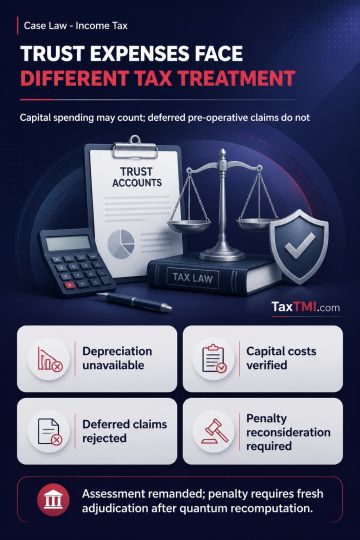
Charitable trust income application permits verified capital expenditure but rejects deferred pre-operative claims and requires reconsideration of con...
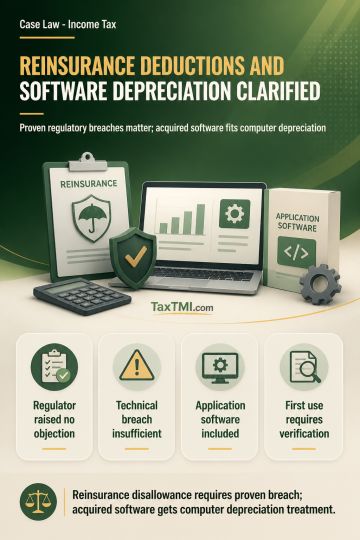
Reinsurance premium deductions require established regulatory breaches, while independently acquired software qualifies within the computer depreciati...
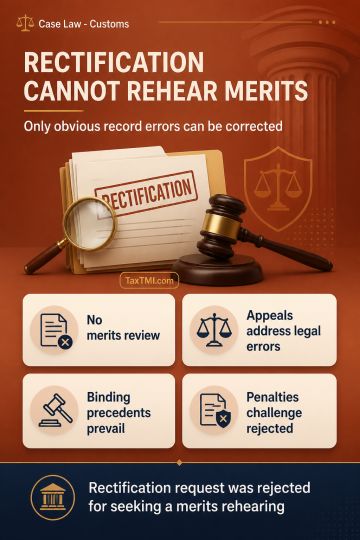
Rectification of mistake remains limited to self-evident record errors, preventing merits review through miscellaneous applications and preserving fin...
Tender creditworthiness conditions may extend to de facto Promoter Directors, with post-participation challenges generally barred absent arbitrariness...
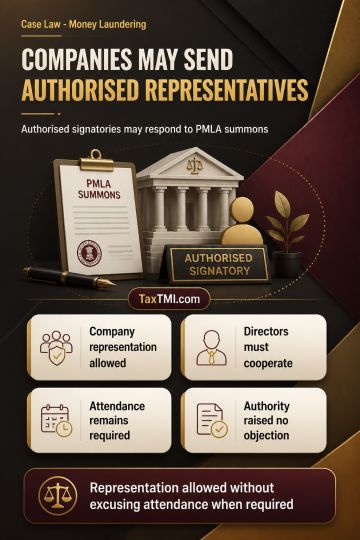
Corporate representation in PMLA summons proceedings permitted through an authorised signatory, subject to directors' continuing cooperation and atten...
The court granted bail to the accused applicant, considering the following factors: the trial has not yet commenced, the applicant's complicity is yet to be determined, relevant evidence is under the department's control, and there is no indication that the applicant's release would adversely affect the trial. Additionally, the alleged offense carries a maximum punishment of five years' imprisonment, and the applicant has already been in jail for a substantial period. The court opined that the applicant has made a case for bail, subject to furnishing personal bonds and sureties to the satisfaction of the concerned court and fulfilling imposed conditions. The decision was based on the Supreme Court's precedents, which emphasize considering the gravity of the offense, the object of the relevant Act, and the attending circumstances, rather than categorizing all economic offenses as one group and denying bail.
The court granted bail to the accused applicant, considering the following factors: the trial has not yet commenced, the applicant's complicity is yet to be determined, relevant evidence is under the department's control, and there is no indication that the applicant's release would adversely affect the trial. Additionally, the alleged offense carries a maximum punishment of five years' imprisonment, and the applicant has already been in jail for a substantial period. The court opined that the applicant has made a case for bail, subject to furnishing personal bonds and sureties to the satisfaction of the concerned court and fulfilling imposed conditions. The decision was based on the Supreme Court's precedents, which emphasize considering the gravity of the offense, the object of the relevant Act, and the attending circumstances, rather than categorizing all economic offenses as one group and denying bail.
Note: It is a system-generated summary and is for quick reference only.
 TaxTMI
 of 4805











 Join Channel


 TaxTMI
