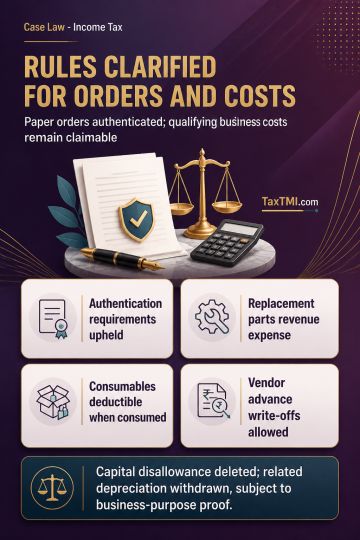
Authentication of paper assessment orders upheld, while qualifying repairs, consumables and vendor advance write-offs remain deductible business claim...
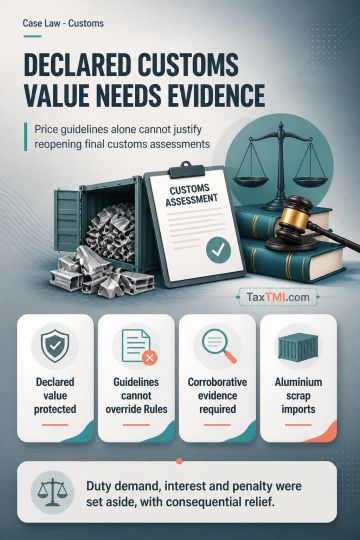
Transaction value cannot be rejected solely on non-statutory valuation guidelines without corroborative evidence supporting reassessment of final cust...
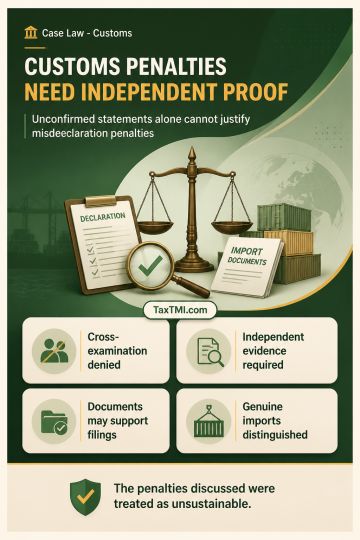
Cross-examination rights and corroborated evidence limit customs penalties for misdeclaration in genuine import transactions involving documented clea...
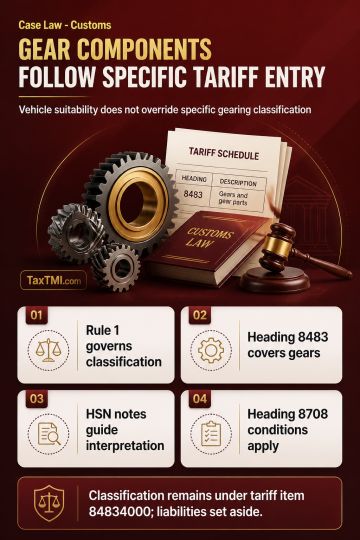
Tariff classification of vehicle gear components follows the specific gearing entry, displacing motor-vehicle parts classification and related liabili...
The court granted bail to the accused applicant, considering the following factors: the trial has not yet commenced, the applicant's complicity is yet to be determined, relevant evidence is under the department's control, and there is no indication that the applicant's release would adversely affect the trial. Additionally, the alleged offense carries a maximum punishment of five years' imprisonment, and the applicant has already been in jail for a substantial period. The court opined that the applicant has made a case for bail, subject to furnishing personal bonds and sureties to the satisfaction of the concerned court and fulfilling imposed conditions. The decision was based on the Supreme Court's precedents, which emphasize considering the gravity of the offense, the object of the relevant Act, and the attending circumstances, rather than categorizing all economic offenses as one group and denying bail.
The court granted bail to the accused applicant, considering the following factors: the trial has not yet commenced, the applicant's complicity is yet to be determined, relevant evidence is under the department's control, and there is no indication that the applicant's release would adversely affect the trial. Additionally, the alleged offense carries a maximum punishment of five years' imprisonment, and the applicant has already been in jail for a substantial period. The court opined that the applicant has made a case for bail, subject to furnishing personal bonds and sureties to the satisfaction of the concerned court and fulfilling imposed conditions. The decision was based on the Supreme Court's precedents, which emphasize considering the gravity of the offense, the object of the relevant Act, and the attending circumstances, rather than categorizing all economic offenses as one group and denying bail.
Note: It is a system-generated summary and is for quick reference only.
 TaxTMI
 of 4805












 Join Channel


 TaxTMI