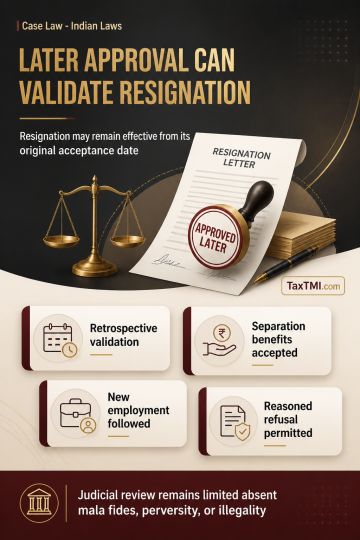
Ratification of resignation acceptance validates separation retrospectively, while withdrawal may be refused through reasoned administrative discretio...
Nature-dependent electricity contracts receive new Ind AS accounting, hedge designation, transition and financial-statement disclosure requirements fr...
Alternative GST remedy permitted protective writ intervention for ex parte adjudication, preserving independent appellate review of input tax credit d...
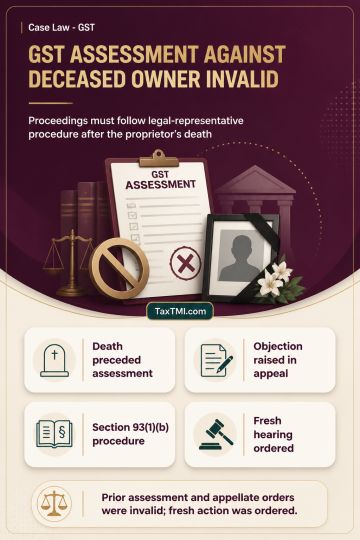
Assessment against deceased sole proprietor requires proceedings against the legal representative, rendering prior assessment and appellate orders inv...
Residential waste collection classification under SAC 999423 defeats composite-supply exemption where facilitating goods are not transferred to the lo...
Page of 4800
Press 'Enter' after typing page number.
161 to 180 of 96000 Results
❮
❯
❯❯
0 / 200
Expand Note
Add to Folder
No Folders have been created
+
Are you sure you want to delete "My most important" ?
The court granted custodial bail to the accused, who had no criminal antecedents, in a case involving illegal mining and revenue loss. The accused filed a petition directly before the High Court, which has concurrent jurisdiction u/s 439 CrPC. The court observed that dismissing the petition solely on the ground of bypassing the Sessions Court would deprive the accused of the statutory right to have the bail petition adjudicated by the Sessions Court first. Considering the duration of judicial custody and the stage of investigation, the court found no justification to continue detention. Relying on the Supreme Court's decision in Gurbaksh Singh Sibbia v State of Punjab, the court held that bail decisions must consider the cumulative effect of various circumstances. Accordingly, the court granted bail subject to fulfillment of certain conditions.
The court granted custodial bail to the accused, who had no criminal antecedents, in a case involving illegal mining and revenue loss. The accused filed a petition directly before the High Court, which has concurrent jurisdiction u/s 439 CrPC. The court observed that dismissing the petition solely on the ground of bypassing the Sessions Court would deprive the accused of the statutory right to have the bail petition adjudicated by the Sessions Court first. Considering the duration of judicial custody and the stage of investigation, the court found no justification to continue detention. Relying on the Supreme Court's decision in Gurbaksh Singh Sibbia v State of Punjab, the court held that bail decisions must consider the cumulative effect of various circumstances. Accordingly, the court granted bail subject to fulfillment of certain conditions.
Note: It is a system-generated summary and is for quick reference only.
 TaxTMI
 of 4800
















 Join Channel


 TaxTMI