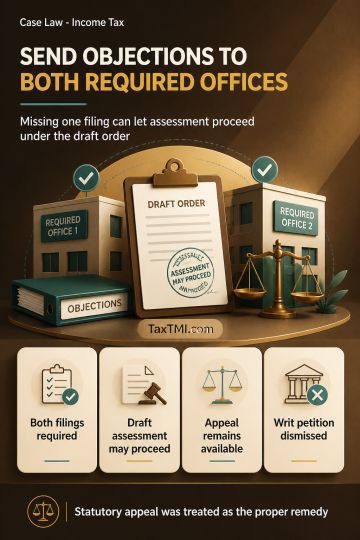
Dispute Resolution Panel objections must reach both prescribed forums; otherwise assessment may proceed and statutory appeal remains the proper remedy...
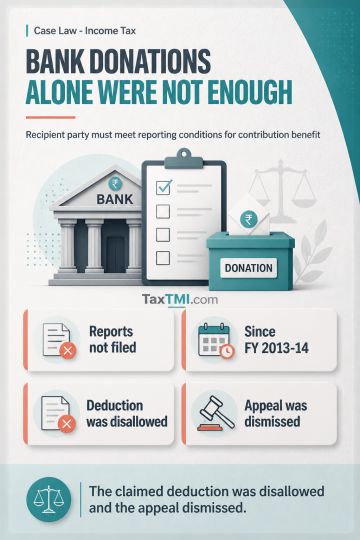
Political contribution deductions require recipient party compliance with contribution-reporting conditions; banking-channel donations alone do not qu...
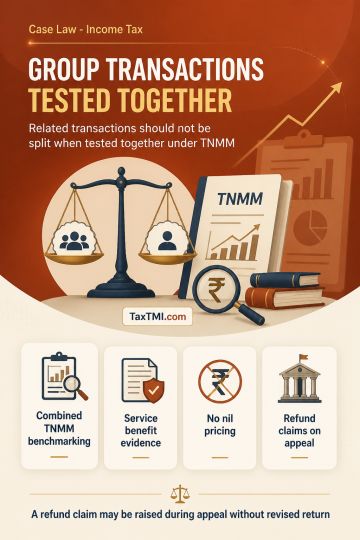
Aggregation under TNMM prevents selective testing of intra-group services without comparable uncontrolled transactions, while appellate additional cla...
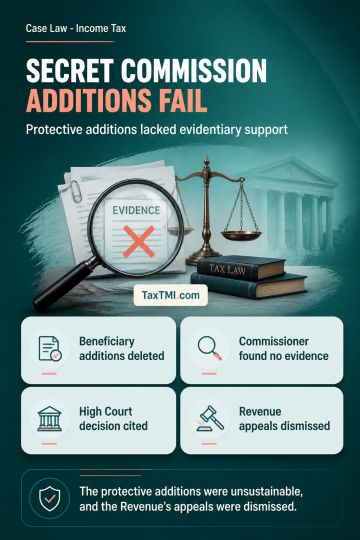
Protective assessment cannot duplicate identical receipts under competing characterisations; remote services did not establish a taxable permanent est...
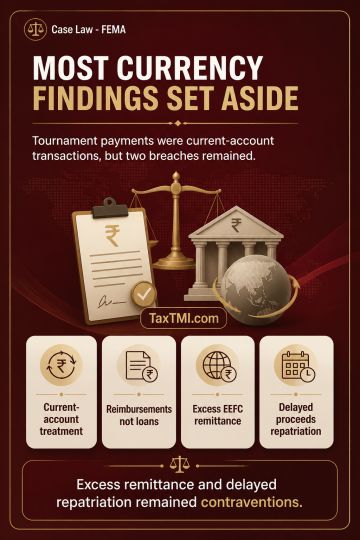
Current account treatment of overseas tournament services removed most FEMA findings, but excess EEFC remittance and delayed repatriation remained bre...
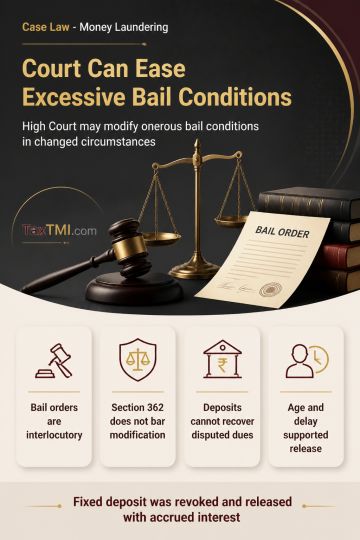
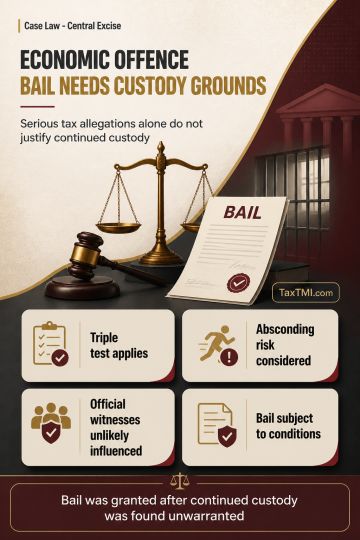
Modification of bail conditions remains available through inherent jurisdiction where onerous deposits undermine justice and cannot recover disputed d...
This is a summary of a case involving an application for conversion of shipping bills under the NFEI scheme to the drawback scheme and the consequent duty drawback u/s 74 of the Customs Act, 1962. The key points are: The authority has discretionary power to allow or reject the conversion based on circumstances. The shipping bills' eligibility for conversion is not a matter of right but subject to the authority's discretion. The identity of the re-exported goods must be established to the satisfaction of the customs officer for granting drawback u/s 74. Physical examination of goods may be required for identification, and the officer's discretion in this regard cannot be curtailed. Non-declaration of drawback claim on the shipping bill as required u/r 4 of the Drawback Rules is a mandatory requirement, and non-compliance can lead to rejection. The Tribunal found the exercise of discretion by the authority to be fair and reasonable, and upheld the rejection of the appeal.
This is a summary of a case involving an application for conversion of shipping bills under the NFEI scheme to the drawback scheme and the consequent duty drawback u/s 74 of the Customs Act, 1962. The key points are: The authority has discretionary power to allow or reject the conversion based on circumstances. The shipping bills' eligibility for conversion is not a matter of right but subject to the authority's discretion. The identity of the re-exported goods must be established to the satisfaction of the customs officer for granting drawback u/s 74. Physical examination of goods may be required for identification, and the officer's discretion in this regard cannot be curtailed. Non-declaration of drawback claim on the shipping bill as required u/r 4 of the Drawback Rules is a mandatory requirement, and non-compliance can lead to rejection. The Tribunal found the exercise of discretion by the authority to be fair and reasonable, and upheld the rejection of the appeal.
Note: It is a system-generated summary and is for quick reference only.
 TaxTMI
 of 4801










 Join Channel


 TaxTMI
