Retention of seized property survives where recorded reasons support proceeds of crime, while stayed investigation periods are excluded from limitatio...
Specified income of Baddi Barotiwala Nalagarh Development Authority receives conditional tax exemption, retrospectively covering its designated assess...
Specified development authority income receives retrospective tax exemption, subject to non-commercial activity, unchanged income sources, and return-...
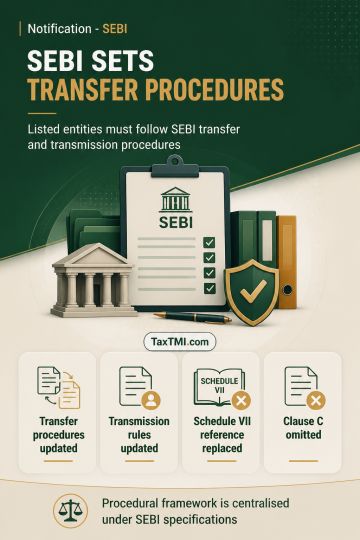
Unified Brand India framework introduces voluntary Trust Mark certification and funding support for export branding, packaging and global promotional ...
Origin Declaration authentication governs preferential tariff claims under India-UK CETA, requiring a validated reference number before import clearan...
Separate assessment orders for different years remain valid when distinct notices and hearing opportunities prevent prejudice from combined proceeding...
Levy of penalty u/ss 114(i) and 114(iii) of the Customs Act without evidence of abetment in the export of red sanders. The appellant failed to obtain and verify the KYC of the exporter for whom they filed the shipping bill, violating Regulation 11 of the Customs House Agents Licensing Regulations (CHALR) 2004. They also failed to advise their client to comply with the Customs Act 1962 and the Shipping Bill of Export Regulations 1991. The Tribunal held that the violation of CHALR alone cannot constitute abetment without evidence of the appellant's knowledge about the illegal export. Mere violation of CHALR without knowledge cannot sustain penalties u/ss 114(i) and 114(iii). The impugned order was set aside, and the appeal was allowed.
Levy of penalty u/ss 114(i) and 114(iii) of the Customs Act without evidence of abetment in the export of red sanders. The appellant failed to obtain and verify the KYC of the exporter for whom they filed the shipping bill, violating Regulation 11 of the Customs House Agents Licensing Regulations (CHALR) 2004. They also failed to advise their client to comply with the Customs Act 1962 and the Shipping Bill of Export Regulations 1991. The Tribunal held that the violation of CHALR alone cannot constitute abetment without evidence of the appellant's knowledge about the illegal export. Mere violation of CHALR without knowledge cannot sustain penalties u/ss 114(i) and 114(iii). The impugned order was set aside, and the appeal was allowed.
Note: It is a system-generated summary and is for quick reference only.
 TaxTMI
 of 4805
















 Join Channel


 TaxTMI
