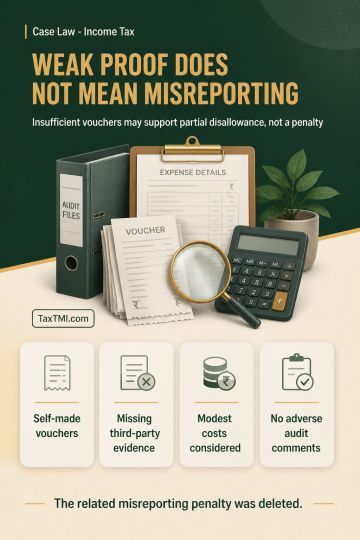
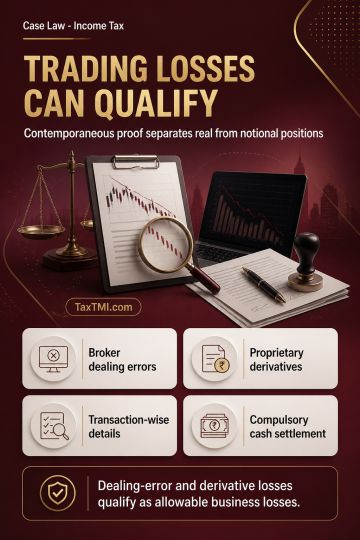
Authentication of paper assessment orders upheld, while qualifying repairs, consumables and vendor advance write-offs remain deductible business claim...
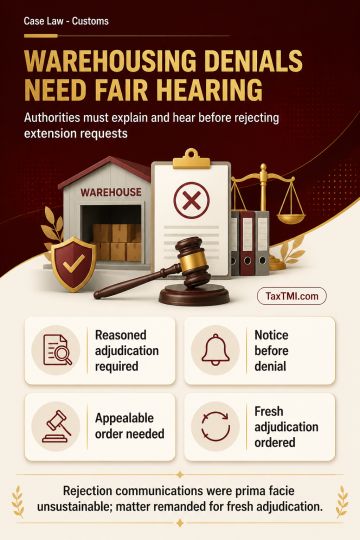
Transaction value cannot be rejected solely on non-statutory valuation guidelines without corroborative evidence supporting reassessment of final cust...
Cross-examination rights and corroborated evidence limit customs penalties for misdeclaration in genuine import transactions involving documented clea...
Tariff classification of vehicle gear components follows the specific gearing entry, displacing motor-vehicle parts classification and related liabili...
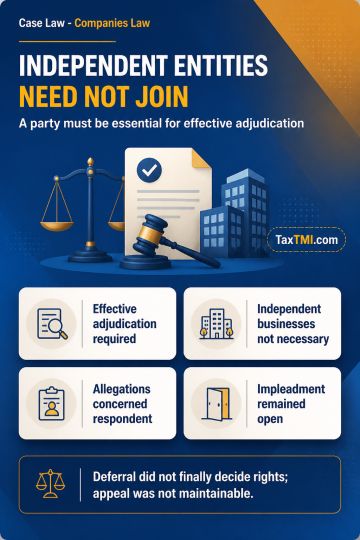
Necessary-party requirements limit impleadment of independent entities, while deferred consideration does not create an appealable adverse determinati...
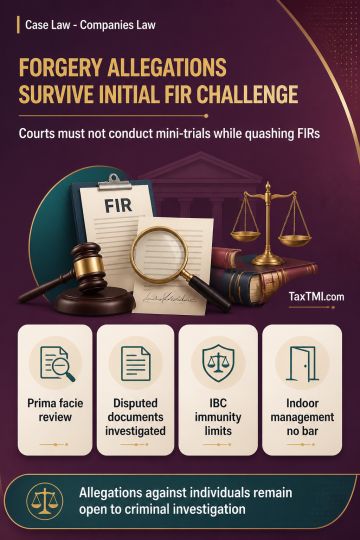
The Supreme Court quashed the summoning order issued for offences u/ss 406, 420 and 120B of the Indian Penal Code, 1860, emphasizing the non-application of mind by the lower courts. It clarified the distinction between criminal breach of trust and cheating, stating that vicarious liability cannot be attributed to office bearers for these offences unless a statutory provision exists. Mere breach of contract or trust does not constitute criminal breach of trust or cheating unless fraudulent intention is proven from inception. In sale of goods, failure to pay consideration cannot amount to criminal breach of trust as the property passes to the purchaser upon delivery. The magistrate and police must carefully apply their mind to ascertain if allegations genuinely constitute these offences before taking cognizance or registering FIR.
The Supreme Court quashed the summoning order issued for offences u/ss 406, 420 and 120B of the Indian Penal Code, 1860, emphasizing the non-application of mind by the lower courts. It clarified the distinction between criminal breach of trust and cheating, stating that vicarious liability cannot be attributed to office bearers for these offences unless a statutory provision exists. Mere breach of contract or trust does not constitute criminal breach of trust or cheating unless fraudulent intention is proven from inception. In sale of goods, failure to pay consideration cannot amount to criminal breach of trust as the property passes to the purchaser upon delivery. The magistrate and police must carefully apply their mind to ascertain if allegations genuinely constitute these offences before taking cognizance or registering FIR.
Note: It is a system-generated summary and is for quick reference only.
 TaxTMI
 of 4803

















 Join Channel


 TaxTMI
