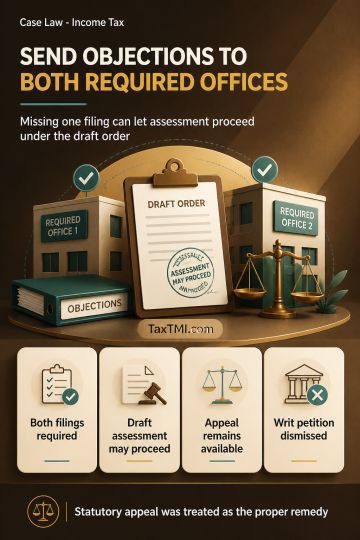
Dispute Resolution Panel objections must reach both prescribed forums; otherwise assessment may proceed and statutory appeal remains the proper remedy...
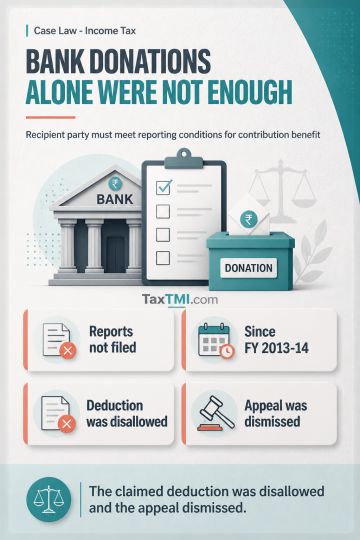
Political contribution deductions require recipient party compliance with contribution-reporting conditions; banking-channel donations alone do not qu...
Aggregation under TNMM prevents selective testing of intra-group services without comparable uncontrolled transactions, while appellate additional cla...
Protective assessment cannot duplicate identical receipts under competing characterisations; remote services did not establish a taxable permanent est...
The Supreme Court quashed the summoning order issued for offences u/ss 406, 420 and 120B of the Indian Penal Code, 1860, emphasizing the non-application of mind by the lower courts. It clarified the distinction between criminal breach of trust and cheating, stating that vicarious liability cannot be attributed to office bearers for these offences unless a statutory provision exists. Mere breach of contract or trust does not constitute criminal breach of trust or cheating unless fraudulent intention is proven from inception. In sale of goods, failure to pay consideration cannot amount to criminal breach of trust as the property passes to the purchaser upon delivery. The magistrate and police must carefully apply their mind to ascertain if allegations genuinely constitute these offences before taking cognizance or registering FIR.
The Supreme Court quashed the summoning order issued for offences u/ss 406, 420 and 120B of the Indian Penal Code, 1860, emphasizing the non-application of mind by the lower courts. It clarified the distinction between criminal breach of trust and cheating, stating that vicarious liability cannot be attributed to office bearers for these offences unless a statutory provision exists. Mere breach of contract or trust does not constitute criminal breach of trust or cheating unless fraudulent intention is proven from inception. In sale of goods, failure to pay consideration cannot amount to criminal breach of trust as the property passes to the purchaser upon delivery. The magistrate and police must carefully apply their mind to ascertain if allegations genuinely constitute these offences before taking cognizance or registering FIR.
Note: It is a system-generated summary and is for quick reference only.
 TaxTMI
 of 4803













 Join Channel


 TaxTMI
