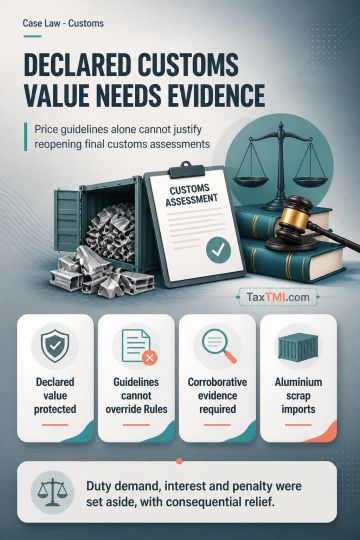
Transaction value cannot be rejected solely on non-statutory valuation guidelines without corroborative evidence supporting reassessment of final cust...
Cross-examination rights and corroborated evidence limit customs penalties for misdeclaration in genuine import transactions involving documented clea...
Tariff classification of vehicle gear components follows the specific gearing entry, displacing motor-vehicle parts classification and related liabili...
Necessary-party requirements limit impleadment of independent entities, while deferred consideration does not create an appealable adverse determinati...
Food supplement classification requires common parlance and authoritative tests, preventing treatment as proprietary Ayurvedic medicines without suppo...
The High Court ruled that mere reflection of an entry in the balance sheet liability column cannot constitute an 'agreement' for payment of gratuity u/s 4(5) of the Payment of Gratuity Act. An underlying document or contract between the parties explicitly agreeing to pay gratuity is necessary. In the absence of such an agreement or contract, the stray entry made by the petitioners themselves in the company's balance sheet, days before selling their stake, cannot create a liability for gratuity payment. The petitioners' names were not included in the LIC gratuity insurance policy, and no evidence suggested previous directors received gratuity. Therefore, the petitioners' claim for gratuity amounting to Rs. 1.21 crores was untenable and rightly rejected by the authorities.
The High Court ruled that mere reflection of an entry in the balance sheet liability column cannot constitute an 'agreement' for payment of gratuity u/s 4(5) of the Payment of Gratuity Act. An underlying document or contract between the parties explicitly agreeing to pay gratuity is necessary. In the absence of such an agreement or contract, the stray entry made by the petitioners themselves in the company's balance sheet, days before selling their stake, cannot create a liability for gratuity payment. The petitioners' names were not included in the LIC gratuity insurance policy, and no evidence suggested previous directors received gratuity. Therefore, the petitioners' claim for gratuity amounting to Rs. 1.21 crores was untenable and rightly rejected by the authorities.
Note: It is a system-generated summary and is for quick reference only.
 TaxTMI
 of 4805




















 Join Channel


 TaxTMI
