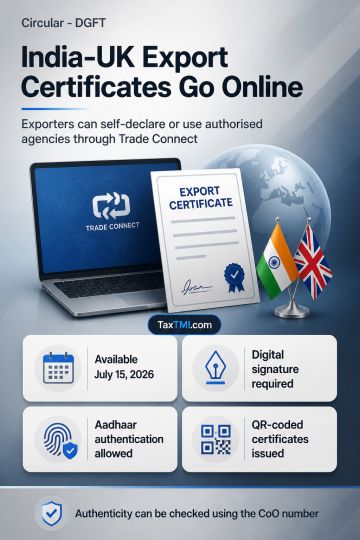
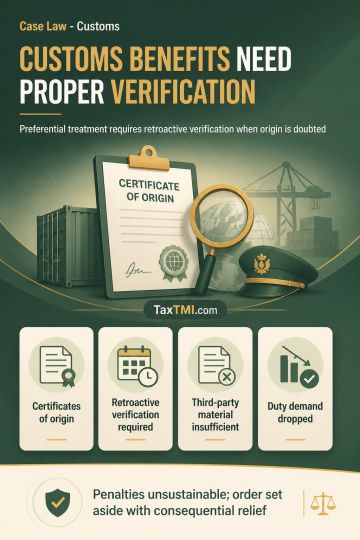
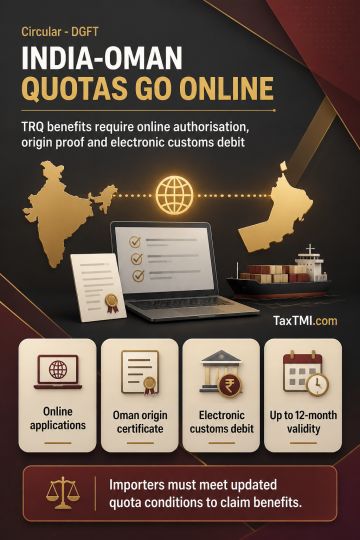
Certificate-of-origin verification procedure governs preferential customs benefits; denial without retroactive verification was set aside with consequ...
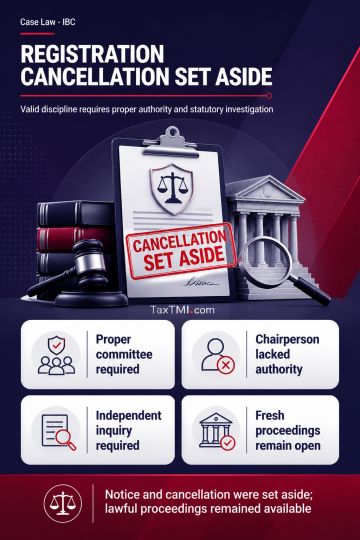
Disciplinary Committee jurisdiction and mandatory investigation requirements invalidated cancellation of an insolvency professional's registration and...
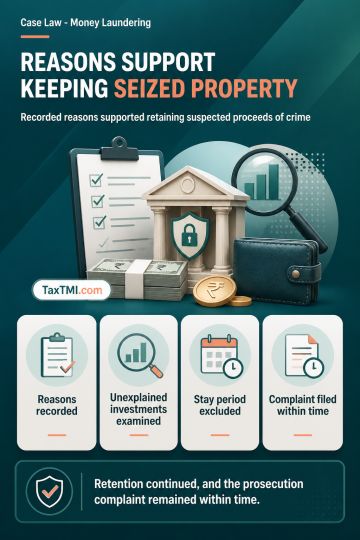
Retention of seized property survives where recorded reasons support proceeds of crime, while stayed investigation periods are excluded from limitatio...
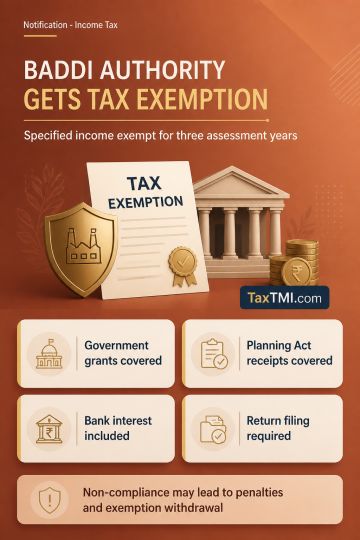
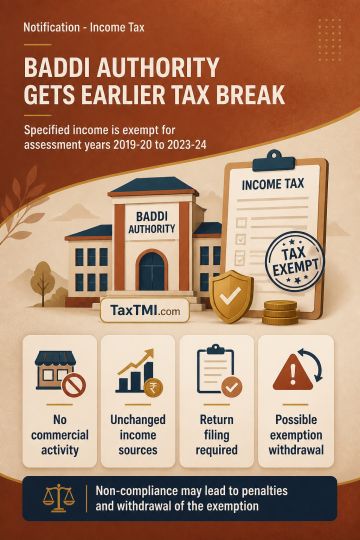
Specified income of Baddi Barotiwala Nalagarh Development Authority receives conditional tax exemption, retrospectively covering its designated assess...
Specified development authority income receives retrospective tax exemption, subject to non-commercial activity, unchanged income sources, and return-...
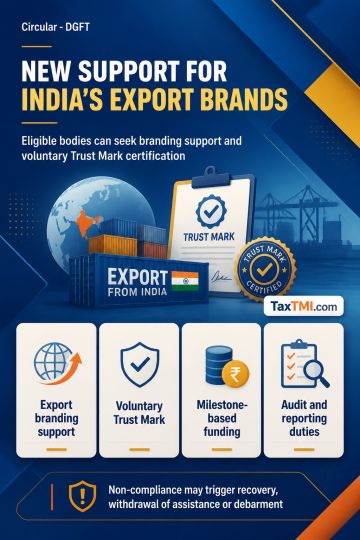
Unified Brand India framework introduces voluntary Trust Mark certification and funding support for export branding, packaging and global promotional ...
The draft modalities outline the proposed operations for E-Commerce Export Hubs (ECEH), designated areas facilitating cross-border e-commerce activities. Key aspects include movement of goods from supplier to ECEH under GST documentation, pre-screening by ECEH operator, segregated fulfilment and customs clearance areas, fulfilment processes like packaging and labelling, customs clearance workflow involving shipping bill filing, risk management, examination if required, let export order, transshipment to port, and export general manifest filing. The process aims to provide predictability, shorter turnaround times, easy re-import for returns/rejects, and bringing stakeholders under one roof, while ensuring GST and customs compliance through electronic systems integration.
The draft modalities outline the proposed operations for E-Commerce Export Hubs (ECEH), designated areas facilitating cross-border e-commerce activities. Key aspects include movement of goods from supplier to ECEH under GST documentation, pre-screening by ECEH operator, segregated fulfilment and customs clearance areas, fulfilment processes like packaging and labelling, customs clearance workflow involving shipping bill filing, risk management, examination if required, let export order, transshipment to port, and export general manifest filing. The process aims to provide predictability, shorter turnaround times, easy re-import for returns/rejects, and bringing stakeholders under one roof, while ensuring GST and customs compliance through electronic systems integration.
Note: It is a system-generated summary and is for quick reference only.
 TaxTMI
 of 4803







 Join Channel


 TaxTMI