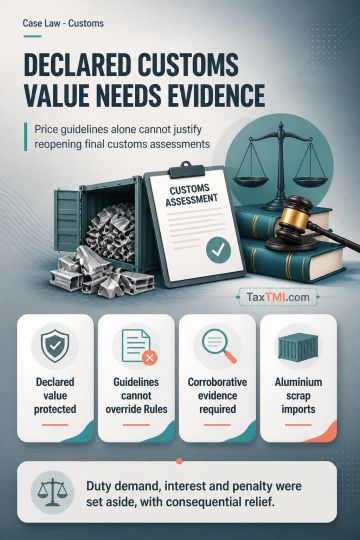
Transaction value cannot be rejected solely on non-statutory valuation guidelines without corroborative evidence supporting reassessment of final cust...
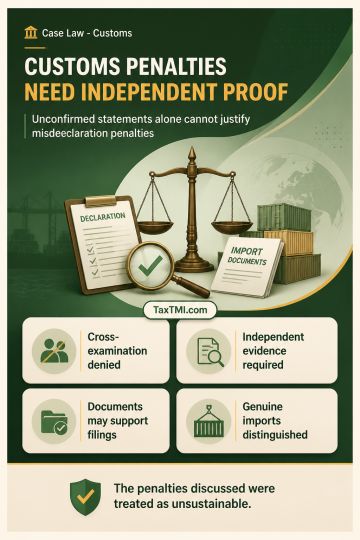
Cross-examination rights and corroborated evidence limit customs penalties for misdeclaration in genuine import transactions involving documented clea...
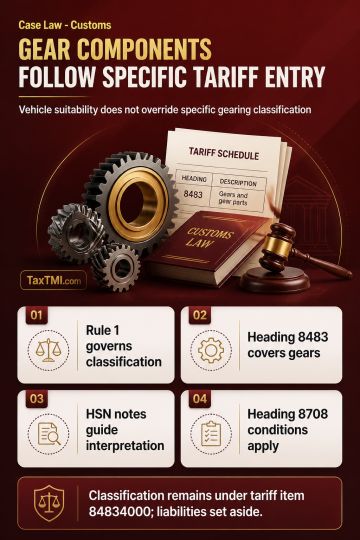
Tariff classification of vehicle gear components follows the specific gearing entry, displacing motor-vehicle parts classification and related liabili...
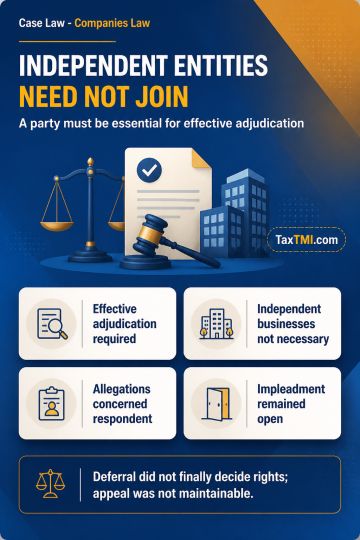
Necessary-party requirements limit impleadment of independent entities, while deferred consideration does not create an appealable adverse determinati...
Food supplement classification requires common parlance and authoritative tests, preventing treatment as proprietary Ayurvedic medicines without suppo...
The draft modalities outline the proposed operations for E-Commerce Export Hubs (ECEH), designated areas facilitating cross-border e-commerce activities. Key aspects include movement of goods from supplier to ECEH under GST documentation, pre-screening by ECEH operator, segregated fulfilment and customs clearance areas, fulfilment processes like packaging and labelling, customs clearance workflow involving shipping bill filing, risk management, examination if required, let export order, transshipment to port, and export general manifest filing. The process aims to provide predictability, shorter turnaround times, easy re-import for returns/rejects, and bringing stakeholders under one roof, while ensuring GST and customs compliance through electronic systems integration.
The draft modalities outline the proposed operations for E-Commerce Export Hubs (ECEH), designated areas facilitating cross-border e-commerce activities. Key aspects include movement of goods from supplier to ECEH under GST documentation, pre-screening by ECEH operator, segregated fulfilment and customs clearance areas, fulfilment processes like packaging and labelling, customs clearance workflow involving shipping bill filing, risk management, examination if required, let export order, transshipment to port, and export general manifest filing. The process aims to provide predictability, shorter turnaround times, easy re-import for returns/rejects, and bringing stakeholders under one roof, while ensuring GST and customs compliance through electronic systems integration.
Note: It is a system-generated summary and is for quick reference only.
 TaxTMI
 of 4801










 Join Channel


 TaxTMI
