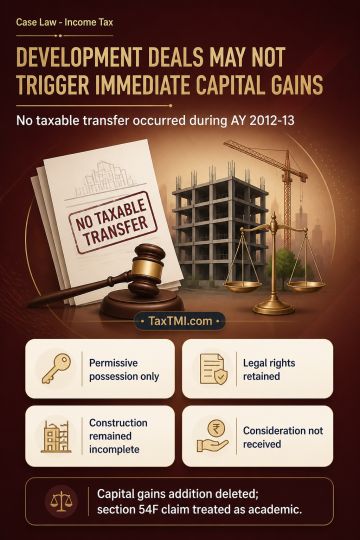
Development agreements require legal possession or effective enjoyment for capital gains transfer; permissive possession and deferred consideration de...
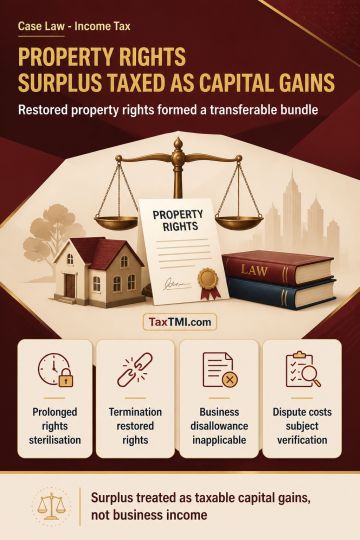
Prolonged sterilisation of development rights supports capital-gains treatment, while business-income disallowances cannot govern capital-gains comput...
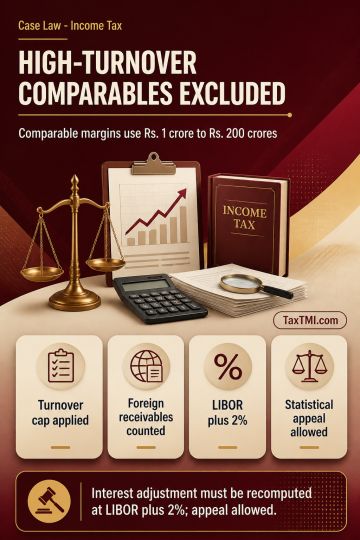
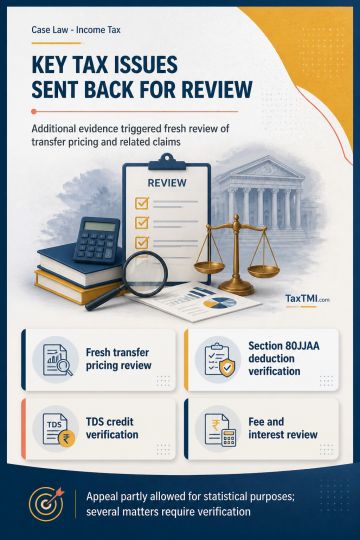
Additional evidence in transfer pricing dispute leads to fresh examination, while tax deductions, TDS credit, fee and refund interest require verifica...
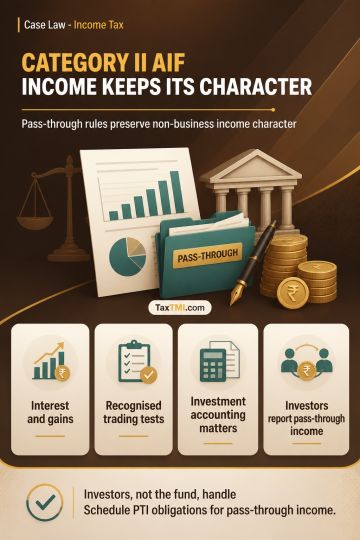
Category II AIF pass-through taxation preserves non-business income character; investment receipts cannot be reclassified without applying recognised ...
Invoking the extended period of limitation u/s 11A(1) of the Central Excise Act for recovery of unpaid duty. The key points are: The department alleged suppression of facts by the appellant with intent to evade duty payment, invoking the 5-year limitation period instead of the normal 1-year period. However, the Commissioner did not provide adequate reasoning or consider the appellant's reply regarding the complex nature of classification. The Tribunal examined the Supreme Court's interpretation in Pushpam Pharmaceuticals case, which held that to invoke extended limitation, suppression of facts must be deliberate to escape duty payment. Mere difference of opinion between department and assessee on duty liability cannot be construed as willful suppression. The Tribunal found the Commissioner's order invoking extended limitation period without proper examination as unsustainable and set it aside, allowing the appeal.
Invoking the extended period of limitation u/s 11A(1) of the Central Excise Act for recovery of unpaid duty. The key points are: The department alleged suppression of facts by the appellant with intent to evade duty payment, invoking the 5-year limitation period instead of the normal 1-year period. However, the Commissioner did not provide adequate reasoning or consider the appellant's reply regarding the complex nature of classification. The Tribunal examined the Supreme Court's interpretation in Pushpam Pharmaceuticals case, which held that to invoke extended limitation, suppression of facts must be deliberate to escape duty payment. Mere difference of opinion between department and assessee on duty liability cannot be construed as willful suppression. The Tribunal found the Commissioner's order invoking extended limitation period without proper examination as unsustainable and set it aside, allowing the appeal.
Note: It is a system-generated summary and is for quick reference only.
 TaxTMI
 of 4801



 Join Channel


 TaxTMI