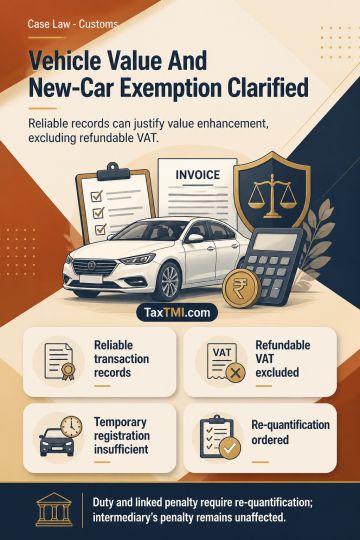
Transaction value rejection requires reliable corroboration; refundable VAT is excluded and temporary registration does not defeat new-vehicle exempti...
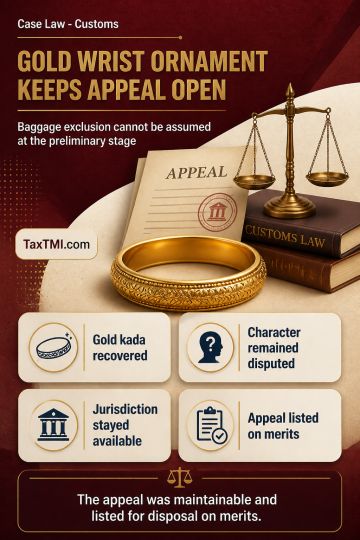
Appellate jurisdiction remains available where a wrist-worn gold ornament cannot conclusively be characterised as imported baggage at the preliminary ...
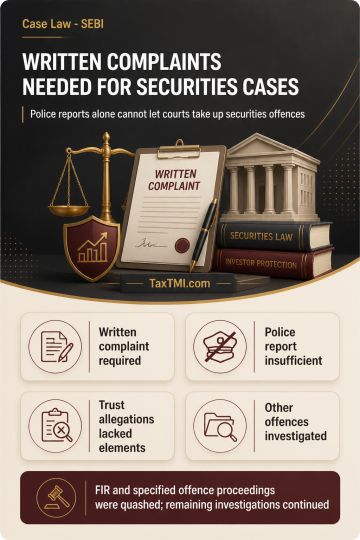
Written complaint requirement bars cognizance on police reports for securities offences, while unsupported breach of trust and cheating allegations fa...
Risk-based postal import clearance standardises electronic assessment, document requests, duty realisation and delivery controls at Foreign Post Offic...
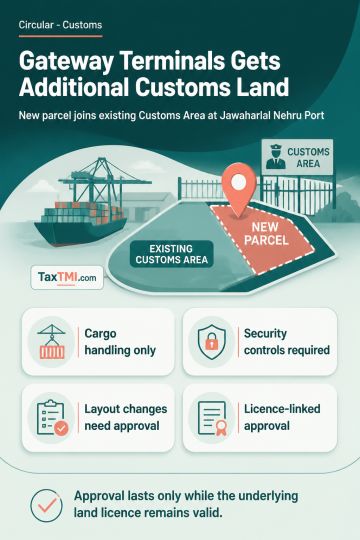
Customs Cargo Service Provider appointment extends custodianship to additional terminal land, subject to cargo-control, security and licence condition...
Invoking the extended period of limitation u/s 11A(1) of the Central Excise Act for recovery of unpaid duty. The key points are: The department alleged suppression of facts by the appellant with intent to evade duty payment, invoking the 5-year limitation period instead of the normal 1-year period. However, the Commissioner did not provide adequate reasoning or consider the appellant's reply regarding the complex nature of classification. The Tribunal examined the Supreme Court's interpretation in Pushpam Pharmaceuticals case, which held that to invoke extended limitation, suppression of facts must be deliberate to escape duty payment. Mere difference of opinion between department and assessee on duty liability cannot be construed as willful suppression. The Tribunal found the Commissioner's order invoking extended limitation period without proper examination as unsustainable and set it aside, allowing the appeal.
Invoking the extended period of limitation u/s 11A(1) of the Central Excise Act for recovery of unpaid duty. The key points are: The department alleged suppression of facts by the appellant with intent to evade duty payment, invoking the 5-year limitation period instead of the normal 1-year period. However, the Commissioner did not provide adequate reasoning or consider the appellant's reply regarding the complex nature of classification. The Tribunal examined the Supreme Court's interpretation in Pushpam Pharmaceuticals case, which held that to invoke extended limitation, suppression of facts must be deliberate to escape duty payment. Mere difference of opinion between department and assessee on duty liability cannot be construed as willful suppression. The Tribunal found the Commissioner's order invoking extended limitation period without proper examination as unsustainable and set it aside, allowing the appeal.
Note: It is a system-generated summary and is for quick reference only.
 TaxTMI
 of 4784





 Join Channel


 TaxTMI