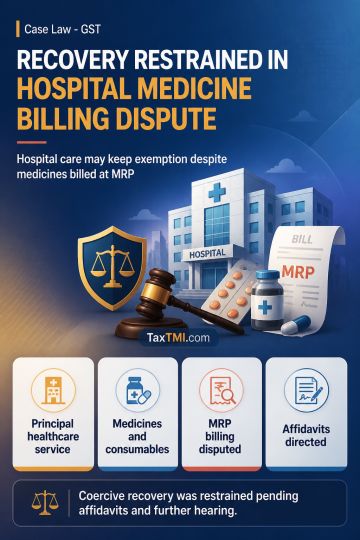
Composite inpatient healthcare supply may retain exemption despite MRP medicine billing, while separate taxable sale characterisation remains disputed...
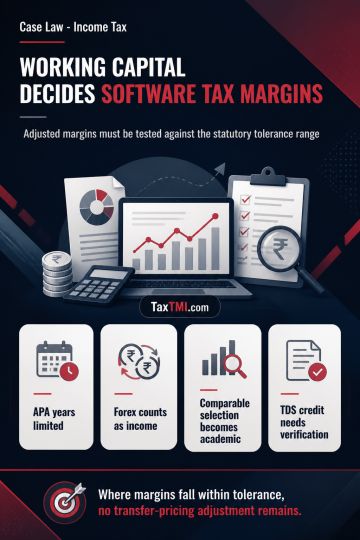
Working-capital adjustment determines whether software-services transfer-pricing margins fall within the statutory tolerance range, eliminating any ad...
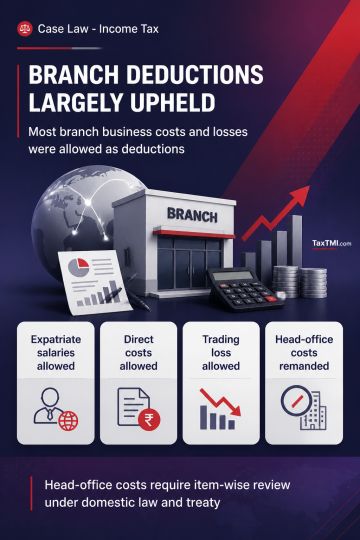
Permanent establishment deductions upheld for expatriate salaries, direct costs and trading losses, while head-office costs require fresh classificati...
Data transmission equipment classification under CTSH 8517 62 remains distinct from residual classification, with exemption evidence requiring scrutin...
A bail application was rejected in a case involving the creation of fake companies, appointment of fictitious directors/ partners/ proprietors, and illegal passing of inadmissible Input Tax Credit under the Goods and Services Tax (GST) laws. The accused, without the knowledge of the purported directors/staff, utilized invoices from fictitious suppliers to wrongfully avail and pass on ineligible Input Tax Credit, resulting in substantial revenue loss to the government. The court emphasized that economic offenses involving deep-rooted conspiracies and massive public fund losses should be viewed seriously as grave offenses affecting the nation's economy. Citing a Supreme Court precedent, the court held that such white-collar criminals, driven by personal profit motives and impeding national development through calculated dishonesty, warrant a different approach to bail. Considering the allegations, verified materials, and the cognizance order for offenses under GST laws and the Indian Penal Code, the court rejected the bail application.
A bail application was rejected in a case involving the creation of fake companies, appointment of fictitious directors/ partners/ proprietors, and illegal passing of inadmissible Input Tax Credit under the Goods and Services Tax (GST) laws. The accused, without the knowledge of the purported directors/staff, utilized invoices from fictitious suppliers to wrongfully avail and pass on ineligible Input Tax Credit, resulting in substantial revenue loss to the government. The court emphasized that economic offenses involving deep-rooted conspiracies and massive public fund losses should be viewed seriously as grave offenses affecting the nation's economy. Citing a Supreme Court precedent, the court held that such white-collar criminals, driven by personal profit motives and impeding national development through calculated dishonesty, warrant a different approach to bail. Considering the allegations, verified materials, and the cognizance order for offenses under GST laws and the Indian Penal Code, the court rejected the bail application.
Note: It is a system-generated summary and is for quick reference only.
 TaxTMI
 of 4803










 Join Channel


 TaxTMI
