Prolonged sterilisation of development rights supports capital-gains treatment, while business-income disallowances cannot govern capital-gains comput...
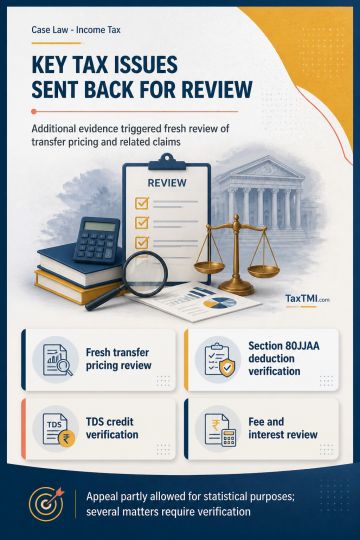
Additional evidence in transfer pricing dispute leads to fresh examination, while tax deductions, TDS credit, fee and refund interest require verifica...
Category II AIF pass-through taxation preserves non-business income character; investment receipts cannot be reclassified without applying recognised ...
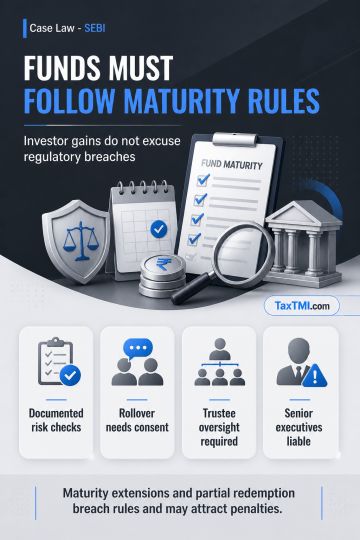
Mutual fund maturity rules require proper rollover, redemption, disclosure, and due diligence; investor gains cannot excuse regulatory breaches or pen...
Threshold exemption excludes exempt services, while stamp-paper purchases avoid reverse charge; consequential service tax penalties were also set asid...
Transfer pricing adjustment on management charges paid to associated enterprise was unreasonable. The assessee provided sufficient evidence of services rendered through agreement, correspondence, invoices, payments, and improved revenue and profitability. The Dispute Resolution Panel arbitrarily upheld the Transfer Pricing Officer's determination of nil value without examining facts and legal precedents. The Tribunal set aside the adjustment, reinstating the assessee's transfer pricing analysis using the Transactional Net Margin Method. Regarding imputed interest on delayed receivables, the Tribunal followed precedents that working capital adjustment subsumes interest on receivables, eliminating separate benchmarking. As the assessee's profit level indicators after working capital adjustment were better than comparables, imputing notional interest was unwarranted. The interest adjustment was deleted in favor of the assessee.
Transfer pricing adjustment on management charges paid to associated enterprise was unreasonable. The assessee provided sufficient evidence of services rendered through agreement, correspondence, invoices, payments, and improved revenue and profitability. The Dispute Resolution Panel arbitrarily upheld the Transfer Pricing Officer's determination of nil value without examining facts and legal precedents. The Tribunal set aside the adjustment, reinstating the assessee's transfer pricing analysis using the Transactional Net Margin Method. Regarding imputed interest on delayed receivables, the Tribunal followed precedents that working capital adjustment subsumes interest on receivables, eliminating separate benchmarking. As the assessee's profit level indicators after working capital adjustment were better than comparables, imputing notional interest was unwarranted. The interest adjustment was deleted in favor of the assessee.
Note: It is a system-generated summary and is for quick reference only.
 TaxTMI
 of 4805















 Join Channel


 TaxTMI
