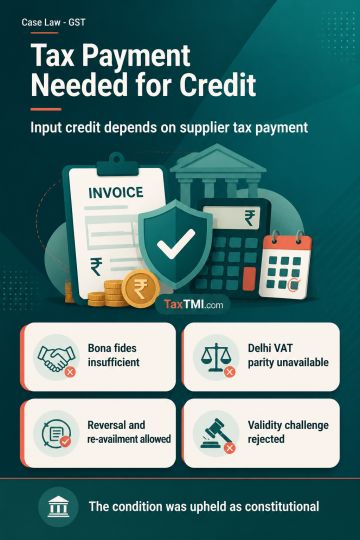
Input tax credit conditions remain constitutionally valid, with eligible recipient claims considered under GST circulars and retrospective filing dead...
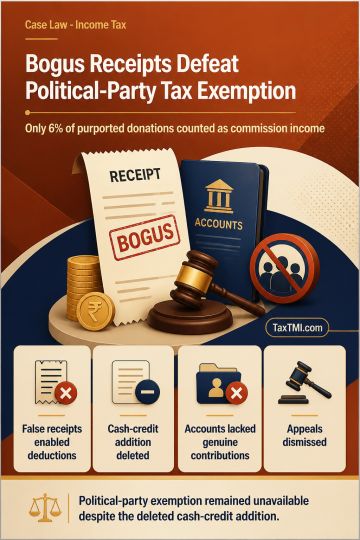
Bogus donation receipts justified commission income assessment and defeated political-party tax exemption for inaccurate accounts and reporting failur...
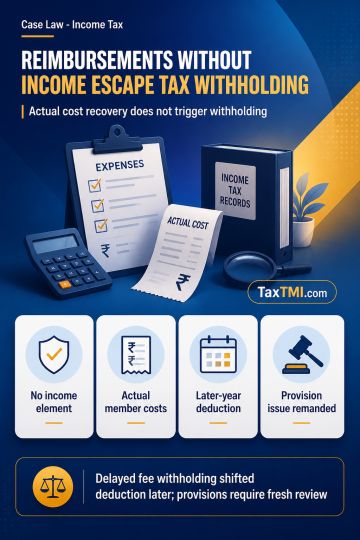
Pure reimbursement without income element escapes tax withholding, while delayed withholding and unsupported provisions face deferred or renewed scrut...
Public benefit requirement defeats charitable registration where residents' association services are reciprocal, member-only facilities governed by mu...
Exempt-income expenditure disallowance is confined to investments that actually generated exempt income, while supported business expenses remain dedu...
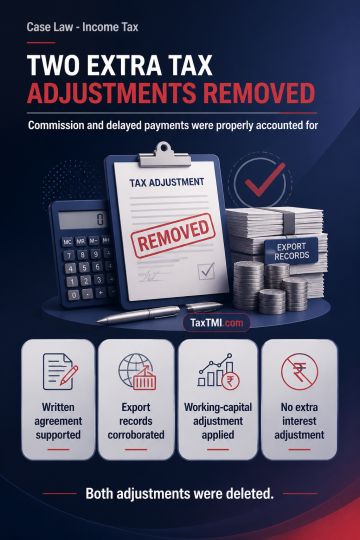
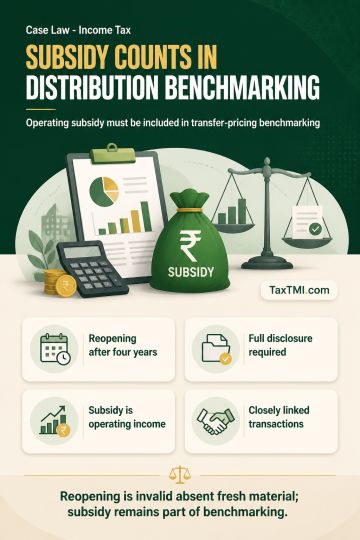
Transfer pricing adjustment on management charges paid to associated enterprise was unreasonable. The assessee provided sufficient evidence of services rendered through agreement, correspondence, invoices, payments, and improved revenue and profitability. The Dispute Resolution Panel arbitrarily upheld the Transfer Pricing Officer's determination of nil value without examining facts and legal precedents. The Tribunal set aside the adjustment, reinstating the assessee's transfer pricing analysis using the Transactional Net Margin Method. Regarding imputed interest on delayed receivables, the Tribunal followed precedents that working capital adjustment subsumes interest on receivables, eliminating separate benchmarking. As the assessee's profit level indicators after working capital adjustment were better than comparables, imputing notional interest was unwarranted. The interest adjustment was deleted in favor of the assessee.
Transfer pricing adjustment on management charges paid to associated enterprise was unreasonable. The assessee provided sufficient evidence of services rendered through agreement, correspondence, invoices, payments, and improved revenue and profitability. The Dispute Resolution Panel arbitrarily upheld the Transfer Pricing Officer's determination of nil value without examining facts and legal precedents. The Tribunal set aside the adjustment, reinstating the assessee's transfer pricing analysis using the Transactional Net Margin Method. Regarding imputed interest on delayed receivables, the Tribunal followed precedents that working capital adjustment subsumes interest on receivables, eliminating separate benchmarking. As the assessee's profit level indicators after working capital adjustment were better than comparables, imputing notional interest was unwarranted. The interest adjustment was deleted in favor of the assessee.
Note: It is a system-generated summary and is for quick reference only.
 TaxTMI
 of 4798












 Join Channel


 TaxTMI