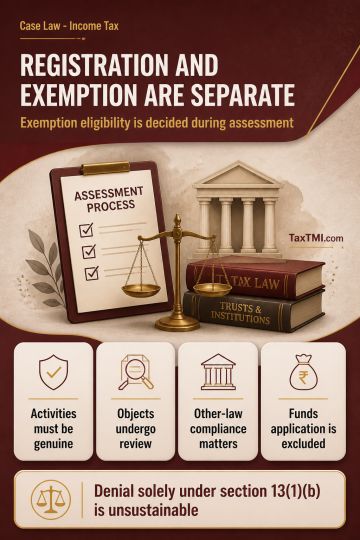
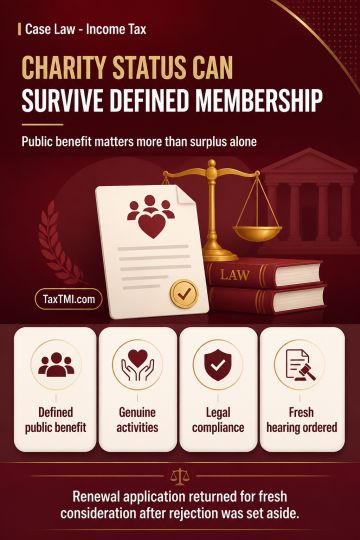
Defined public benefit can retain charitable character; registration renewal requires examining genuine activities and legal compliance, not surplus a...
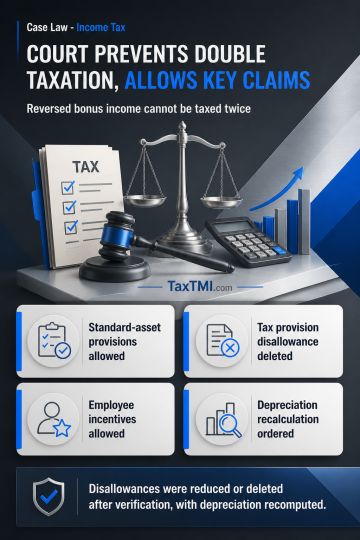
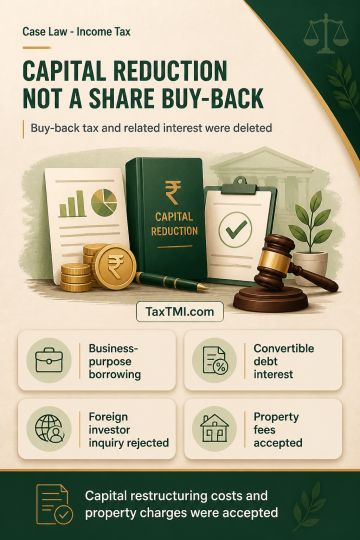
Capital reduction is distinct from share buy-back, preventing buy-back tax; restructuring interest and related business deductions also survive scruti...
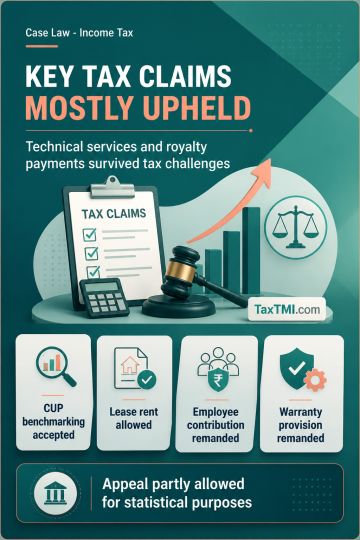
Transfer pricing and tax deductions upheld on established principles, while employee contributions and warranty provisions returned for fresh examinat...
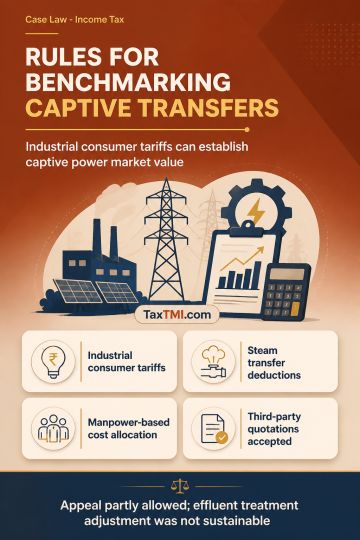
Captive transfer pricing relies on industrial consumer tariffs, while genuine quotations can benchmark effluent treatment transfers under the Other Me...
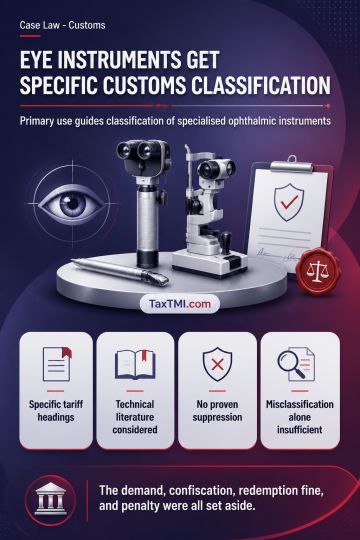
Specific tariff classification for ophthalmic instruments and extended limitation principles determine the treatment of duty demands, confiscation, an...
Page of 4801
Press 'Enter' after typing page number.
1161 to 1180 of 96001 Results
❮
❯
❯❯
0 / 200
Expand Note
Add to Folder
No Folders have been created
+
Are you sure you want to delete "My most important" ?
The court examined the interpretation of "reasons to believe" u/s 110 of the Customs Act, 1962, regarding seizure of goods. A previous case had left the interpretation open for examination in other cases. A circular stipulated that at the time of seizure, a Panchnama should clearly mention the reasons to believe the goods are liable for confiscation. There was a dispute over whether the driver produced relevant documents at the time of seizure. The petitioner admitted that documents were produced later at the customs office, implying the driver did not carry them initially. An e-way bill generated shortly before the seizure showed alleged discrepancies. However, under Article 226, the court cannot examine disputed issues. The petitioner failed to make out a case, leading to the dismissal of the writ petition.
The court examined the interpretation of "reasons to believe" u/s 110 of the Customs Act, 1962, regarding seizure of goods. A previous case had left the interpretation open for examination in other cases. A circular stipulated that at the time of seizure, a Panchnama should clearly mention the reasons to believe the goods are liable for confiscation. There was a dispute over whether the driver produced relevant documents at the time of seizure. The petitioner admitted that documents were produced later at the customs office, implying the driver did not carry them initially. An e-way bill generated shortly before the seizure showed alleged discrepancies. However, under Article 226, the court cannot examine disputed issues. The petitioner failed to make out a case, leading to the dismissal of the writ petition.
Note: It is a system-generated summary and is for quick reference only.
 TaxTMI
 of 4801




 Join Channel


 TaxTMI