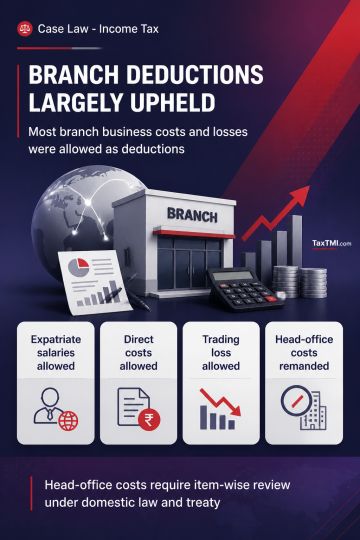
Permanent establishment deductions upheld for expatriate salaries, direct costs and trading losses, while head-office costs require fresh classificati...
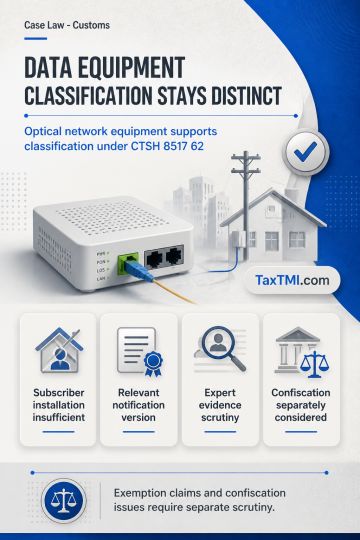
Data transmission equipment classification under CTSH 8517 62 remains distinct from residual classification, with exemption evidence requiring scrutin...
The court examined the interpretation of "reasons to believe" u/s 110 of the Customs Act, 1962, regarding seizure of goods. A previous case had left the interpretation open for examination in other cases. A circular stipulated that at the time of seizure, a Panchnama should clearly mention the reasons to believe the goods are liable for confiscation. There was a dispute over whether the driver produced relevant documents at the time of seizure. The petitioner admitted that documents were produced later at the customs office, implying the driver did not carry them initially. An e-way bill generated shortly before the seizure showed alleged discrepancies. However, under Article 226, the court cannot examine disputed issues. The petitioner failed to make out a case, leading to the dismissal of the writ petition.
The court examined the interpretation of "reasons to believe" u/s 110 of the Customs Act, 1962, regarding seizure of goods. A previous case had left the interpretation open for examination in other cases. A circular stipulated that at the time of seizure, a Panchnama should clearly mention the reasons to believe the goods are liable for confiscation. There was a dispute over whether the driver produced relevant documents at the time of seizure. The petitioner admitted that documents were produced later at the customs office, implying the driver did not carry them initially. An e-way bill generated shortly before the seizure showed alleged discrepancies. However, under Article 226, the court cannot examine disputed issues. The petitioner failed to make out a case, leading to the dismissal of the writ petition.
Note: It is a system-generated summary and is for quick reference only.
 TaxTMI
 of 4798




 Join Channel


 TaxTMI